Crunch time: will Lewisham council wake up to the harms of the borough's biggest polluter, SELCHP?
The council's contract with the SELCHP incinerator is coming up for renewal. After 38 years of unwavering support, will the Green administration finally reset the relationship?
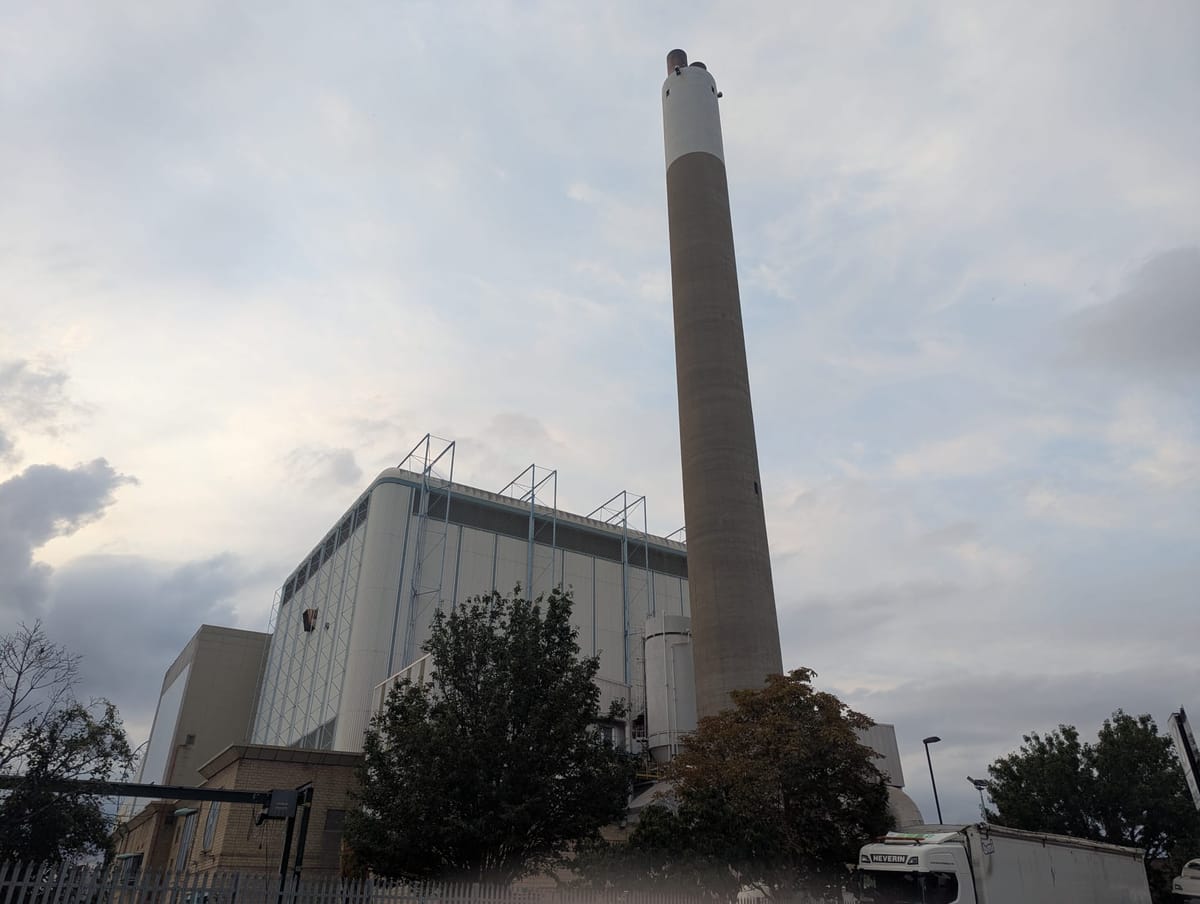
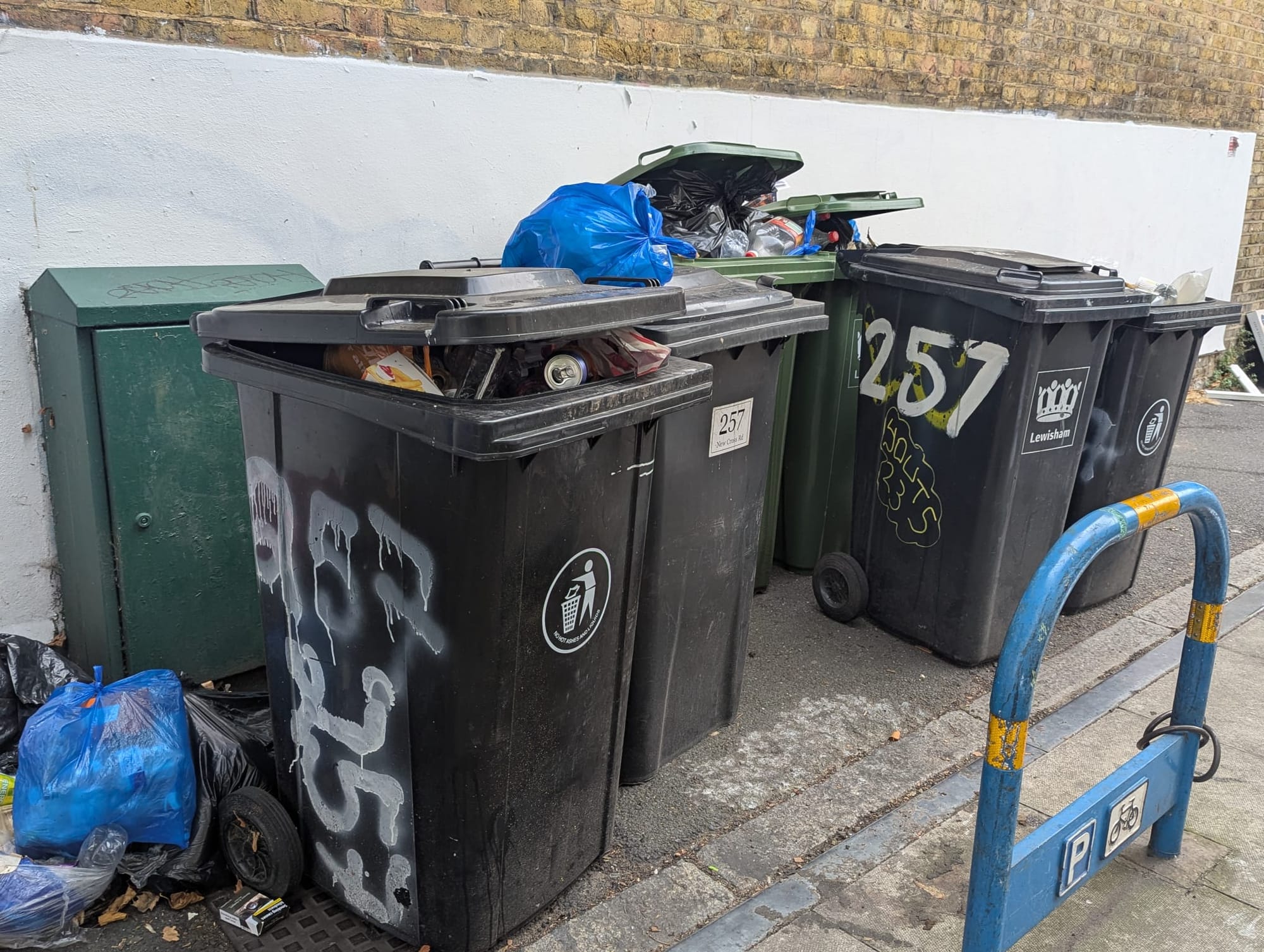
Lewisham council recycles 27% of household waste and incinerates the remaining 73% at South East London Combined Heat and Power (SELCHP) at Landmann Way in Deptford.
Southwark, Greenwich and Lewisham jointly commissioned the incinerator in 1988, it is operated by French waste giant Veolia. The plant is sited in a densely populated area of high deprivation
The Energy from Waste (EfW) industry took off over the last 20 years and new incinerators sprang up around England. Council rates of incineration surged and a clear correlation between high rates of incineration and low rates of recycling has emerged.
Greenwich has a recycling rate of 33%, its waste trucks bring the remaining 67% of rubbish to SELCHP for incineration. Southwark has a recycling rate of 34% and brings the remaining 66% to the Deptford plant.
Other councils in London and across the country transport their rubbish across London to feed SELCHP, which is the 8th largest incinerator in the UK.
Salamander has calculated that over 100 waste trucks are making journeys along Trundley's Road to and from the site every weekday.
SELCHP emits a continuous stream of air pollution and 345,284 tonnes of CO2 every year. By comparison, Lewisham council emits 12,745 tonnes of CO2 across its entire corporate estate, including council buildings, schools, leisure centres and fleet.
Lewisham council has had a close relationship with the plant from the start and remarkably "SECHLP (Veolia)" is listed as a partner in the council's first climate emergency plan, and features heavily throughout.
The incinerator emits a wide range of toxic air pollutants, including the WHO's "dirty dozen" of persistent organic pollutants which build up in water, soil and plants and our bodies.
As the council begins its Right to Grow programme, which aims to help communities reclaim plots of land and grow food on them, this pollution source should not be ignored.
In Paris, allotment growers in a wide area around a municipal incinerator were warned not to eat their vegetables or free range eggs after high dioxin pollution levels were found in soil.
Independent studies have found high levels of dioxins, PFAs - "forever chemicals" - and heavy metals in water, soil and foods such as eggs near waste incinerators in Spain, France and The Netherlands.
Greenpeace protested at dioxins emitted from SELCHP in 2002 and in an extraordinary direct action, two teams of climbers shut the plant down for three and a half days.
Lewisham opposition Liberal Democrat councillors pledged support for the Greenpeace campaign.
But Lewisham council has never challenged Veolia's narrative and has never acknowledged the harms of incineration to local communities.
In addition to the health risks from the toxic pollutants that are emitted from the flue, there are impacts from the high numbers of HGV trucks, the plant's immense carbon dioxide emissions and its effect in depressing recycling rates and undermining moves to a circular economy.
Greens in North London have supported the Stop Edmonton incinerator campaign and once elected in May, councillors quickly took over the North London Waste Authority's board.
The London Green Party campaigned against the Beddington incinerator in Sutton, while Green Assembly Member Caroline Russell led the London Assembly environment committee which fiercely opposed Cory's Riverside 2 incinerator in Bexley.
But Lewisham's Green administration has been silent on the future of the vast incinerator. Despite publishing a detailed manifesto for the 2026 elections, there is not a single reference to SELCHP within it.
Lewisham and Greenwich council have a joint contract with SELCHP which comes up for renewal in January 2029.
A council spokesperson said: "The council is currently reviewing options for how residual waste will be treated and disposed of when the current SELCHP contract ends".
Support local independent journalism from just £2 per month or leave a tip.
An environmental justice issue
Research by Greenpeace found that incinerators are three times more likely to be in deprived areas and areas of global majority communities, than in the least deprived areas.
The neighbourhood around SELCHP is in the top 5% of most deprived areas in the UK.
Meanwhile, the air pollution coming from the incinerator flue is becoming even more toxic. As manufacturers have embraced plastics, derived from fossil fuels, the composition of our waste has changed.
The UK tops the global chart for the greatest amount of plastic waste per person, second only to the US.
Research into air pollution and public health has advanced rapidly in the last two decades and our understanding of the harms of air pollution has been transformed.
But in addition to the more familiar pollutants that are emitted from petrol and diesel vehicles and from wood burning stoves, incinerators produce a wide range of other dangerous and persistent pollutants.
While the composition of vehicle fuel is highly regulated, almost any kind of waste material, but predominantly plastics, can become incinerator feedstock.
Dr Pete Knapp, air quality scientist and filmmaker, told Salamander that there are no guidelines or safe levels for the pollutants such as dioxins, furans, PCBs and PFAs that are emitted from the SELCHP flue.
Sign-up for our free weekly newsletter - Salamander News in your inbox

Incineration is UK's 'dirtiest form of power'
The climate crisis has accelerated since SELCHP began operations, leading Veolia to rebrand its activities as "energy recovery" and label its generated electricity and waste heat "green" and "low carbon".
Lewisham council has been repeating these claims and even listed SELCHP (Veolia) as a partner, alongside organisations such as Climate Action Lewisham and South East London Community Energy (Selce), in its first Climate Emergency Plan in 2020.
"SELCHP represents one of the big opportunities in the borough as a source of low carbon heating," the plan says.
In the section Greener Adaptive Lewisham, the council doubles down: "Household waste in the borough is already managed in a low carbon way by avoiding landfill and converting waste to energy at SELCHP."
However, the BBC has challenged the EfW industry’s low carbon claim, reporting in October 2024 that waste incineration is now the UK's dirtiest form of power.
The BBC investigation examined the greenhouse gas emissions from the UK's incinerators and concluded that burning waste is as bad for the planet as burning coal.
As the UK has now phased out burning coal for power, electricity generated from burning waste has become the UK's dirtiest form of power.
The report notes that our waste is increasingly made of plastic, and that government figures show that burning plastic produces 137 times more CO2 than burying it in landfill.
Dr Ian Williams, professor of applied environmental science at Southampton University told the BBC that the UK's increasing use of incineration to dispose of rubbish was "insane" and "disastrous for our climate."
Community backlash to incineration
After backlash from communities across the country, the government has begun to tighten regulations on incineration.
Government policies on climate emissions, recycling, plastics use and residual waste aim to support transition to a near-term future where most waste incineration is avoided.
Technologies for recycling, reclamation and reduction of landfill have also advanced and the government has given councils a target of recycling 65% of household waste by 2035.
The Department of Energy and Net Zero had announced that incinerators would be brought under the UK Emissions Trading Scheme in 2028, reducing the cost differential which has made incineration so attractive to councils.
This was expected to boost local authority recycling rates. However, in August it was announced that the new policy has been pushed back.
Sign-up for our free weekly newsletter - Salamander News in your inbox
Lewisham's climate action plan would lock-in incineration at SELCHP and Riverside, Bexley
While some councils are trying to scale back their use of incineration, Lewisham's climate action plans threaten to lock-in waste incineration both at SELCHP and at Cory's Riverside 1 and 2 in Bexley.
The Climate Action Plan Update Annex A from September 2026 describes plans for different heat networks sourced by different types of heat - some from incinerators, one using "waste heat from a datacentre", and one from renewables.
"A long standing grant funded project to connect the SELCHP energy from waste plant to the Convoys Wharf development has stalled," it says.
But continues: "Officers have also been involved in discussions with the Cory Group on their Heat Transmission Project.
"This is a proposal to capture waste heat from Cory's Riverside Energy-from-Waste facility and distribute it through a strategic heat network to homes and businesses across South East and Central London."
Salamander has reported on the permanent damage to nature caused by Cory's Riverside 1 and Riverside 2 incinerators, the firm's controversial Carbon Capture and Storage plans and the dangers of allowing Cory incinerators to become the anchor heat source of the planned London district heat network.
Lewisham council's plans would lock-in incineration for decades to come.
Salamander asked Lewisham council if they supported calls, for example from leading campaign group UK Without Incineration (UKWIN), to reduce and phase out household waste incineration.
The spokesperson dodged the question, saying the council "follows the waste hierarchy, which prioritises reducing the amount of waste we produce in the first place." The council's 73% waste incineration rate speaks for itself.
We asked the council whether it accepted that heat networks should use clean energy, genuinely unavoidable waste energy and be highly efficient and smart, in line with expert advice from the Oxford Regulatory Assistance Project.
Again the council did not engage with the question, and bafflingly said that regulation by Ofgem was needed. Ofgem regulations do not consider the carbon impacts of different sources of heat.
The deadline for renewal of the contract with SELCHP is just over two years away, within the term of the Green administration.
After 38 years of denial of the incinerator's harms, will councillors sleepwalk into another yet another renewal of the contract?
Or will they finally reset the relationship with SELCHP?
The Sustainable Development Committee will discuss fly tipping, waste and recycling at its next meeting on 5 November.
No AI, we're human only. Please support Salamander News from just £2 per month or leave a tip.