'Dirtiest form of power' - plans for London-wide heat network will lock-in incineration
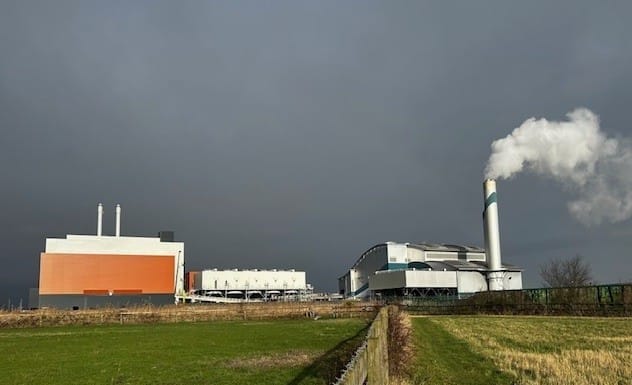
Waste firm Cory has plans for a vast district heat network across London, fed from its household waste incinerators at Belvedere, Bexley.
"Incinerators burn plastics which are fossil fuels responsible for climate change pollution, both through direct emissions and through the destruction of material that could and should have been reduced, reused, repaired, or recycled.
"Heat networks sourced from incineration are reliant on this high-carbon destructive process ..
"We need an incineration exit strategy rather than more incinerator lock-in."
Shlomo Dowen, national coordinator of the UK Without Incineration Network (UKWIN) explains how Cory's plan to use its two incinerators at Bexley as the "anchor" heat source for a London-wide district heat network undermines the government's goals on climate emissions, recycling, phase-out of plastics and reducing residual (non-recyclable) waste.
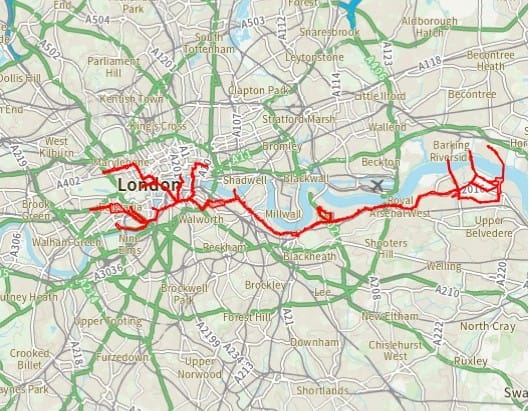
Cory describe their project as "the UK's first large scale heat transmission system .. It will transport surplus low-carbon heat, initially from Cory's facilities [incinerators] at the Riverside campus in Belvedere, Bexley to local heat distribution networks across London that will provide heating and hot water to homes and businesses".
Cory's clean energy claims
Cory describe their heat as "clean energy". But contrary to Cory's claims, the BBC found that power generated from burning household rubbish in incinerators is the UK's dirtiest form of power.
There are increasing amounts of plastic in household waste, making CO2 emissions from incineration worse, and raising concerns about the cocktail of toxic pollutants coming from the flue.
The same carbon calculations apply to the waste heat that is generated by the plant.
But Cory claim: "Under the UK Government carbon metrics, the initial source of heat gives a c.95% carbon reduction against gas, and a c.60% carbon reduction against heat pumps."
The reasoning has been presented in the firm's submissions for an different scheme, the Thames Mobile Heat Consortium. This project plans to ship heat down the Thames on two barges, each carrying up to 40 batteries of around 30MWh.
Cory claim that this heat is 12gCO2/kWh - very low carbon. So what's their argument?
They reference what appears to be a loophole in the Treasury Green Book methodology which states "heat from a waste combustion plan or energy from waste or EfW .. can be considered to be free in terms of CO2 and Primary Energy (on the basis that the waste would have been burnt anyway) other than in its impact on reducing any electrical generation from the waste combustion process".
This asks us to dismiss the carbon emissions and other pollutants coming out of the chimney, on the basis that all waste incineration is unavoidable.
But the assumption that "the waste would have been burnt anyway" denies the many options for reducing and phasing out incineration.
The government's own policies on climate emissions, recycling, plastics use and residual waste support transition to a near-term future where most waste incineration is avoided.
The independent Climate Change Committee (CCC) advises the government. Its position diverges from the Green Book methodology, and acknowledges the incinerator's carbon emissions.
The CCC advice Local Authorities and the Sixth Carbon Budget states that "heat produced by unabated EfW plants .. is not particularly low-carbon."
It continues with examples, explaining that generating heat by burning household waste can be worse in terms of carbon emissions than burning gas.
Sign-up for our free weekly newsletter - Salamander News in your inbox
Best practice for low-carbon district heat networks
The Regulatory Assistance Project (RAP) is a renowned independent NGO which advises policymakers around the world on the clean energy transition.
RAP advises that district heating, while common across Europe for decades, now must be decarbonised to achieve climate goals.
They advise that networks should use clean, renewable energy, or genuinely unavoidable waste heat, be highly energy efficient and smart - connected to the electricity network.
They warn that today's waste heat may not be available tomorrow as industrial processes evolve, eg with electrification. They add that district heat planners should take into account that availability of waste heat from waste incineration will decline as circular economy goals advance.
Unfortunately, planners in London aren't yet taking this advice.

Local opposition overruled by government
Cory started building its first incinerator at Bexley in 2009, despite decades of opposition.
It applied to build the second in 2018. There was widespread opposition once again, with concerns that this would create overcapacity, creating a disincentive for councils to recycle and resulting in shipping of waste into the area. (This has already happened with a single incinerator in operation.)
The views of residents, MPs, City Hall and the GLA were overruled as the government forced the project through as Nationally Significant Infrastructure.
Salamander has written about Cory's plans for Carbon Capture and Storage, a notoriously unsuccessful technology, frequently described as a fossil fuel scam.
Each Cory construction project has spread further on the ancient grazing marshland, disturbing fragile ecosystems, displacing endangered species and now encroaching on the "protected" Crossness Nature Reserve.
Call for phase-out of incinerators
"As our recent letter to the Government explains, we need an incineration exit strategy rather than more incinerator lock-in," Dowen says.
UKWIN along with 38 environmental organisations including Zero Waste Europe, Biofuelwatch and local Friends of the Earth groups, wrote to Emma Hardy, the newly appointed circular economy minister.
They are calling for urgent action to begin the phase-out of UK incinerators, in order to meet government targets for recycling, preventing plastic waste, reducing non-recyclable waste and reducing climate emissions.
Their first demand is to avoid incinerator lock-in, so that further steps to phase out incineration can be taken.
They point out that current levels of CO2 emissions from waste incineration are incompatible with the government’s climate objectives, in large part due to the amount of plastic in household waste.
Councils locked into contracts with incinerators have a disincentive to recycle.
UKWIN say that 26 councils had to delay the introduction of their separate food waste collections because of their waste incineration contract.
Lewisham, which feeds its large household waste incinerator sited at Deptford, reported a recycling rate of 27% in 2023/24.
"Reliance on an incinerator for a heat network can make it harder to shut down the incinerator as demand falls," Dowen says.
"Those who value the environment should pursue genuinely low carbon sources of heat instead."
Cory responded to Salamander's enquiries following publication. A spokesperson for the firm confirmed:
"For carbon savings we’ve followed the UK Government’s Greenbook appraisal practice, whereby a project's impacts are assessed against the situation that would occur if the project did not proceed.
"Cory's Riverside Energy Recovery Facility already generates electricity from residual waste which, if it were not burnt, would be sent to landfill (with worse environmental implications given the carbon and methane landfills emit) or exported for other countries to deal with (by landfill or energy recovery).
"In the absence of a heat network, the surplus heat produced by the energy recovery process is currently rejected to atmosphere.
"The relevant comparison is therefore between:
- the current situation, where the heat is not recovered; and
- the proposed situation, where heat is recovered and supplied to homes and businesses [Cory's emphasis]."
The firm's calculation depends on the reduction in amount of electricity generated and uses a grid carbon intensity factor, with a projection which assumes this will reduce further in future.
The calculation is based on the firm's assumption, mentioned above, that none of the incinerator's direct combustion emissions are attributed to the heat.
Salamander also asked for a carbon comparison with district heat running from a alternative clean energy sources, such as solar or wind generating clean electricity, in line with the advice from RAP.
Cory responded that: "Captive renewable generation is not viable because it does not align with the heat demand profile of a heat network i.e. electricity is not always produced by renewables when heat networks require heat (for example on a cold winter evening when there is no sunlight and little wind)."
They argue that adding capacity and storage, ie batteries, is the only way to address this and would add cost and reduce efficiency.
Salamander's final question was how the firm would handle diurnal and seasonal variation in heat demand and how this affects the carbon calculations.
The spokesperson replied: "Any surplus heat during warmer months would continue to be vented, as it is today ..
"Our efficiency and carbon calculations are based only on the heat expected to be delivered to customers, not on theoretical heat available."
Updated on 27/08/26 at 18:53 to include response from Cory.
Support local independent journalism from just £2 per month or leave a tip.