Almost 6,000 children admitted to Lewisham Hospital struggling to breath
Air pollution is getting worse in Lewisham. Mums for Lungs found 5,805 children attended Lewisham hospital with breathing difficulties in 2025.
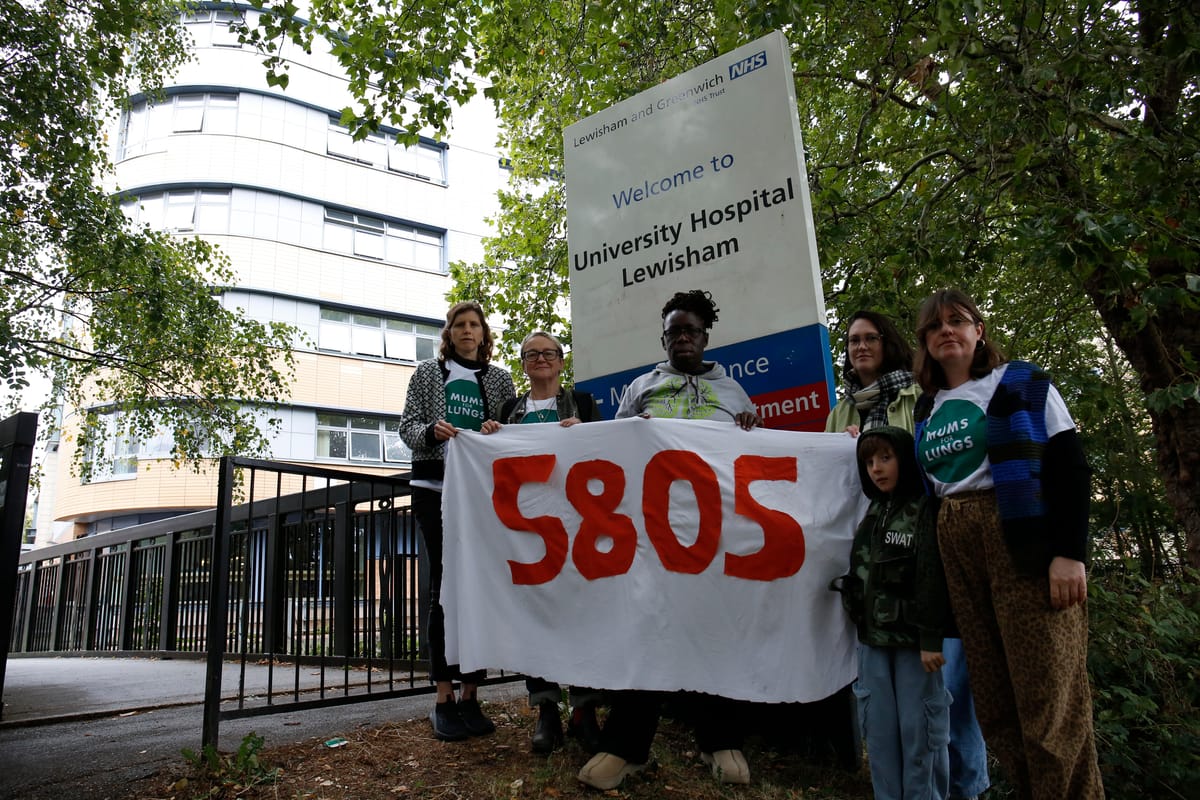
Figures obtained by campaigners Mum’s for Lungs shows that 5,805 children were admitted to Lewisham Hospital in 2025 with acute breathing difficulties.
Lewisham council's air quality status report shows that air pollution levels got worse in 2025, with dangers to health across all age groups.
The Department for Environment, Food and Rural Affairs (DEFRA) found that air pollution levels in London, Bristol and Glasgow exceeded UK legal limits during 2025.
Mums for Lungs used Freedom of Information requests to obtain data for 11 major English cities, which showed that the youngest children are most affected by respiratory problems.
Babies and toddlers accounted for over half (57%) of those attending A&E or admitted to hospital with breathing difficulties last year.
Preema Patel, a mum from southeast London, responded to the hospital admission figures, saying that it's time we made children’s health a priority.
Her 3-year old daughter Violet was admitted to hospital with breathing difficulties 11 times last year.
“As a mother, it is heartbreaking to watch your child struggle to breathe, need oxygen and be too breathless to simply play," Patel said.
“We need to take greater responsibility for the air our children breathe and recognise that even small changes can make a real difference.”
Dr Rosamund Adoo-Kissi-Debrah, a global advocate for air quality, joined Mums for Lungs outside Lewisham hospital to highlight the health crisis.
Her daughter Ella Adoo-Kissi-Debrah died tragically from an acute asthma attack, aged nine.
Ella became the first person in the world to have air pollution named as a cause of death. The inquest found that the source of the pollution was heavy traffic on the A205 South Circular in Lewisham.
Research in the last two decades has revealed the extent to which air pollution poses a serious threat to public health.
Call for legal right to clean air
The UK's air quality guidelines are significantly weaker than WHO limits; for some pollutants the UK allows four times the WHO guideline. The UK has also fallen behind EU guidelines.
Mums for Lungs is calling on the government to reinstate its dropped commitment to introduce a legal right to clean air.
The group says that in opposition, the Labour Party promised to introduce a legal right to clean air through a Clean Air Act, but this was later dropped from the Labour's manifesto.
The campaigners are calling for a public health campaign, along with a clear pathway to reach WHO air quality guidelines.
Their demands include action to reduce traffic-related pollution, particularly around schools, a transition away from diesel vehicles and a reduction in use of wood burning stoves.
Sign-up for our free weekly newsletter - Salamander News in your inbox
Air pollution in Lewisham is getting worse
Lewisham's Air Quality Annual Status Report released in May 2026 shows air pollution is getting worse across the borough.
More than half of the 148 diffusion tubes which measure Nitrogen Dioxide (NO2) levels show an increase in pollution in 2025. Lewis Grove near Lewisham High Street consistently showed the highest levels of NO2.
Many of Lewisham's automatic monitoring stations also show an increase in NO2 levels including Laurence House, New Cross and Honor Oak Park.
NO2 is emitted through combustion processes, particularly car engines and gas boilers, and causes breathing difficulties.
Children are particularly vulnerable because their lungs are still developing and they breathe in more air relative to their body size.
The report also records an increase in particulate pollution PM2.5 across the borough. PM2.5 is identified as particles of size smaller than 2.5 microns in diameter.
Traffic, woodburning stoves, and commercial cooking, including street food are the main sources of PM2.5 pollution in London.
PM2.5 is considered the most dangerous pollutant. The small particles are breathed into the lungs and circulate in the bloodstream, lodging in major organs including the heart, lungs and brain.
Exposure causes harm to all age groups and increases the risk of many chronic diseases including heart disease, stroke, respiratory infection, dementia and cancer and the increases the risk of early death.
PM2.5 levels at all monitoring locations mentioned in the report exceeded the annual mean limit set by the WHO.
At the Deptford monitoring station, levels were the highest recorded since 2020. This site was then decommissioned in April 2025.
Salamander has reported the multiple breaches of air quality targets for ozone in Lewisham. This pollutant is generated from traffic fumes in heat and sunlight.
It is also highly dangerous, causing an immediate irritation of the lungs.
Ozone levels are not included in Lewisham's Air Quality Status report.
Roadvent - unproven and 'unbelievable'
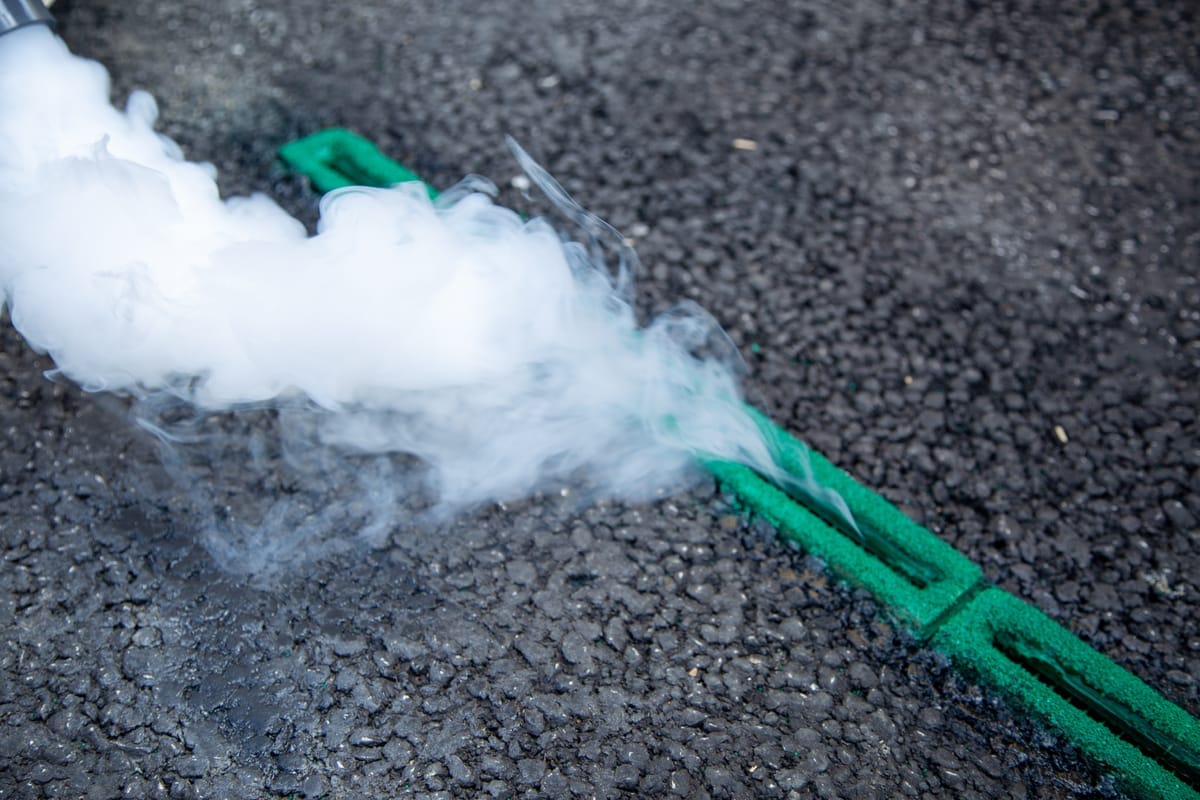
The report mentions the highly controversial Roadvent project as a council priority. The unproven scheme claims to suck NO2 from the air.
Councillors raised questions about the project in September 2025, which they said seemed "unbelievable".
Salamander's investigation found that Lewisham is being used as a test site by the firm behind the scheme, Pollution Solution Holdings.
The tiny firm could provide no evidence that the innovation would work in real-world conditions, and the scheme has links with the petrol and diesel lobby.
Our questions about risks to the public and to the environment went unanswered.
The project seems to run directly counter to the council's stated aim to support modal shift away from road traffic.
Support local independent journalism from just £2 per month or leave a tip.
Increase in journeys by car
The Healthy Streets Scorecard shows that Lewisham’s sustainable mode share, which records the percentage of journeys taken by public transport, cycling, wheeling or walking, has fallen to 71.6%.
This is second lowest score for inner London boroughs and shows that more journeys are being made by car.
Lewisham council’s recent update for Clean Air Night highlights its work on School Streets and the council's outreach on indoor air quality.
But it fails to acknowledge the council's biggest challenge, reducing car journeys across the borough.
The council has closed several air pollution monitoring stations and is installing other which can be found here. The green/amber/red alert is based on the UK’s weak air quality standards, not WHO guidelines.
To see trends over the year, click on a site and page down 5 pages.