Heatwaves and traffic drive dangerous ozone pollution across Lewisham
A toxic mix of traffic fumes, heat and sunlight is raising ozone levels. The Honor Oak Park air pollution sensor has recorded 26 breaches of UK air quality objectives in 2026.
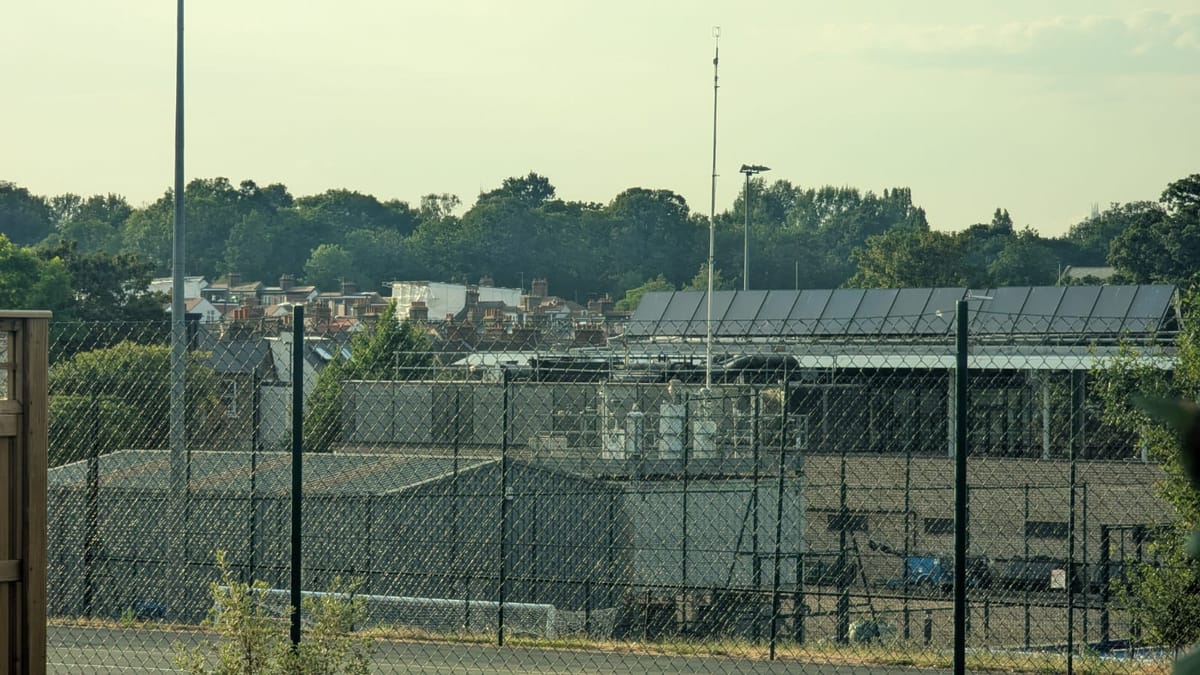
Lewisham council has issued nine air pollution warnings so far during July, because of the readings from the monitor at King's College Sports Ground in Honor Oak Park.
The monitor shows ozone levels have breached UK air quality objectives 26 times in 2026. The target is 10 breaches, for the entire year.
Honor Oak Park is the only air quality monitor in the borough measuring ozone. But ozone pollution is not a problem particular to Honor Oak Park, its a problem across Lewisham and much of London.
Ground level ozone is one of the most dangerous kinds of air pollution, causing immediate irritation of the lungs and breathing difficulties.
Asthmatics, people with respiratory problems, children and elderly people are particularly vulnerable, and often don't need an air pollution alert to know that ozone levels are high.
But most air quality monitors don't measure this pollutant, London Air shows only 3 ozone monitors across the whole of south London.
Other boroughs with ozone monitors that have already breached the annual limit are Tower Hamlets, Camden, Kensington and Chelsea and Richmond.
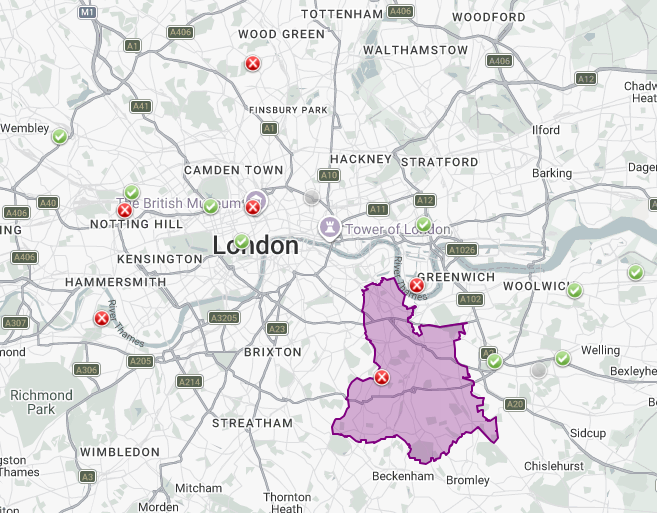
Lewisham council has been issuing air quality alerts to subscribers throughout July, warning of "moderate" air pollution - without naming the pollutant.
Alerts display the monitor at Honor Oak Park as a yellow or amber circle, while other sites show green.
Despite labelling the pollution "moderate", the message goes on to warn that vulnerable adults and children may experience symptoms and need to reduce strenuous outdoor physical activity.
Support local independent journalism from just £2 per month.
A toxic mix of traffic fumes, heat and sunlight
The primary cause of ozone in Lewisham, and more widely across London, is road traffic. Petrol and diesel vehicles produce nitrogen dioxide (NO2) and volatile organic compounds (VOCs).
Ozone is formed from chemical reactions between different pollutants including nitrogen oxides (NOx), VOCs and carbon monoxide (CO), under the influence of heat and ultraviolet radiation from sunlight.
Nitrogen dioxide pollution maps closely to heavy traffic, so this is where ozone will form.
Lewisham has been unable to reduce car journeys, and rising summer ozone pollution is a direct result of the heavy traffic across the borough.
London mayor Sadiq Khan also made the connection in a high pollution alert for ozone for 24 June this year, during the second early heatwave.
He linked ozone levels to traffic emissions, calling on Londoners to drive less, car share if possible and stop their engines idling.
The mayor's forecasters from Imperial College London point out that UK air quality targets are almost 2.5 times higher than World Health Organisation (WHO) targets.
The UK's thresholds "represent especially acute exceedances which can have immediate health impacts for individuals with pre-existing conditions such as asthma or chronic obstructive pulmonary disease (COPD)".
Lewisham council did not issue an air pollution alert on 24 June or promote the mayor's of London's alert.
A spokesperson said: "The alerts issued by UK Air and the Mayor of London use different measurements, which is why they issued alerts while Lewisham's local system did not.”
The recent update on ULEZ and London's air pollution confirmed that the main source of NO2 and PM2.5 air pollution across London is still road traffic.
Why is dangerous air pollution showing amber or even green?
Most London air quality maps colour code low/moderate/high air pollution using the UK's current air quality targets, which have fallen behind the EU's air quality targets and far behind WHO targets.
As research on the widespread harms of air pollution has developed over the last two decades, the WHO air quality targets have been tightened up.
The UK's air quality targets are now far weaker than WHO safe levels and for some key pollutants our targets are 4 times higher than the WHO target.
Our "low" or "moderate" levels of air pollution do not reflect two decades of research on the harms of air pollution.
Air quality campaigners including Mums for Lungs are calling for Ella's Law, the Clean Air (Human Rights) bill, named in memory of Lewisham nine-year old Ella Adoo-Kissi-Debrah.
The law would make clean air a human right and bring in tougher air quality standards.
The group are also calling for the UK to follow an "enforceable pathway" to achieve World Health Organisation (WHO) targets for air pollution.
Support local independent journalism from just £2 per month.