Can Lewisham council's new housebuilding strategy deliver the homes the borough needs?
The community-led housing strategy is a key part of the Greens' plan to build 1,000 social homes by 2030. Can it deliver?
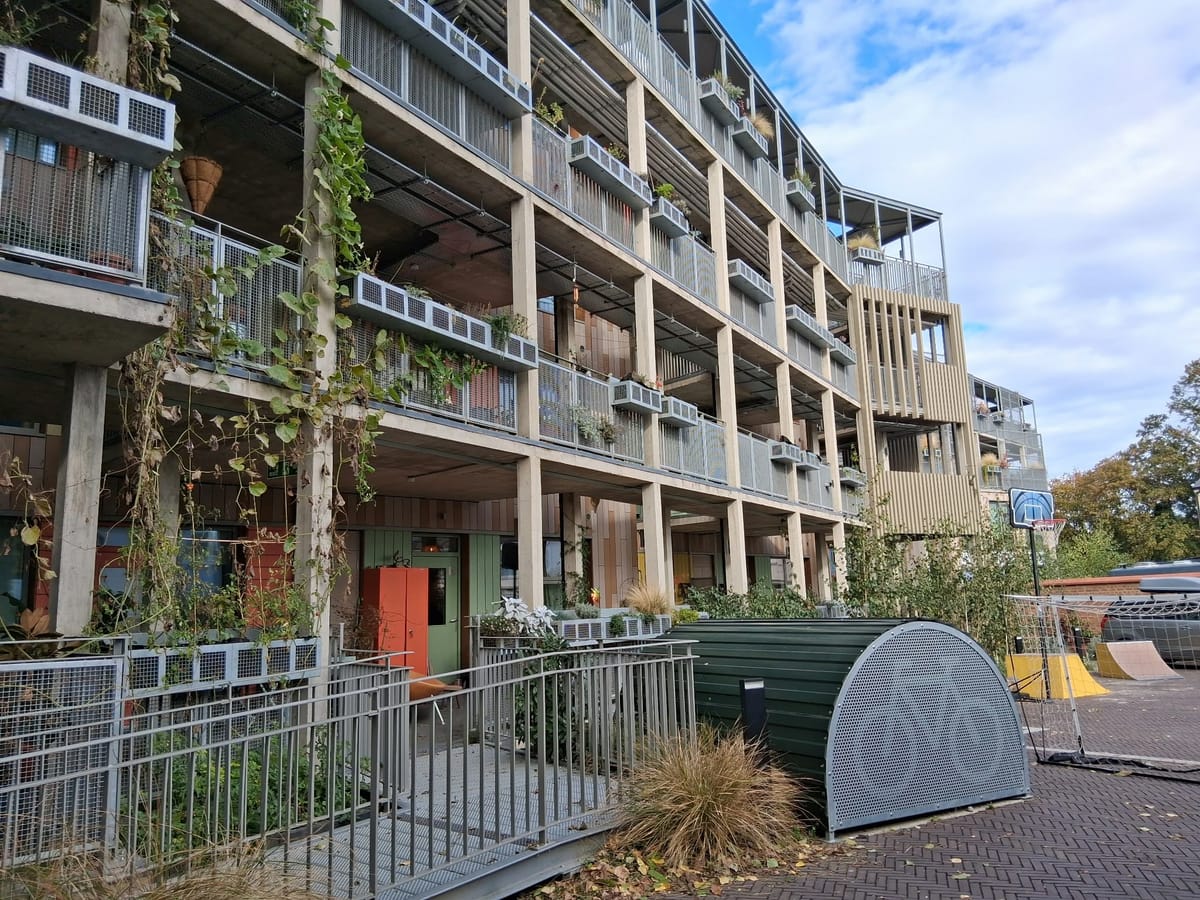
Lewisham Council has adopted a new housebuilding strategy which aims to support community groups, housing co-operatives and innovative housing providers to deliver more affordable homes in the borough.
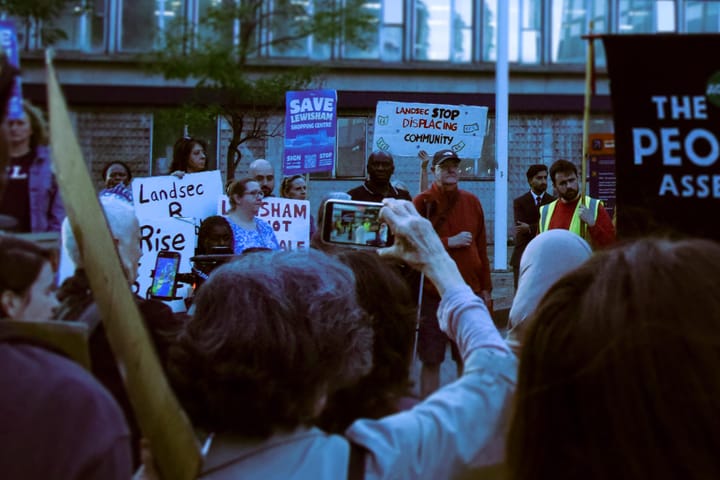
The strategy is a flagship policy of Lewisham’s Green administration and has taken on new significance following last week's announcement that Landsec has shelved its plans to redevelop Lewisham Shopping Centre.
The Landsec masterplan was set to deliver around 1,700 new homes, with around 344 of them being “affordable”.
Responding to Landsec's announcement, the Mayor of Lewisham, Liam Shrivastava, posted across social media: “The way out of the housing crisis is through building social housing.
“We’ve got a range of exciting projects coming forward, from our community-led housebuilding strategy to a small sites aggregator that has the potential to unlock thousands of homes across the borough.”
What is community-led housebuilding?
Community led housing takes several forms including housing co-operatives, Community Land Trusts (CLTs), cohousing and self-help housing.
The benefits of community-led housing normally include the delivery of below market rent homes (although not necessarily all homes), so can help provide “affordable” housing, including homes at social rent.
The advocates of community-led housing highlight additional benefits. They stress that shared neighbourly living can mean that residents have greater control over housing and development in their communities, and that community-led housing can positively contribute to health and well-being.
What are the Greens proposing?
The council say the strategy will be developed through a new Community-Led Housing Registered Provider (RP) Forum. They hope that by bringing together housing organisations and council officers, the forum will improve collaboration, share expertise and identify opportunities for housing delivery.
They suggest that the forum will also improve community groups' access to support, expertise, funding opportunities and development partners,
The report on the new housing strategy, which was approved by the mayor and cabinet in on 7 October, continues: “The proposed strategy may identify future housing development opportunities, involving council-owned land…”
Support local independent journalism from just £2 per month or leave a tip.
Are there existing community-led housing developments in Lewisham?
The answer is most definitely yes.
Lewisham has a long history of community-led housing, such as Walters Way and Segal Way in Forest Hill, Church Grove in Ladywell, Stanstead Road social homes for people with autism in Forest Hill, Brasted Close Community Land Trust in Sydenham, The Deptford Ragged Trust and Nubia Way in Downham, London's first black housing co-op.
Lewisham’s involvement in community-led housing goes back to the 1970s. Founded in 1973, Sanford housing cooperative in New Cross was the first purpose-built housing cooperative in the UK.
The project was started by housing activists who partnered with the then Greater London Council, with Lewisham council providing the land. There are now are around 125 tenant-members living in 14 houses and a block of flats.
The council's new strategy to encourage community-led housebuilding is in many respects an attempt to build on the long legacy that exists in the borough.
'Slow moving' and low numbers
Although many community-led housing schemes are innovative and inspiring, some reality checks are needed as to what it has actually delivered.
Last year the London Assembly housing committee undertook an investigation into community-led housing across London. As part of their investigation they visited Lewisham to look at the Church Grove project in Ladywell.
Despite the report being very supportive of the expansion of community-led housing, it is worth noting some of the chair’s observations. In her introduction to the report, Assembly Member Sem Moema said "the sector has its problems. It is currently too small – partly because there are so many barriers to projects succeeding.
"It can move very slowly, with developing a single project often taking up to 15 years.”
Her remarks about the long length of time for projects to be completed certainly resonate in Lewisham. Lewisham council publicly announced its intention for a community-led housing scheme in Ladywell in May 2013.
Rural Urban Synthesis Society (RUSS) were appointed the council’s preferred development partner in 2015. It then took RUSS a further two years to submit a planning application, and planning permission was then granted in December 2018.
However, it was only in February 2024 that 36 self-build homes were completed at the Church Grove project, a period of almost 11 years from the council’s first stated intention to build the scheme.
Sem Moema's concerns about the small size of the community-led sector are reflected in the low numbers of homes it has delivered, both in London and across the country.
A Liverpool University investigation into community led housing in England made this sobering statement about its delivery up to 2016: “Despite rising interest from the public, civil society and some politicians, the overall output of the sector has remained low.
"The current number of homes previously built by the community-led housing sector is estimated at around 26,800.”
The report adds: “The vast majority of these homes are legacy housing cooperatives, established in the 1970s and 1980s during a period of government investment.”
Salamander is London's only news co-op. Join and support us or leave a tip.
Lewisham council's next steps
The council aims to scale up the delivery of community-led housing; however it is far from clear how quickly this can occur.
Despite work by Lewisham council’s press team to get the new strategy into national media, the council admits that no spending has been approved so far to take the strategy forward.
The mayor and cabinet are due to examine a report on potential financial support options for the strategy in March 2027.
Most significantly the council admits it cannot easily transfer land at below-market value, although it believes it may be able to consider discounted or nil-cost land transfers where schemes deliver significant social value including 50% or more social rent housing.
Can small sites be a game changer?
Last week, Lewisham mayor Shrivastava not merely highlighted a new strategic approach to community-led housebuilding, but also drew attention to Lewisham’s involvement in a small sites aggregator pilot (SSA).
This initiative began in May 2025 under the previous Labour administration.
The London Borough of Lewisham, Bristol City Council, Sheffield City Council and the Ministry of Housing, Communities and Local Government (MHCLG) began the pilot which focusses on accelerating homebuilding on smaller plots of land, aiming to deliver more social and affordable housing and reduce local housing waiting lists.
So far, little information has been provided on how this pilot is progressing, although a report on housing delivery for the next mayor and cabinet meeting on the 4 November states: “Once we have sites to be delivered as part of the SSA pilot, mayor and cabinet approval will be sought.”
If it is successful, the initiative could play a useful role in delivering more homes in Lewisham. But currently, we are awaiting evidence that the project will identify a significant new supply of sites for housing.
Manifesto promise of 1,000 social homes
The mayor’s most recent statement about delivering social housing and boosting community-led housebuilding should be set against what Lewisham Green Party promised the electorate before its election victory this year.
Their manifesto pledged to deliver 1,000 high quality, energy efficient homes for social rent.
In July, councillor Daniel Dream, cabinet member for inclusive regeneration, planning and housing delivery, responded to a public question: “The delivery of 1,000 social rent homes will be achieved through a mix of council led, developer-led, and community-led schemes as part of a new 2026–2030 housebuilding programme.
"This programme will be launched following the Greater London Authority's announcement of our Social and Affordable Housing Programme (SAHP) grant allocation in the autumn."
He continued: “The aim is for all homes delivered through the programme to be completed and ready for occupation on or before 31 March 2030.”
The role that community-led housing plays in reaching his bold ambition will soon be clear.
Challenges facing community-led housing
There are many passionate advocates of community led housing; however passion itself doesn’t not build more homes, and certainly not social homes.
The challenges facing community-led housing are numerous. They include the critical need for increased and sustained funding from both the Mayor of London and central government for this type of housing provision.
Local authorities also need greater freedom over the use of publicly owned land.
Whether Lewisham council can overcome these and other barriers and step up the delivery of new homes delivered through community-led housing schemes will be a real test of the success or failure of Lewisham’s Green administration.
Sign-up for our free weekly newsletter - Salamander News in your inbox