The greening of Sayes Court estate, Evelyn
The early National Trust missed its chance to bring 10 acres of gardens at the historic Deptford site into public ownership. More than 140 years later, the organisation is back.
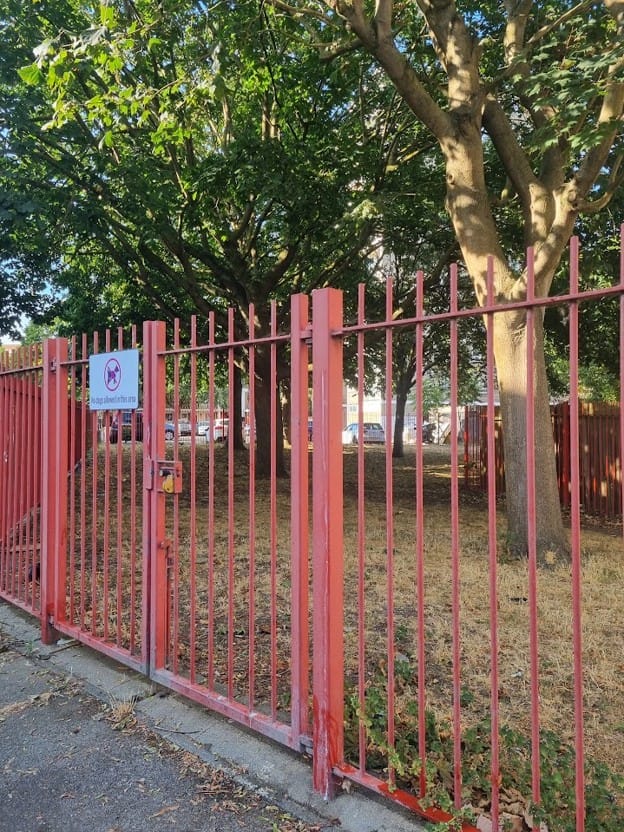
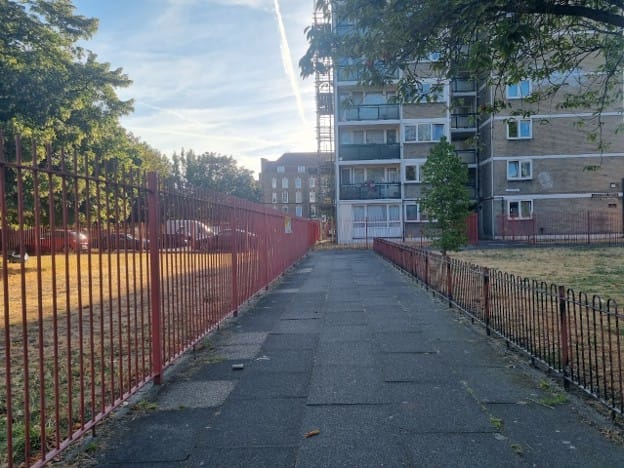
Looking at dead grass imprisoned behind tall metal fences in the middle of Sayes Court estate, it’s hard to imagine that this site was key to the founding of the National Trust.
Lewisham council is partnering with the National Trust to revitalise three green spaces on the estate to become something worthy of not just their origin story, but also for the thousands of people who call the estate home.
Funding has been secured for improvement of the first site and after consultations with residents during 2024, construction has now begun.
Samba dancing and garden designs
The 1960s Sayes Court estate consists of three towers 11 storeys high, and numerous shorter blocks of flats and maisonettes.
Bordered to the south by Evelyn Street and cycleway 4, and blocked from river access to the north by the undeveloped Convoy’s Wharf project, the estate sits on the eastern boundary of Evelyn Ward.
The National Trust received money from the Greater London Authority (GLA) and Lewisham council in 2024 to begin engagement on redesigning the green spaces that were underutilised across the estate.
They partnered with south east London architecture firm NimTim to lead a 12-month community engagement programme. The firm collaborated with Lewisham Refugee and Migrant Centre (LRMN) and Youth First London.
NimTim had previously worked on Becontree Estate in east London, similarly creating designs to unlock the use of their green spaces in conjunction with residents.
“We varied the ways that people can give feedback from large consultation sessions open to all, to smaller more intimate workshops with specific groups who might otherwise be overlooked to capture both loud and quiet voices," the firm said.
"There have been collaging and plaster casting workshops, exhibitions, planting days and Samba dancing. We worked with clients at LRMN to inform our sensory planting strategy.
"The proposals create accessible, climate resilient and biodiverse green spaces that reflect the ambitions and thoughts of the local Sayes Court community.”
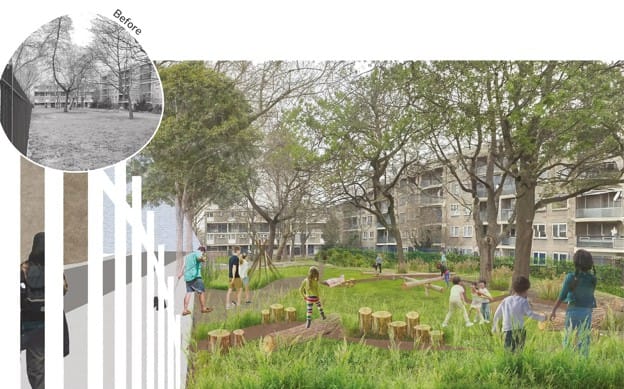
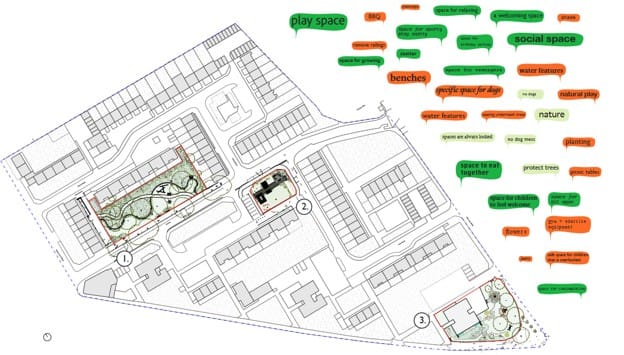
The community agreed on to initially focus on three green spaces within the estate, with sites identified at:
- Prince Street
- Czar Street/Prince Street
- Evelyn Street/New King Street
Greening Evelyn and creating a 'garden ward'
The plans are part of a wider plan to "Green Evelyn" which has seen a toolkit produced by the National Trust with partners Wonky and JCLA. The toolkit notes that many residents of Evelyn ward live in flats without access to private green space.
In 2023, £70,000 was secured from Mayor of London’s Green and Resilient Spaces Fund and Lewisham council's Neighbourhood Community Infrastructure Levy (NCIL), as part of the vision to turn Evelyn into Lewisham’s first garden ward.
It wouldn’t be the first time efforts have been undertaken to make Evelyn ward greener. In 2019, community group Deptford Folk won the Community Tree Award for their project Evelyn200.
The initiative planted 200 trees across the ward in honour of the 200th anniversary of the publication of John Evelyn’s diaries.
The 2019 award write-up noted the ward’s 49% child poverty rate.
Climate resilience in Evelyn ward
Lewisham’s local plan states: “Lewisham’s neighbourhoods and communities must be made more resilient to the effects of climate change, such as heat and flood risk.
"The borough’s position alongside the River Thames and within the Ravensbourne catchment puts people and properties at risk of flooding.”
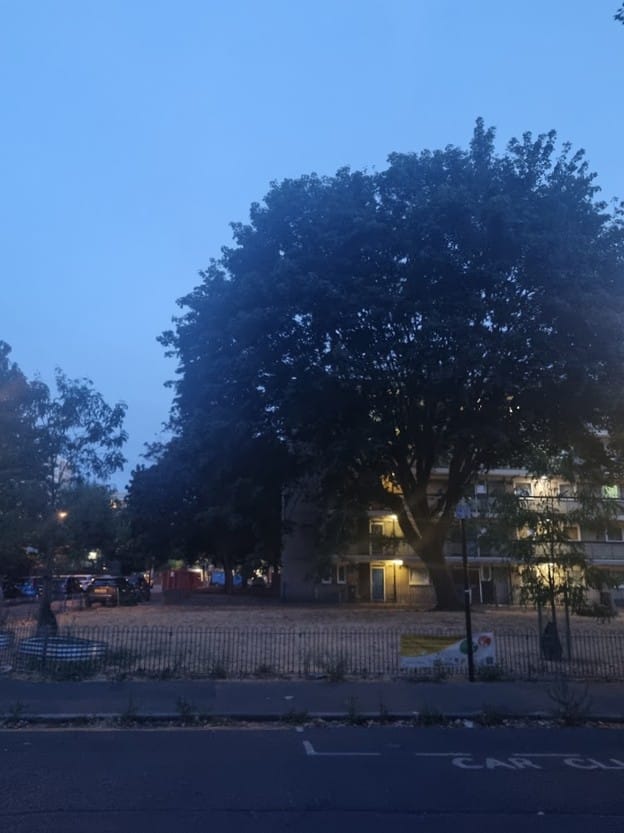
The estate sits in the Thames estuary flood risk area, which means plantings have to be resilient to both water and drought.
A nearby development illustrates some of the challenges and opportunities.
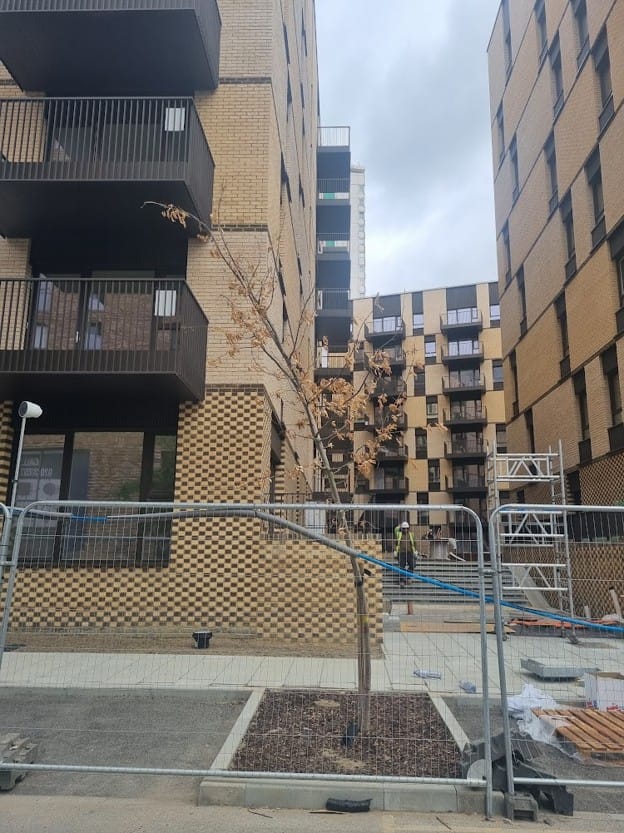
The Deptford Landing has completed several buildings as part of its masterplan, with more under construction or waiting to start. The newest addition, named Deptford Edge, has newly planted trees between parking spaces.
Some have already died in this summer's heatwaves, withering before the construction fences have come down.
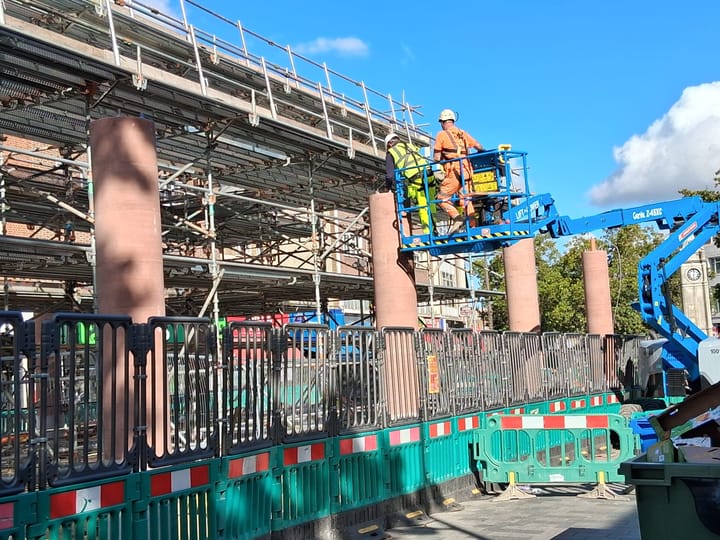
Just in front of the Deptford Edge building, construction is underway on extending Waterline Way, which will connect with Grand Canal Avenue to create a linear park that stretches from Timberyard Street to Plough Way.
The linear park has a slope channelling water through the middle, able to divert surface water during prolonged spells of rain.
Support local independent journalism from just £2 per month or leave a tip.
The Landscape Practice, who will be implementing the project, said: “As extreme weather events become more frequent, the site will need to cope with both periods of high rainfall as well as drought and high temperatures.
"The proposed swales will take rainfall from the building downpipes, slowing the flow of water and removing or diverting it from entering into the sewer system.”
“Raised beds are also to be built as part of the scheme, to give residents of Langford House the opportunity to grow their own food. A water butt will be installed to collect rainfall for watering.”
The birth of the National Trust and a site rich in history
Walking around the Sayes Court Estate and Park feels distinctly different from sites usually associated with the National Trust.
But it once looked much more like the traditional National Trust site, with a manor house and gardens.
Losing the chance to purchase Sayes Court House in the 1800s was inspiration for the formation of the organisation which became the National Trust.
Famous diarist John Evelyn rebuilt Sayes Court House in the 1660s, leasing it from the king, Charles II and drawing many visitors to its celebrated gardens.
Evelyn coined the term "sustainability", and produced an influential work encouraging landowners to plant trees for naval shipbuilding.
A century later the house was converted into a workhouse, and in the 1800s as a site for penal transportation. However, in 1869 a descendant of John Evelyn bought back much of the site.
In 1884, W.J. Evelyn sought out social reformer Octavia Hill to secure public ownership of the site which had been transformed back into ten acres of gardens.
The plan did not succeed, as they didn’t have the legal structure needed for the purchase. The organisation now known as the National Trust took a further ten years to form with its two other co-founders, by which point the opportunity to buy Sayes Court had been lost.
The ruins of the house have been found on the nearby Convoy’s Wharf site, and earmarked for preservation. Various planning applications for Convoy’s Wharf go back over twenty years, but the site remains undeveloped besides a single building accessible to investors only.
The current Sayes Court Park has a mulberry tree, rumoured to have been planted by Peter the Great after a wild night out wrecked existing planting, during his three month stay at the Manor. DNA tests suggest the tree is actually from several generations after the Czar’s time.
Samuel Pepys, who recently discovered letters suggest concealed his links to benefitting from the transatlantic trade of enslaved people, was close friends and contemporaries with John Evelyn.
One of the groups highlighting this aspect of the history of Deptford is the organisation Memorial of (en)Slavement & Freedom. The group runs free walking tours on a monthly basis.
Sign-up for our free weekly newsletter - Salamander News in your inbox