Josh Matthews: Citizens assemblies not culture wars
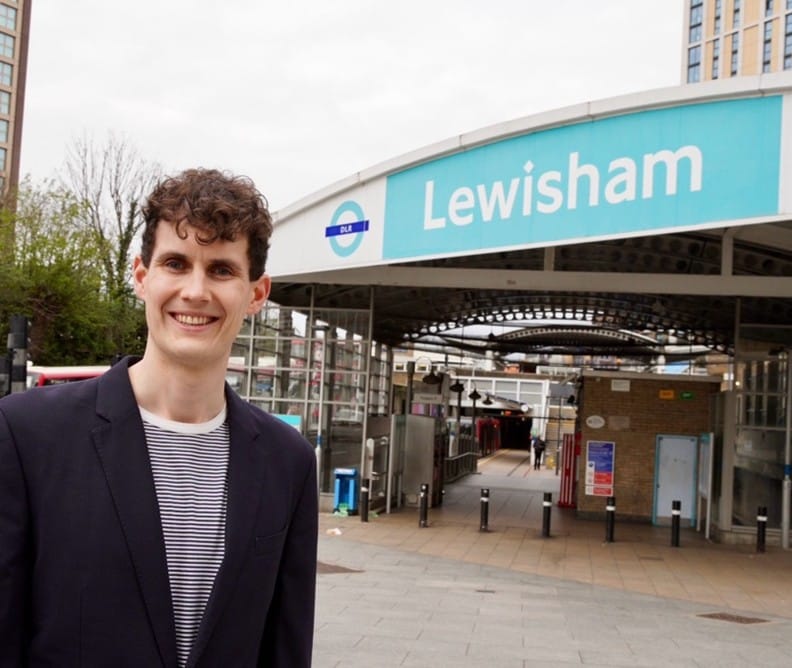
Lewisham Liberal Democrat mayoral candidate Josh Matthews has plans for one-stop shops and citizens assemblies, and a vision of positive climate tipping points.
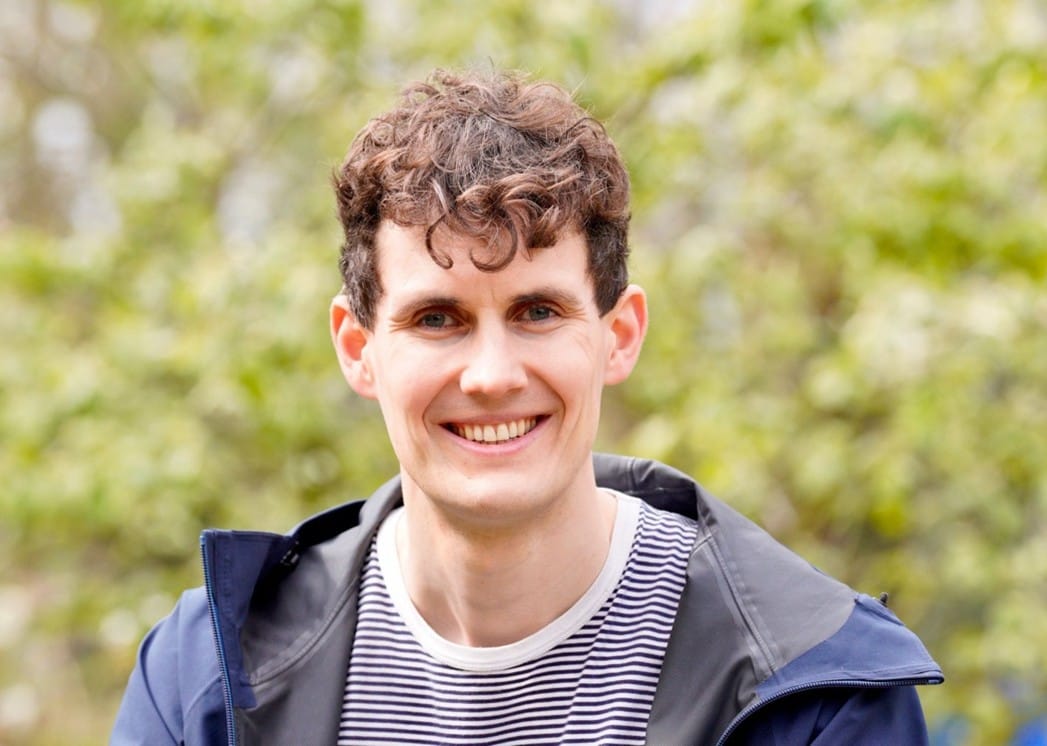
Josh Matthews originally trained as a chemical engineer and now works on climate change and sustainability, and is a passionate advocate for the well-being economy as an alternative to using GDP.
He was a city councillor in Cambridge where he held the shadow cabinet position for climate, environment and the city centre.
Salamander met with Josh in Hilly Fields Park and asked him our most pressing questions.
Q. There are 11,000 households in Lewisham on the waiting list for social housing, but we know that developers don’t want to build them. How are you going to address this?
A: We need to build more social homes. From a local, from a London-wide and from a national standpoint.
Locally we really need to bring legal and housing expertise back in-house rather than spend so much money on consultants .. so that we can properly challenge developers who don't want to include affordable housing, and I mean genuine social rent homes that local people can actually afford.
So we need someone in Lewisham council .. beyond the cabinet member for housing and the mayor .. who is the legal and technical authority to challenge developers.
For years and years we've had just 54 Labour councillors with no scrutiny, it becomes very hard in local government to stand up to developers when you have a very well resourced and financed legal team on the other side who's saying "no we need to drop down from say 50% affordable housing to below 20%".
And with the Mayor of London's new scheme to give people exemptions on S106 and CIL funding for meeting 20% affordable housing, it's such a low bar and it's not going to help any local authority in challenging developers.
Q: There are around 36,000 households in social rented housing in Lewisham. The council has a long history of failure in its handling of repairs. How did this serious neglect come about? What still needs to be done?
A: I think it's come about through a lack of community engagement, it speaks to a politics that's completely broken.
One thing I can promise people is that as mayor, or if I hold any position on the council, you will not be forgotten about in an incredibly complex housing system ..
I will open one-stop shops in every community - it's something Liberal Democrat councillors do - so everybody knows you can access the council, right there in your community.
You will not be told "this is not my responsibility", you will not be passed from the council to a housing association to a charity to the police back to the council.
Some people call it a "no wrong door policy" - you will access the council and you will have someone there who wants to help you.
Q: Salamander launched in March 25 and we have reported on many campaigns by local residents opposing intensive high-rise development. None of these campaigns have been successful.
But readers saw Blackheath getting "special treatment", and told us this seems unfair. What do you think and what's your vision for future development?
A: One of the biggest lessons I took from my first day as a councillor is you get developers and the community engaged as soon as you humanly can and you make sure people are heard.
If people feel that they are taken seriously and that their concerns are genuinely fed in through the planning process, not only does it result in better developments, with so many avoidable mistakes being ironed out through that process, but you also just get a much tighter sense of community and better working relationships between councils, developers, residents groups, and the community more broadly.
As a principle for development, for example the long-standing plans for Catford's regeneration, is that we should create places that people are excited to live in, excited to go to ..
One thing I really want to do as well is have these community coalitions of small and local businesses to create those places - not just to support each other but also to be able to push up to the council or to the London Assembly when things aren't going right - say when fly tipping's not being cleared up or when the pavements aren't clean or when the street lighting's out - it means that there's lower footfall to the community.
Support independent community news from £2 per month or leave a tip.
Q: Vision Zero - There has already been one tragic death of a cyclist this year in New Cross Gate. 80% of KSI (killed and serious injury) road accident victims are pedestrians and cyclists.
What steps would you take to increase take up of public transport and make cycling and walking safer?
A: For a long time my vision for society or community has been where walking cycling and using public transport is the best, the easiest, the most accessible and the cheapest option for absolutely everyone.
But we are not going to get that if we continue to fight culture wars between drivers and the people who don't drive.
We support the entire society whether you drive, whether you use public transport whether you cycle, whether you walk. And think this speaks to why I'm a Liberal Democrat - above all else, we try to bring people together as much as we can, rather than drive them apart.
We also have so much unspent development money S106 and and CIL funding as well as about £30 m of community infrastructure money that could be spent in Lewisham.
Some of the the biggest assets we have are those community groups who are always going to understand an area usually far better than any councillor any mayor and council officer .. and we should look to empower them to do the work that they want to do, to make their community just that little bit better to live in.
One other overarching principle on transport, and trying to promote public transport and cycling, is making sure that investments in the alternatives come before any penalties for say driving a particular car, and making sure that transition is mapped out.
If we talk about transition planning and we talk about climate and the environment - from my professional side - it means making sure that positive alternative is there before you make the change.
If you get that transition wrong, the costs will always fall on the people who struggle to afford it.
Q: Cars and SUVs - Car journeys in Lewisham are increasing year on year, and cars are getting bigger and more dangerous. A move to active travel would reduce air pollution, make Lewisham safer, reduce climate emissions and improve health.
Do you support work to increase active travel (walking, cycling and public transport) and reduce car use, and if so how would you tackle this?
A: Honestly the only way I can see solving this issue in a way that doesn't just take communities apart and pit people who drive and those who don't against each other, is to have massive citizens assemblies and re-establish ward assemblies.
There are loads of ways that you can improve democracy, but I think starting with big Lewisham-wide citizens assemblies on something like transport. I would love to do one of those on housing, on health, air pollution, on climate and nature as well.
We would need to make sure that we have a genuinely representative sample of the community invited, that we remove the barriers to different parts of that community, we get everyone involved without the time pressure.
We would have all the technical expertise, the science and the data, but we also have all the representatives from key community pillars, institutions, council businesses, and so on. So that not only can the evidence and the science be presented for discussion, but also people can have those genuine conversations that really centre what matters for our community and what we want as a starting point.
We also need to get those ward assemblies back, so that we can have these conversations in safe spaces where everyone, no matter what mode of transport they use, is welcome and can play a part.
It comes back to that principle of - can we find a way of investing in the positive alternative before we then start to explore how we transition people away from larger vehicles.
Again, it's the same concept with transitioning to electric vehicles or addressing climate sustainability more broadly. We know exactly where we need to get to, we know what people in the community would like for their children, where it's safe, cheap, accessible to walk, cycle, use public transport.
But we are so far away from that as a society and we're not going to get any closer without a huge rethink of how we do democracy, how we do planning, how we do these transitions.
Q: Education - At KS2, disadvantaged children in Lewisham have achievement 8% below London average for disadvantaged children.
Across all children, Lewisham schools have achievement below the London average at KS2, the gap gets wider at KS4 (GCSE stage) and for academic pathways at KS5.
What will you do to support schools and teachers to address this?
A: I thought a lot about this what I could actually do, as Mayor of Lewisham. Probably the best help I could be is to give children and parents, the teachers who work here, is to help them in all other areas of the community, to actually give everyone that platform to thrive.
We speak in the UK about the safety net or the welfare system - I would flip that on its head by actually designing an economy around wellbeing and giving people that platform to build their lives on top of, to build their version of a best life.
And to do that you need to deal with everything from education to health to democracy to the environment to housing and far beyond.
So I think promoting that more widely in Lewisham is probably the biggest lever.
The Mayor of Lewisham doesn't decide the curriculum, but I would try to embed sustainable and digital skills, to advocate for that nationally as part of the curriculum, but also to involve local businesses and colleges and universities in different parts of the communities to come into schools to really make sure that the children that we're bringing up are prepared for the two major transitions that are happening side by side right now - around digital and AI, but also around climate and sustainability and the energy transition.
Q: Immigration, asylum and refugees - Lewisham is a Borough of Sanctuary, but Labour government policies are making it harder every year for refugees to reach this programme.
As a Liberal Democrat, what is your national party’s position on immigration, refugees and asylum seekers to the UK?
A: So many times I've to had to refuse to even enter into a conversation around the immigration and asylum system because we're not starting from a point of treating people like human beings, and not starting from a point of kindness.
And I take this to any policy area - it could be immigration, health, housing, climate crisis - we can't even begin to have a proper conversation about the system if we're not starting from that point of kindness, empathy and respect ..
These are some of the most vulnerable people in the world. For all the logistical faults of the asylum system, if we're starting from a point of cruelty - whether it's performative or not - then we can't get into the weeds of how you manage a system that should be caring, compassionate and kind.
Being a Borough of Sanctuary is something we should be proud of but we really have to live up to that name.
Q: Safety and crime is coming up as an issue in London’s local elections.
City Hall has pushed back against misinformation and social media scares, saying that London has the lowest homicide rate in its recorded history.
In Lewisham, there has been a decrease in many kinds of crime, but there was a tragic increase in homicides, to 10 last year.
Do you believe that social media is fuelling a panic? Do you think Lewisham is unsafe and if so, what is your solution?
A: So I don't think it needs to be an either or - we absolutely need to challenge that misinformation, but at the same time we need to take people's concerns seriously ..
In terms of my approach as mayor, once again it comes back to collaboration, to very tangibly launch a massive multi-partner collaboration across Lewisham on prevention and safety and community engagement ..
What we want to do is make sure that our communities thrive and they're safe and we're always looking forward, rather than just going after punishment for the sake of revenge or a good headline ..
So our broader campaigns across London try to help the Met Police as much as possible to reprioritise their time from back office and from certain offenses like policing the possession of laughing gas and cannabis .. With a proper review of stop and search so that we can can make sure that it's not impacting some of the most vulnerable communities disproportionately.
To make sure that that police time can be reprioritised towards tackling serious violence, domestic violence, violence against women and girls and the crimes that affect people in their homes and in their communities.
Q: The NEB briefing from scientists to MPs in November 2025 tried to raise the alarm about climate and nature breakdown, and how we need to mobilise from government level down.
The collapse will profoundly affect the lives and futures of everyone in Lewisham, particularly younger people.
As mayor, you will have a powerful platform. How will you use it to help bring about the transformation that we need to address these linked crises?
I want Lewisham to be a world-leading council on tackling the climate and nature emergency - that's the level of my ambition and that would be the Liberal Democrat ambition.
Using my professional experience in Sustainability, I would think in terms of "spheres of influence", the council's direct footprint - what it can achieve with residents, community groups, businesses, for London and nationally, and what it can do to really change the entire system that we live within.
On the direct impact, we have put together proper transition plans to address the entire spectrum of the UN Sustainable Development Goals, so not just the environmental side, climate, water, waste, biodiversity, but also the social and the economic side ..
I think one of the biggest levers local authorities have is in housing and the built environment - to insulate, to make sure solar panels and heat pumps are installed .. but also through the planning process and making sure that everything is built and retrofitted to be compatible with the decarbonised future that we need.
Also making sure that that planning process really does promote bringing back biodiversity in nature and protects the kind of spaces, not just to let wildlife thrive, but also to make Lewisham the place where everyone wants to live ..
More broadly, we've spoken about citizen assemblies and working with the community, but also working across London and nationally, especially on the pension side ..
Those transition plans would include the investment side. How are we going to map that transition to also make sure that we have a positive and sustainable pension system as well?
More broadly, I would love to create an entire wellbeing economy for Lewisham, and really measure what matters.
My professional work is starting to veer towards how do we move away from GDP and growth at all costs.
That's not, very clearly not, to say we need to de-grow, but we should make sure that the growth has been targeted, it's the growth of the right measures and that we're judging what good looks like as a society, based on what really matters to people and the environment.
Again, I want Lewisham to be world-leading on that, in measuring what matters and creating an environment where we're growing wellbeing and sustainability ..
A final point on systems change. I'm interested in what some of your readers think about this.
I think about this critical mass concept of what can you make work so unequivocally well within your sphere of influence that it then triggers a positive tipping point and then pulls policymaking, consumer behaviour, the public and business along with it.
And so the question then is: What does that look like for Lewisham? If you subscribe to the view that the potential biggest impact of a council being housing and the built environment, I think you would certainly start there. Then you have the planning system as well.
But I'm really open to the idea that there is something that we're missing in Lewisham and that we could really spot something special that then everyone else would look towards ..
We all need to look at what part of this bigger sustainability puzzle we can make work and we can prove works. And also learn from everyone else that does the same, in their own area.
Updated 16/4/26 9:00 to correct typos and clarify that Josh's answers were provided live, as part of a longer, in-person interview.
Please support independent community news from just £2 per month. Subscribe or leave a tip.