Awaab's Law - how is Lewisham council doing?
Lewisham council's housing select committee questioned officers on repairs, provision of homeless temporary accommodation and council rent increases.
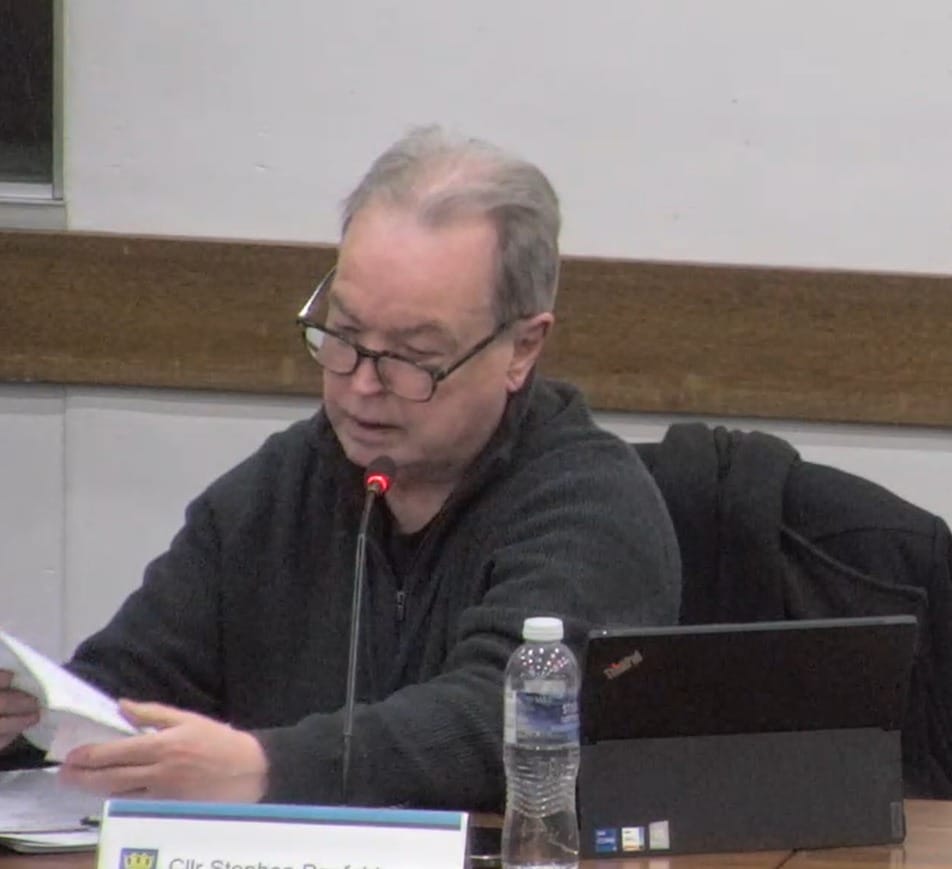
Lewisham council's housing select committee met on 14 January to review how the council is meeting its obligations on repairs, in particular for damp and mould where Awaab's Law has placed the council under new legal obligations.
They also covered updates on homelessness temporary accommodation and council rent increases.
Obligations under Awaab's Law
Awaab's Law came into effect on 27 October 2025 and puts new legal responsibilities on social landlords to identify, investigate and resolve damp and mould issues within strict timeframes.
Lewisham's stock condition survey in February 2025 identified 6,840 hazards of which 1,508 were category 1 (severe); 397 of the category 1 hazards were for damp and mould.
The council is required to respond to emergency damp and mould (category 1) hazards and make them safe within 24 hours, or the tenant would need to be decanted.
Officers reported on the changes they had made in preparation of the introduction to the law, and that the council's performance has improved, but needs to continue to improve further.
The council had met the 24 hour target in 100% of category 1 cases in November and December 2025. The report is available here.
Mould wash
Responding to questions from councillor Stephen Penfold, the housing select committee chair, officers confirmed that "responding" to emergency hazards could include removing or mitigating the risk.
This could mean a mould wash to temporarily remove the hazard, while a root cause analysis takes place.
For significant hazards (Category 2), investigations must be completed within 10 days, with mitigation or resolution within 5 working days.
Failure to meet these deadlines could also result in decanting.
Councillor Pauline Dall raised concerns and asked for a much more detailed breakdown of different categories of repairs cases, to allow an analysis of why they are open.
She said: "I take your point about the mould wash, but we do hear often from people who say: 'that's all that you were doing and a couple of two days later it was back'.
For anyone who is worried about health issues caused by spores .. this isn't much of a solution."
Self treatment kits
Penfold raised questions about the plans for "self treatment kits".
Officers explained that they are considering offering self treatment kits to tenants in certain circumstances of minor mould issues, and investigating Pura Plus, a brand which is safe and used by the NHS and other providers and which offer a tenants kit.
They pointed out that this would give tenants "the right tools" and help counter "misinformation out there, for example around the use of bleach, which will actually make damp and mould worse."
Vulnerable tenants would not be expected to use the kits.
9 out of 10 damp and mould cases from solicitors
Penfold noted from the report that only one in ten damp and mould cases were reported directly by residents, with many issues being addressed through disrepair legislation.
He asked whether this means that 9 out of 10 damp and mould cases are coming from solicitors?
Officers confirmed that historically, because of call centre failings (such as a typical one hour wait to get through) people were resorting to raising these cases via solicitors.
Officers said that the council has addressed the call centre issues and "turned a corner" on repair cases, and that the numbers of cases is gradually coming down, although there is still a high volume of aged cases.
Penfold pointed out that every legal case is costing the council money which could be spent on repairs.
Awaab's Law will be extended in October 2026 to include other types of hazards, including excess cold and heat.
Sign-up for our free weekly newsletter - Salamander News in your inbox
Homeless temporary accommodation
The committee also question officers regarding their update on homeless temporary accommodation.
Councillors expressed concern that Lewisham remains in the top five or six London boroughs in approaches for homelessness, despite the work of the council team.
Officers were unable to provide the reasons for this.
The committee discussed concerns about children experiencing repeated disruption of schooling after several moves, in part due to landlord evictions.
Officers replied that the homelessness service expects to see improvements once the Renters Rights Act is enacted in May: "We are hoping to see a lot more stability in the market and .. we are hoping, less of that (disruption)".
Officers had previously raised the issue that the subsidy that council can claim back from government is only 90% of the 2011 Local Housing Allowance (LHA) rate and council has to pay the difference.
Stephen Penfold asked whether that is still the case and whether the council is lobbying central government.
Councillor Will Cooper, Cabinet lead for Better Homes, Neighbourhoods and Homelessness, confirmed that it is still the case.
He said that London councils continue to lobby the government on this issue, and the council continues to campaign.
If this could be addressed, it would reduce Lewisham council's housing overspend, and mean budgets are not as stretched as they are currently.
Councillors accepted the report.
The select committee also questioned officers on the planned council rent and service charge increases.
Sign-up for our free weekly newsletter - Salamander News in your inbox