'Imagine a Lewisham not dominated by cars' - what do council transport plans deliver?
Will Lewisham council's plans move the needle on improving road safety?
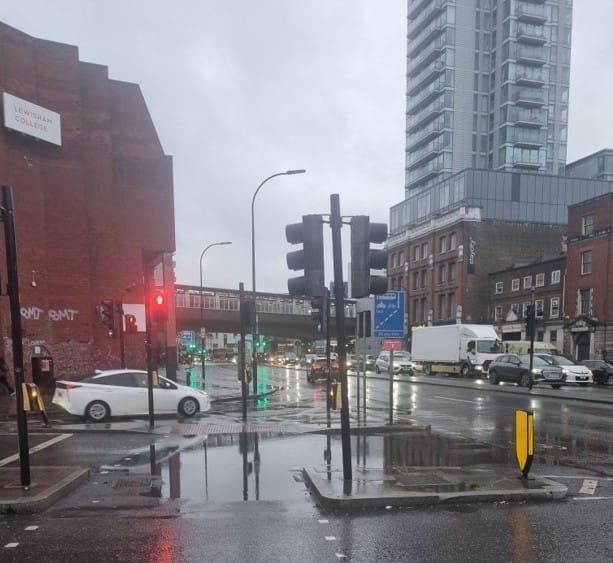
Lewisham council's strategic transport programme for 2026-2027 aims to prioritise road safety and encourage active travel. But currently, the borough ranks lowest of inner-London boroughs in the Healthy Street Scorecards.
On Wednesday 9 September, Lewisham Council agreed to deliver the recommended Strategic Transport and Highways Capital Programme for 2026-2027.
Councillor Corin Ashwell, Cabinet Member for Environment, Nature, Transport and Climate Action, introduced the measure.
He provided context that it was largely derived from a framework developed by the previous Lewisham Labour administration under wider Labour-controlled Greater London Authority, but noted his support and alignment with London mayor Sadiq Khan, for the “the necessary yet ambitious” Vision Zero.
A flight of fancy
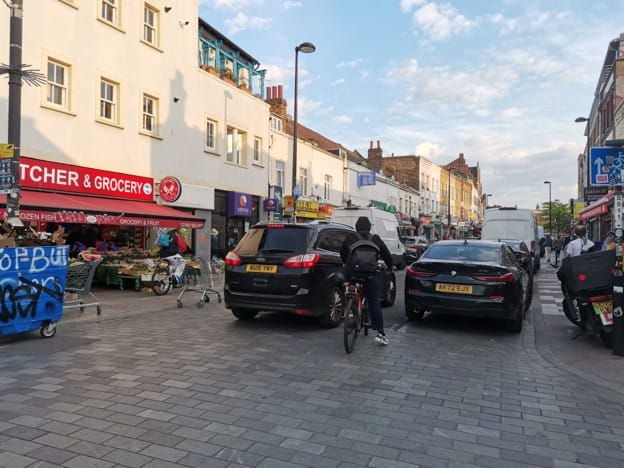
Ashwell opened with a plea: “I’d like people to indulge me for a moment, for a little flight of imagination. A Lewisham not dominated by cars and motor traffic. I’d like us to imagine a borough where streets are communal spaces, that could be used for play, for socialising, and for physical activity.
I’d like us to imagine the space used for car parking, which after all is private storage on public land, being used for the trees we need.”
It was a lofty statement for the council where World Car Free Day was recently celebrated by closing down one street in Telegraph Hill for three hours.
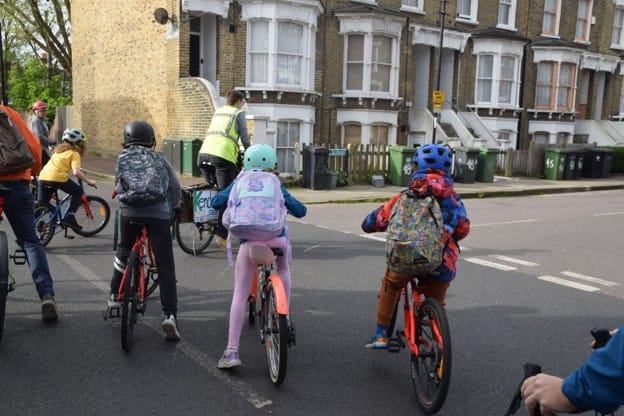
Ashwell also stated his agreement with community groups including Lewisham Cycling Campaign and Mums for Lungs that there was a need to radically shift street design to enable active travel.
He noted the pressing ecological issues, and transport’s contribution to the climate crisis, stating that transport was the cause of 30% of emissions in Lewisham.
Lewisham mayor Liam Shrivastava added: “This administration is very committed to improving road safety.” He acknowledged the three fatalities that Lewisham has had this year from road collisions.
He also emphasized his hope for meaningful engagement on the plan, with the goal of reducing use of cars, while acknowledging that some journeys by cars would be necessary.
The recommendations were agreed without any further discussion.
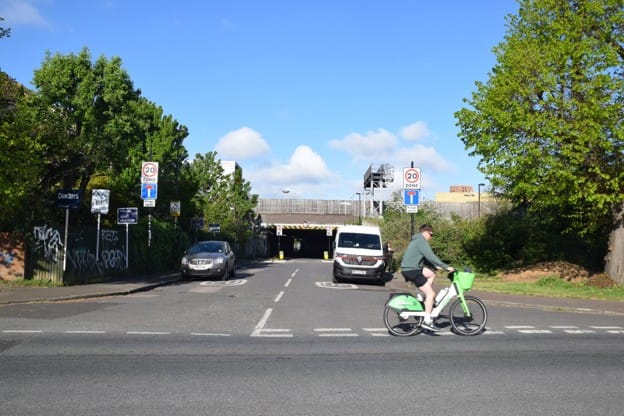
A win for Cold Blow Lane campaigners
The programme approves construction to make the temporary pedestrianisation of the Cold Blow Tunnel permanent, which had been announced in February.
In a win for community campaigners, it will also include a link between Cold Blow Lane and the pedestrian path Woodpecker Road. Though plans haven’t been seen yet, this will presumably include a new crossing on Sanford road where there was a pedestrian fatality earlier this year.
Shrivastava was previously a councillor for New Cross Gate ward and lent his support to local campaigners at the time.
Also in the programme is an allocation for improved cycle infrastructure in three more sections. Improvements in the Catford underpass and between Limes Groves and Lee Railway station are reported as "in construction" or final "construction close out" stage.
Changes from Lee High Road to Grove Park are at initiation stage.
Support local independent journalism from just £2 per month or leave a tip.
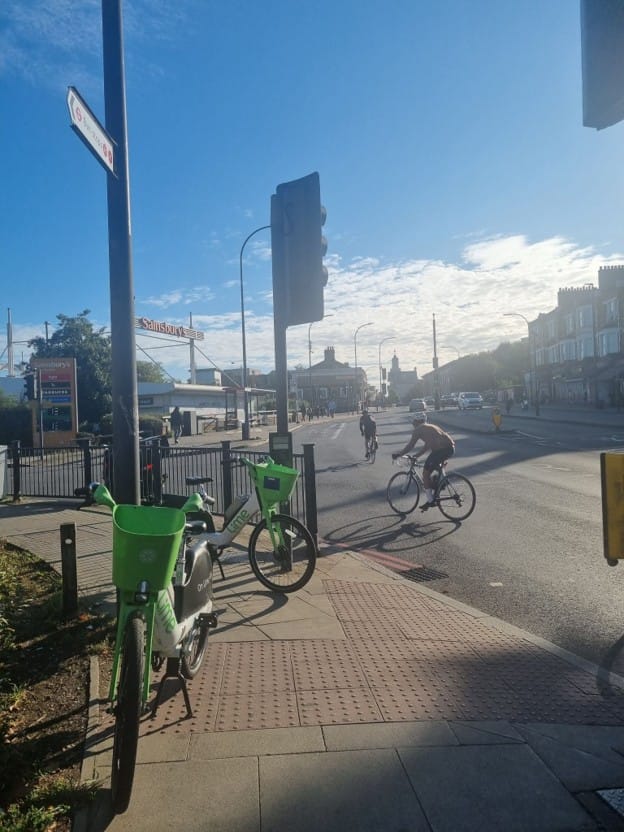
More parking for free standing e-bikes
In the past year, London boroughs have seized over 3,000 dockless e-bikes. Councils have been frustrated by a lack of central regulation, with restrictions on parking varying by invisible borough boundaries.
In Lewisham, £75,000 has now been dedicated to micromobility parking which aims to support current e-bike mobility schemes. This will create more dedicated parking for the bikes, in a bid to prevent them from blocking pavements.
Healthy Neighbourhoods
New healthy neighbourhood schemes have been proposed in the Kender area, New Cross Gate area, Telegraph Hill and St John’s.
Healthy Neighbourhoods appear to bear many similarities to Low-Traffic Neighbourhood, but avoids the controversial branding that comes with the name.
The St. John’s and Tanners Hill scheme has been posted on the council website for for over a year and alongside the Kender area scheme is listed in the report as at the stage where funding has been allocated for detailed designs.
Telegraph Hill and New Cross Gate have a more preliminary status.
The designs for St. John’s show a combination of new crossings and modal filters, which will limit motorised traffic on some streets. Given the focus of modal filters on the council website, this is likely to also be the case in other healthy neighbourhood schemes.
At least one community group has expressed concern that traffic will increase on other roads in their neighbourhood, but the council notes that: “Some traffic may shift to main roads at first, but overall traffic often goes down as people change how they travel.
"The aim isn't to move traffic elsewhere, but to reduce it by encouraging walking, cycling, and public transport.”
The Telegraph Hill scheme represents something of a resurrection, as earlier attempts to change the streets were foiled by a vocal group of motorists upset about the potential introduction of paid parking.
Can the budget move the needle on active travel?
The programme is funded through several lines: a total of £2,557,000 comes from Transport for London’s allocation for the local implementation plan, over £400K from Section 106, and £95K from the Neighbourhood Community Infrastructure Levy.
This programme’s stated primary objective is to improve road safety and support the council's commitment to reducing road danger. It includes both infrastructure, and other initiatives such as cycle training.
It is ultimately dwarfed by the larger Highways and Bridges budget, which totals over £3m, largely for resurfacing roads with some pavements also being improved.
However, Lewisham’s busiest carriageways and their pavements are maintained by Transport for London under a separate budget.
At the last council budget meeting, the Greens, then in opposition, put forward a proposal that heavier vehicles pay additional tax, due to the damage they cause to roads. But this was defeated, with the then-Labour controlled council speaking against the idea.
Larger vehicles have been shown to be not just more damaging for infrastructure, but also more dangerous for other road users.
The schemes in the budget will ultimately be measured by how much they move the needle on addressing road safety issues.
Lewisham remains last of inner-London boroughs for healthy street indicators, for the third year in a row.
Support local independent journalism from just £2 per month or leave a tip.