How volunteers created Buckthorne nature reserve .. and the vision for Gorne Wood
A look at how nature is thriving at the reserve in Crofton Park and the founders' hopes to grow it further with three acres of ancient woodland.
It’s hard to imagine, but the first thing the new custodians of Buckthorne Cutting Nature Reserve did was order skips - lots of them. The area had become a massive fly tipping site. Everything from discarded syringes to mattresses were strewn across the three-acre parcel of land.
That was eight years ago when Fourth Reserve Foundation, now a charity, was granted a licence from the landowners Network Rail to run the place.
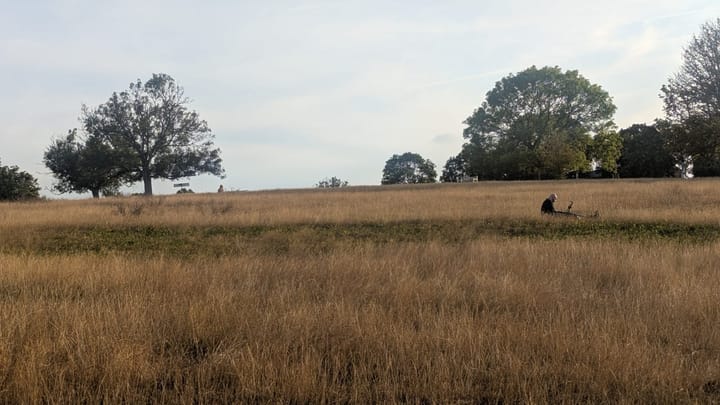
Now the reserve is a calm green space with paths lined with bricks from the old railway signalman’s house winding through ancient oaks. A lime tree next to where signalman Charles Adams’ cottage still stands is thought to have been planted by him.
Anna-Maria Cahalane, Fourth Reserve co-founder, guides me through the area. We pass a cluster of bee hives belonging to Brockley Bees who sell honey at the reserve’s quarterly open days.
She points to bare ground where a seed meadow will be planted in the autumn. Volunteers were given the tough task of clearing the area of brambles to create space for the seeds.
“We had an invertebrate survey done a few years ago as we suspected we had too many brambles. We’re going to create a grass meadow to attract pollinators and insects,” says Anna-Maria.
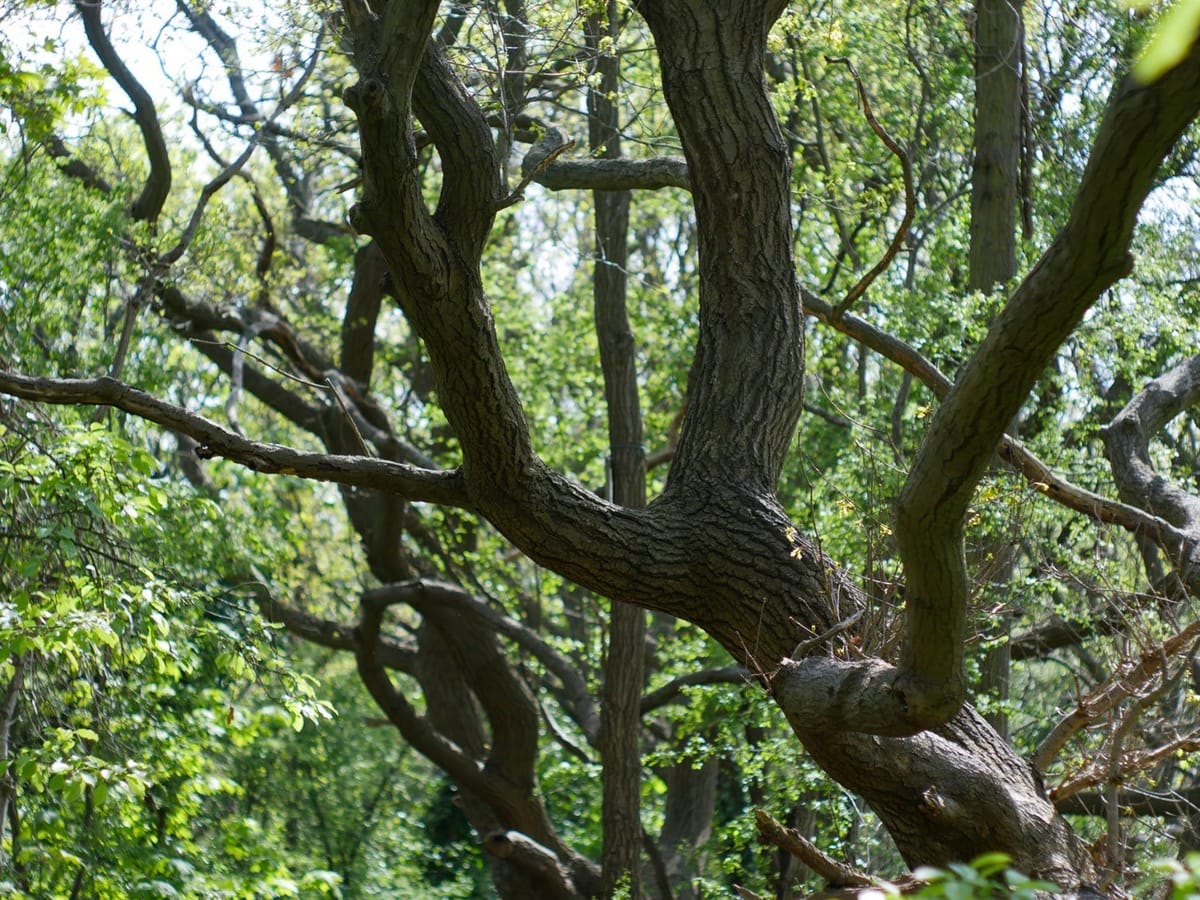
Further up the hill there’s a cluster of ancient gnarled oak trees twisting up to the sky. They support invertebrates - everything from the purple hairstreak butterfly to the stag beetle. Squirrels and badgers forage for the acorns in the autumn.
Several of the trees have bird boxes for blue tits, Anna-Maria says these are essential for keeping oak processionary moths at bay.
The creatures’ lay their larvae under the oak trees’ bark which can damage the health of the tree, the eggs metamorphising into caterpillars whose whispery hair can cause rashes, breathing difficulties and itchy eyes if touched.
“They are a health hazard. However, blue tits and other small birds feed on them which is why we have boxes on the trees made by local cub groups,” explains Anna-Maria.
They are hoping to put up more boxes thanks to funds from the Kenneth White biodiversity legacy awards.
We pass by the soft aviary for rescued birds about to be released back into the wild. It’s where they build their strength up and adjust themselves to their new life. Each year, around 50 birds are set free after care by local wildlife rescue groups.
Further up there’s a curious looking hut on stilts, with a tubular shoot that looks like a cold war spy telescope. It’s a "hacking box" for rescued birds of prey where they can gather their strength before flying off into the treetops. The shoot is for dropping frozen mice to the birds.
“An owl caught in scaffolding and another one hit by a car were taken here for the few weeks before their release into the wild. It’s high up so they have a free flight path straight into the trees. It’s a valuable resource for injured birds of prey, ” Anna-Maria says.
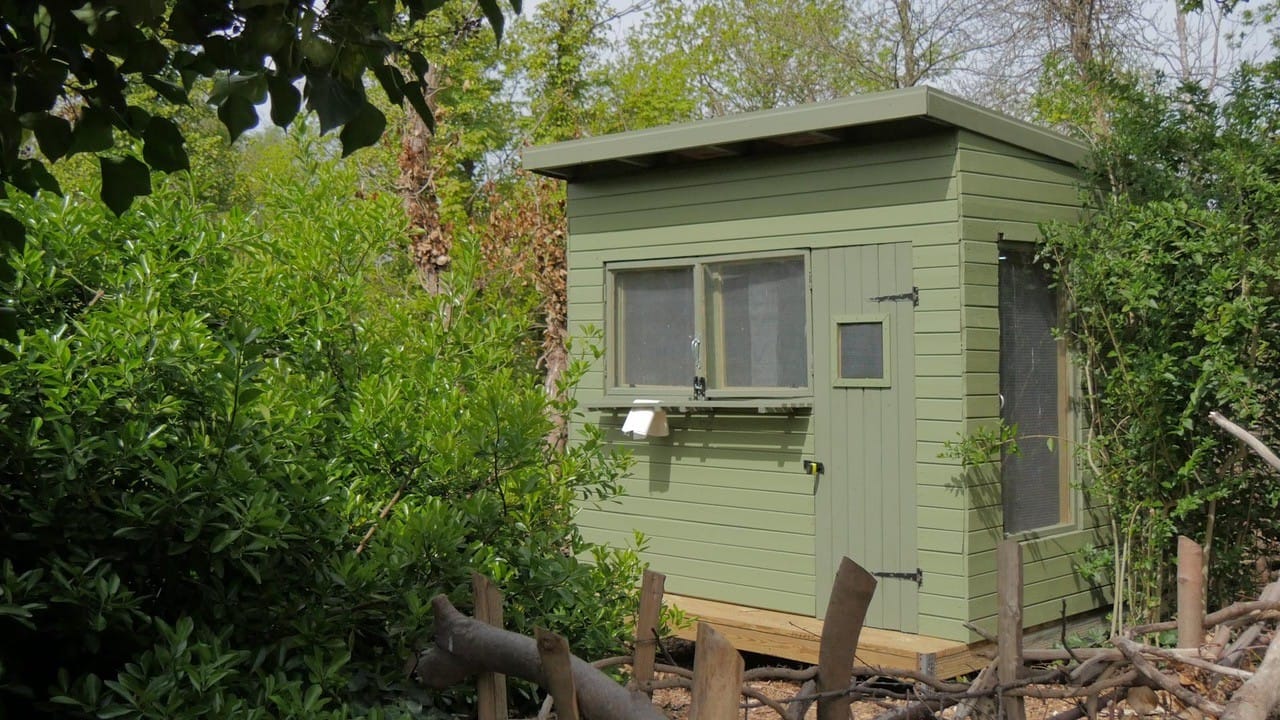
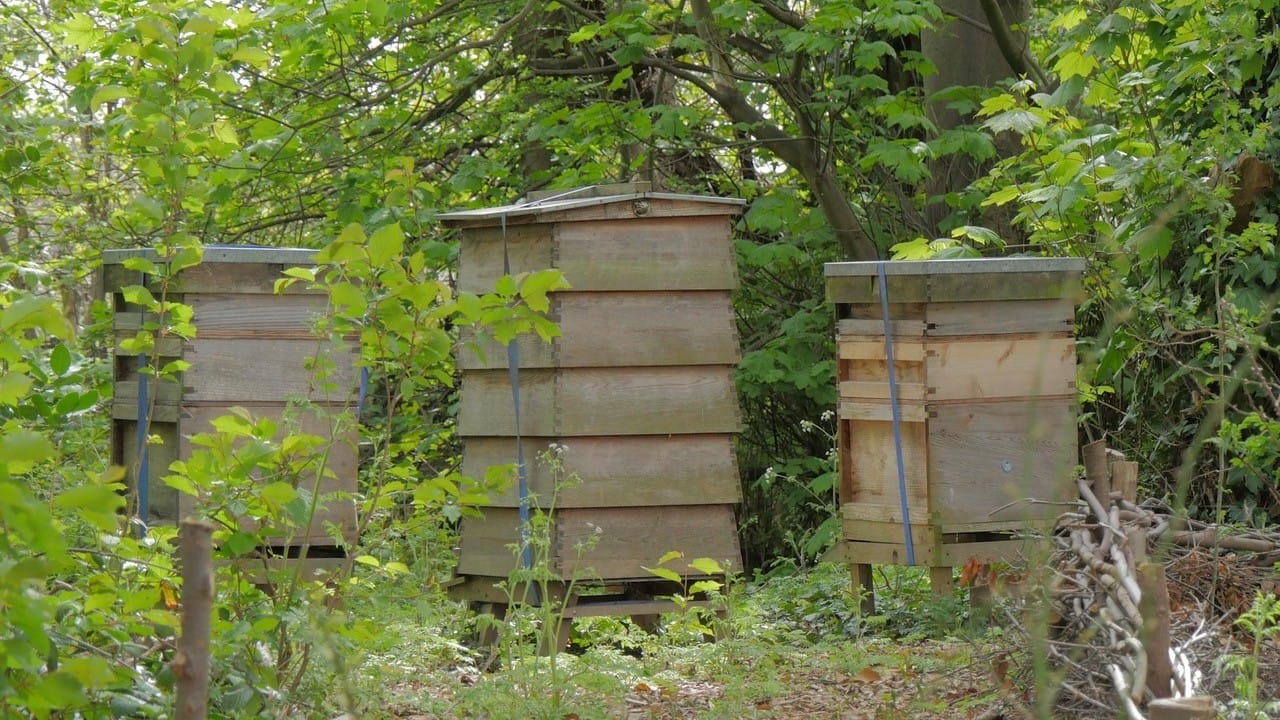
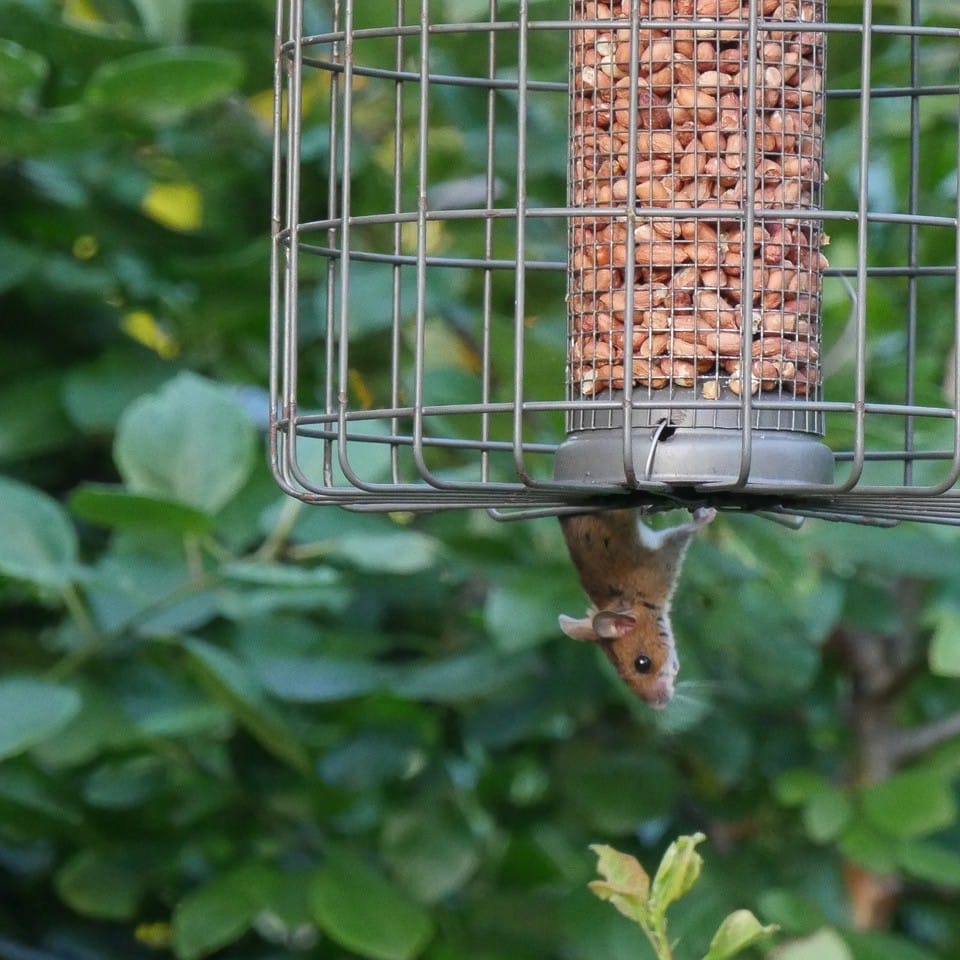
A hut at the reserve, bee hives and dormouse hanging from peanut bird feeder. Images: Daniel Saunders
A sea of reeds surrounds the hacking box, which was thought to be a legacy of the former Croydon Canal. However, this theory was revised when volunteers discovered unusual clay rocks with white lines running through them. Photos were sent to the London Geological Partnership which identified them as "septarian nodules" - rocks formed from ancient marine clay beds.
Beyond the reed beds is a plum orchard created by the Brockley Garden Society in early 1900s which also included local allotments.
“The trees were bending over at 45-degree angles to find sunlight as they were covered in ivy,” Anna-Maria explains.
Following guidance from the Orchard Project Survey, volunteers cleared the ivy and conducted extensive pruning. The 40 plus trees are thriving with last year’s harvest generous enough to make 100 jars of jam.
Wildflower seeding created a meadow and helped deliver a ‘mosaic’ habitat of reeds, plum trees, grasses, wildflowers and ponds.
As we make our way back down the hill towards the railway track, there’s a clearing with a large octagonal raised wooden platform with green parachute roof.
Nick MacGuinness, Anna-Maria's husband and co-founder of the charity, designed the Raven’s Nest. It was built by volunteers who offered carpentry skills, during the Covid pandemic in 2021.
Nearby is a tall wooden column with a raven on the top, which has been used as a maypole for dancing.
When I visited, volunteers were busy clearing undergrowth under the direction of Tommy Radclyffe-Thomas, the chair of trustees who also manages the charity’s finances.
Groups have been sent to the nature reserve under social prescribing initiatives and refugee groups have met there for bird watching.
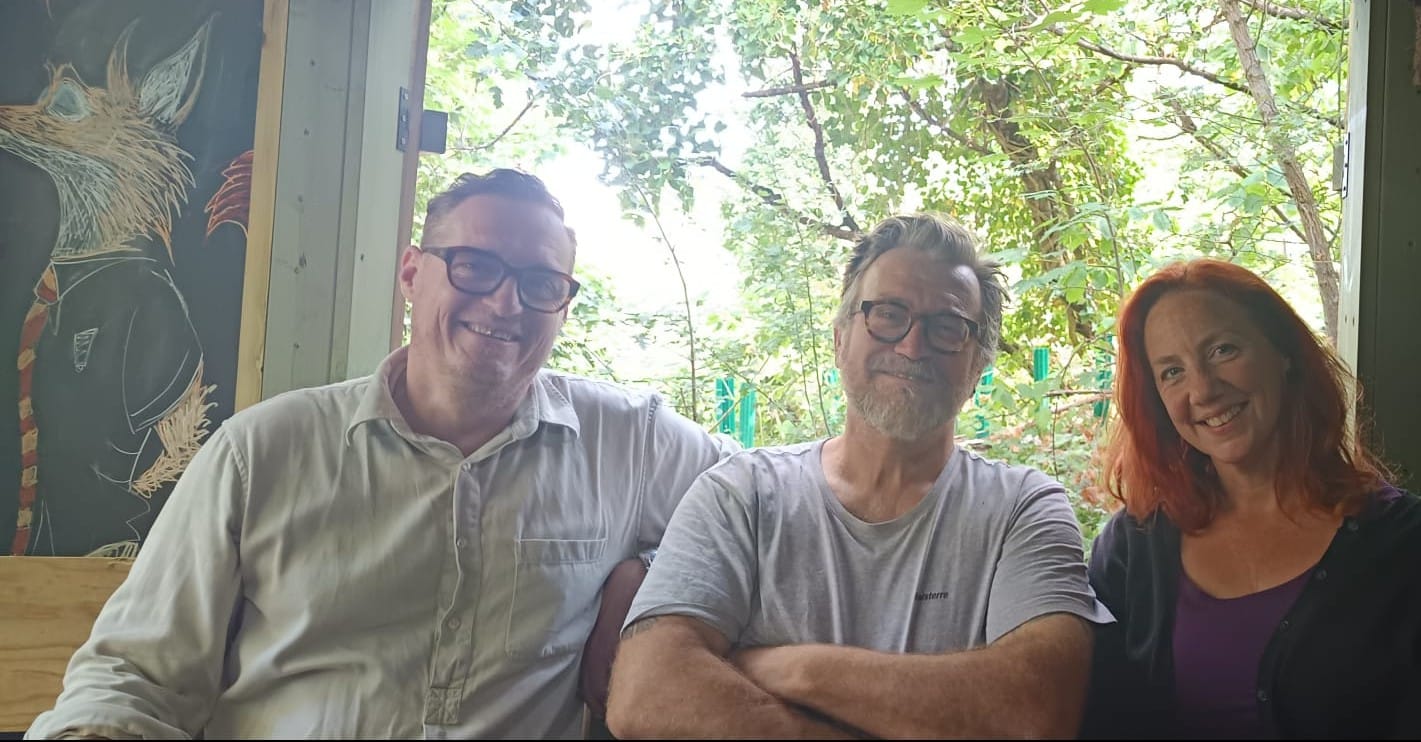
We stop for a break at the Mare’s Tail - a wooden cabin where volunteers are treated to tea and biscuits after a hard morning’s work. The hut has open windows with charming chalk drawn illustrations of a fox and a toad.
The reserve hosts after-school clubs four days a week, collecting children from Turnham Academy, John Stainer Community School and Prendergast Ladywell primary school for nature themed sessions. These can include bug hunts, and learning about birds and endangered species.
Anna-Maria says that school visits are only possible during the spring and summer because the reserve doesn’t have an all-weather building.
Plans to buy Gorne Wood
The charity wants to acquire the neighbouring three acres of ancient woodland, Gorne Wood. The wood lies behind the old scout hut at 8A Courtrai Road, covering the area north to Eddystone Road, where Buckthorne nature reserve begins.
Fourth Reserve's crowdfunding campaign launched in 2021 and raised around £130,000 from local residents to buy the bramble infested site, which has stood neglected for two decades.
If the charity manage to buy Gorne Wood, they plan to develop an eco building on the site of the dilapidated scout hut. They are waiting for new legislation, the English devolution and community empowerment act, to come into force.
“Once this happens the owner would not be able to sell it on the open market or inflate the value which is the current risk,” says Anna-Maria.
In the meantime, the future of the wood is in the balance. The current owner, Anwar Ansari of AA Homes and Housing, has twice tried to sell it at auction.
The developer and landlord has a vast property empire across London. But Inside Croydon reports that many of his companies are now in financial difficulty, and that the receiver has been called in to at least six of them.
The company had advertised the Gorne Wood site for sale on 24 July 2026, but then withdrew it from sale in early August.
AA Homes and Housing did not respond to a request for comment.
Corin Ashwell, Lewisham council cabinet member for Environment, Nature, Transport and Climate Action said:
“Lewisham Council has consistently supported the protection of this privately owned woodland. It has been designated as Metropolitan Open Land, which provides the same strict legal protection against development as a Green Belt designation; and we have accepted a nomination to list it as an Asset of Community Value (ACV).
“This places certain obligations on the owner if they intend to sell, including statutory moratorium periods that give community interest groups the opportunity to prepare a bid for the property.
“As the property has been withdrawn from sale, there is no moratorium currently in effect.”
Anna-Maria said: “We are committed to buying Gorne Wood so that we can offer a space where kids can connect to nature. It would enable us to be open a lot more to the public too.”
Buckthorne Reserve is at Eddystone Footbridge, Eddystone Road SE4 2DE. Next open day is 27 September, 12 - 4pm including poetry, story telling and art by local artists with a nature theme.
Sign-up for our free weekly newsletter - Salamander News in your inbox