'Driverless cars don't see disabled people as people' - campaigners raise safety and access concerns
Driverless taxi trials have been approved in London, but disabled people are raising concerns about safety and accessibility and say the tech is a diversion from the greater need to make public transport accessible.
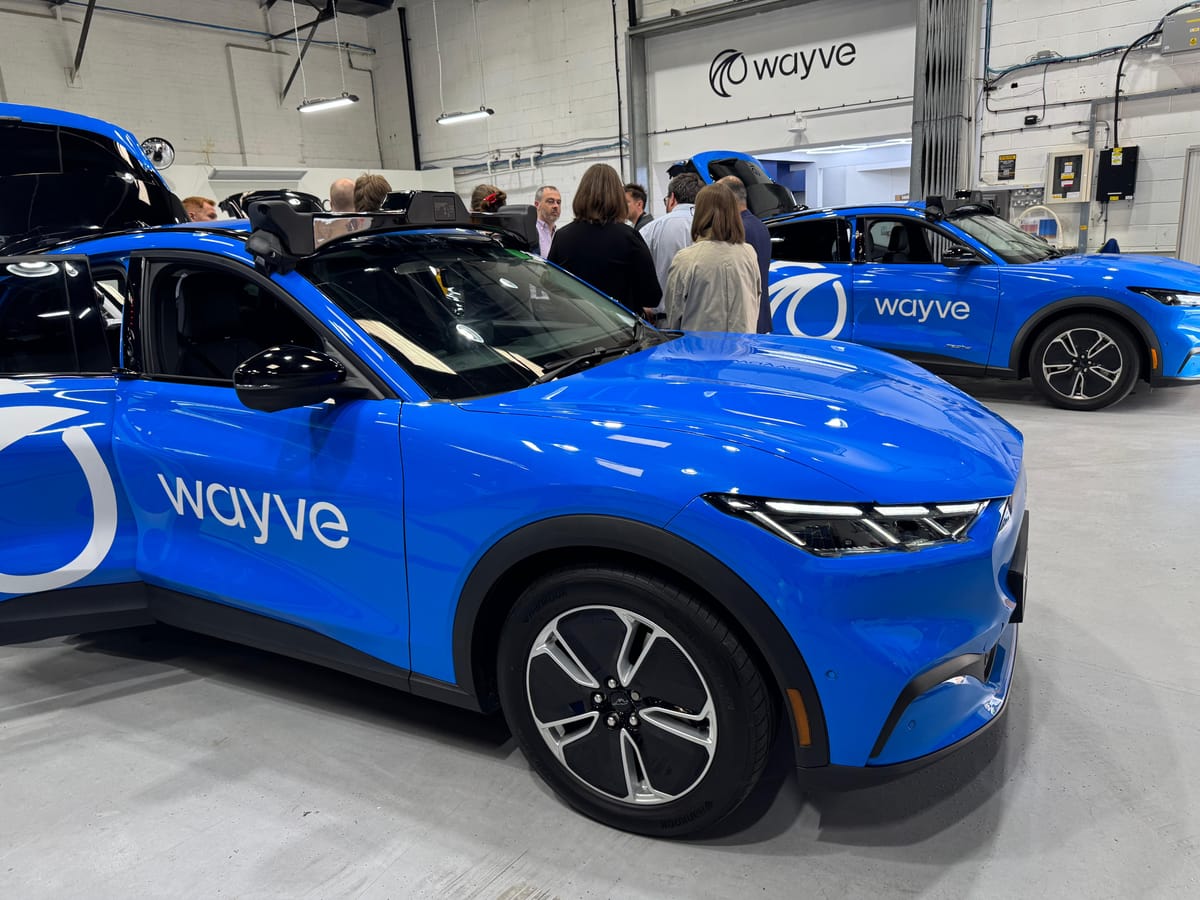
Tech firms are using disabled people to promote driverless cars, but disability researchers and campaigners are raising safety concerns over the vehicles' ability to recognise disabled people outside the car, and accessibility for passengers getting in and out of them.
Uber launched 15 autonomous vehicles across London on 3 September, available to book on the Uber app.
They are still being trialled with a safety driver in the front seat in case human intervention is needed.
Campaigners say that the debate is being used as a diversion from the continuing lack of investment in accessible public transport and lifts.
Joseph Wilk, an artist and programmer whose works focuses on disability and digital technology, raised concerns over autonomous vehicle recognition technology when it comes to disabled pedestrians.
“The fact that driverless cars don't see disabled people as people - wheelchairs are often mis-categorised as bikes - reflects the wider values of companies developing these technologies," Wilk said.
He has also found that there is not enough consideration as to how disabled passengers can access the vehicles.
“I've been to driverless research labs in Bristol and was surprised how little thought they have put into considering how a wheelchair might get into the vehicle,” he said.
This was also a concern raised by Rensa Gaunt, from disabled rights organisation, Inclusion London.
“Many disabled people rely on assistance from drivers, whether that be to safely find the taxi, carry luggage or use a wheelchair ramp," Gaunt said.
"On trains, it has already become harder and harder to get assistance, as operators have removed staff to cut costs. We don’t want assistance to disappear from taxis in the same way.”
Rua-Mae Williams is Assistant Professor at Purdue University, Indiana whose works focus on technologies and disability. They pointed out that advancements were often reported as benefits for the disabled community, while the real improvements needed to make transport accessible were ignored.
“Driverless and automated vehicles have been purported as a solution to disability issues for a long time.
"This idea that they improve transportation access for people with disabilities is very frustrating because in some ways it is true, but it's true because we've made other choices that are wrong.
“Technically, this is a solution to a problem, but the real problem is accessible public transit.”
This is a thought shared by Wilk: “Driverless cars would be less of an issue if we had a really accessible public transport system.
"But we don't, which means taxis are a core part of trying to move around London when the buses fail.”
However, Williams discussed the fact that some disabled people may still need to use taxis even with more efficient public transport systems because of the "last-mile problem". That is the first or final part of a journey where one has to get from point A to public transport.
They said there have been some problems with taxis with drivers, that means that they aren't always accessible for disabled people. “I've seen people be turned away just for having the chair at all. Even if they can fold their own chair and transfer themselves.”
This is an ongoing issue that Gaunt also raised. “Some disabled passengers face discrimination from taxi drivers, for example drivers who wrongfully refuse to transport guide dogs, leaving us stranded.
"Driverless taxis remove that risk, and that is an exciting prospect.”
But Williams had concerns about whether systems would be in place that would guarantee a driverless taxi would accept a guide dog, and that would ensure that vehicles were accessible for those in wheelchairs or with other mobility problems to use.
They also raised concerns over how self-driving cars could recognise wheelchairs on the roads.
Williams said that advancements in this kind of technology often highlighted the benefits for disabled people, but failed to properly consider them. “I call it in my book, the disability diversion. Anytime that you try to critique a system like this, they appeal to this idea that it will save disabled people.
“Usually the argument that we [the disabled community] are making is that we should be solving it in a different way, in a more societal way.”
This was also echoed by Wilk who said: “I wish we had more governmental regulation that mandated accessibility, since big tech companies have repeatedly shown themselves only interested in disabled people as inspiration-porn to sell more things.”
Companies developing and planning on using the technology report stories of the benefits of these taxis for people with disabilities, including those who are blind or partially sighted.
Salamander is a readers' and workers' co-op. Join and support us or leave a tip.
Two firms Uber and Wayve were the first to be granted private hire licenses by Transport for London (TfL) in early August. But initially they must have a human "safety driver" in the driver's seat.
The firms report that more than 100,000 people have signed up for rides in the autonomous vehicles.
Some operators had hoped to launch commercial services by the end of the year, but the rollout of the vehicles across London is likely to be delayed.
TfL has not yet published the official guidance that companies must follow, which is part of the process for firms to be awarded the new type of permit.
TfL has emphasized that any vehicle with a license to carry passengers must align with the London mayor's Vision Zero target, to eliminate all deaths or serious injuries on London's road network by 2041.
The Greater London Authority (GLA) transport committee has been investigating the proposed rollout of driverless vehicles for some months. They have raised questions over which firms will be allowed to operate and the practical implications of the vehicles operating.
Chair of the transport committee, Caroline Russell AM said: “The London Assembly Transport Committee has conducted an in-depth investigation into Autonomous Passenger Vehicles (APVs) and their proposed introduction on the streets of London.
"Our investigation has shown there are some outstanding questions on accessibility in terms of lack of wheelchair accessible cars, the lack of a driver to help older people or people with sight loss in and out of the car and to provide simple advice about which way to head on exit.
"Many older people don’t use smart phones and prefer to book over the phone, so it is crucial that any passenger service is fully inclusive.
“Transport for London (TfL) has not yet provided guidelines for what they expect operators to do to gain consent for autonomous operation. That delay is a sign that TfL is taking its time to get this right.
"The London Assembly Transport Committee report, which is due to be published in the next few weeks, will provide TfL with some useful recommendations for inclusion in the guidance.”
This article was updated on 3 September 2026 at 17:27 to include reference to the launch of Uber trialling self-driving vehicles in London.
Sign-up for our free weekly newsletter - Salamander News in your inbox