'Yes this is climate change, yes it’s us, no it’s not El Niño ..'
The UK issued its second ever red heat-health alert as records for extreme heat have been broken in London and cities across Europe.
"Yes this is climate change, yes it’s us, no it’s not El Nino, yes we have the solutions, no we’re not implementing them fast enough," says Friederike Otto, Professor of Climate Science at Imperial College London.
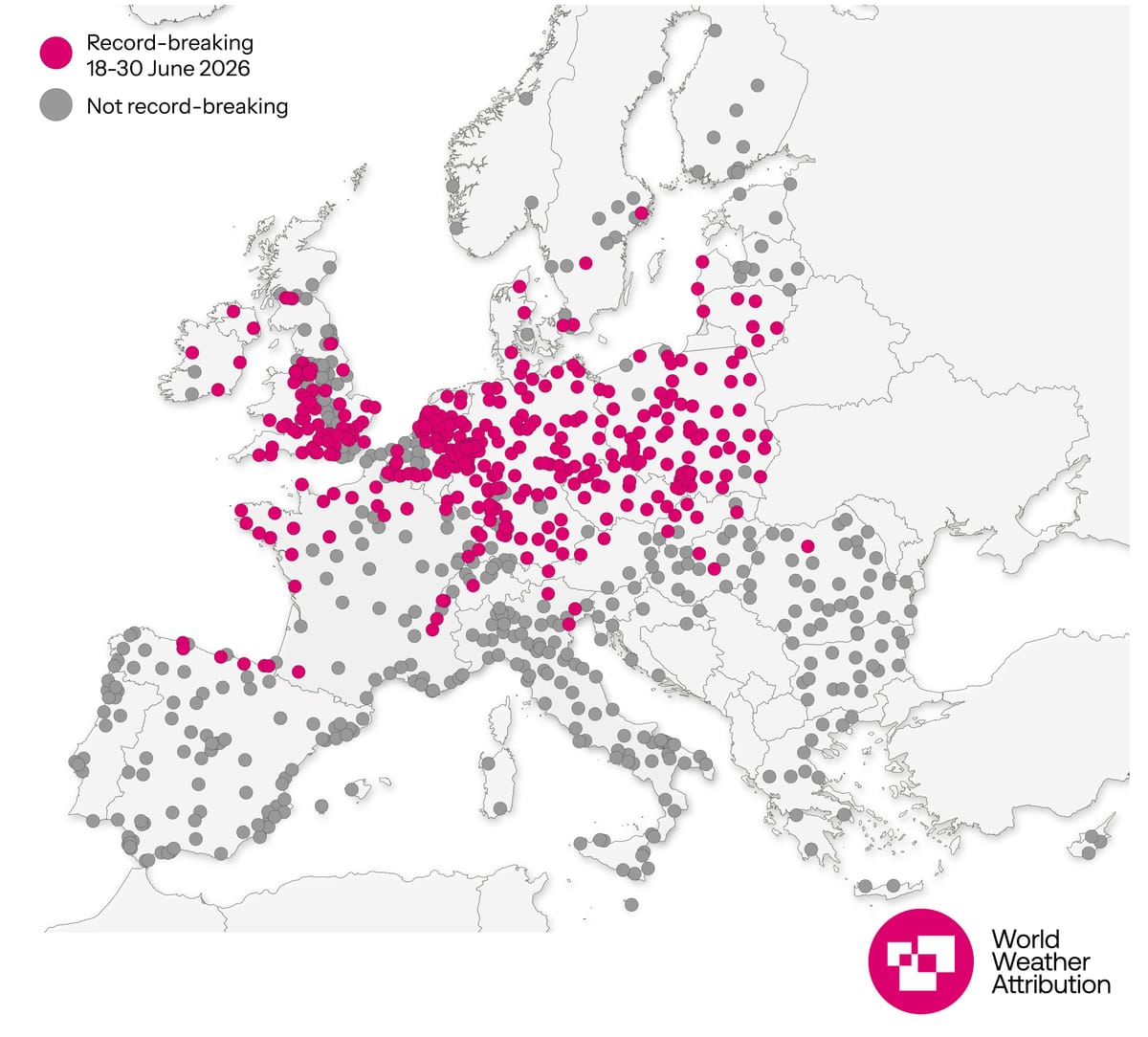
The World Weather Attribution project have released their analysis of our second heatwave this year, which has happened earlier than ever.
Extreme heat records have been broken in the UK, France, The Netherlands, Germany and across western Europe, and the scientists say that this heatwave is the most severe ever recorded in the region.
Climate change has caused the extreme temperatures. “The science of how climate change is worsening heatwaves is settled," says Dr Theodore Keeping, Extreme Weather Researcher at Imperial College London.
"Continued fossil-fuel emissions are directly responsible for the disruption people are experiencing this week in their homes, schools and workplaces.
"The speed of change is startling."
The scientists have charted Wet Bulb Globe Temperature (WBGT) in cities across Europe. WBGT is a measure of heat stress and the body's ability to cool itself through sweating.
The combination of heat and humidity creates conditions that are dangerous to health.
The extreme temperatures can also have profound effects on wildlife and ecosystems - Belgian wildlife rescue centres have reported a sharp rise in heat stressed animals, particularly young birds.
Some French nuclear power stations have had to shut down reactors or reduce output, as the temperature of the rivers used for cooling has reached a threshold which endangers local ecosystems.
Who is most vulnerable?
The research confirms that heat risk is worst in cities, due to the urban heat island effect, aging building stock and deprivation.
Older people aged 65 and over, people with chronic illness and pregnant people face particular risks to health, while inequality plays a huge role.
In particular, people in poor or overcrowded housing or with a single aspect (window on one side only) will struggle to cool their homes, and homeless people and migrants are even more vulnerable.
London's aging homes, schools, transport systems and energy infrastructure were not designed for prolonged extreme heat.
Impacts in Lewisham and the capital
Some Lewisham schools have been operating part-time hours while others are shut altogether.
In some cases, parents have clubbed together to buy fans for classrooms, and there has been a knock on effect of closed schools or shorter hours on parents' ability to work.
Underground services have been affected by the heat. There is a reduction in service of the Windrush Line, with many trains cancelled and others delayed.
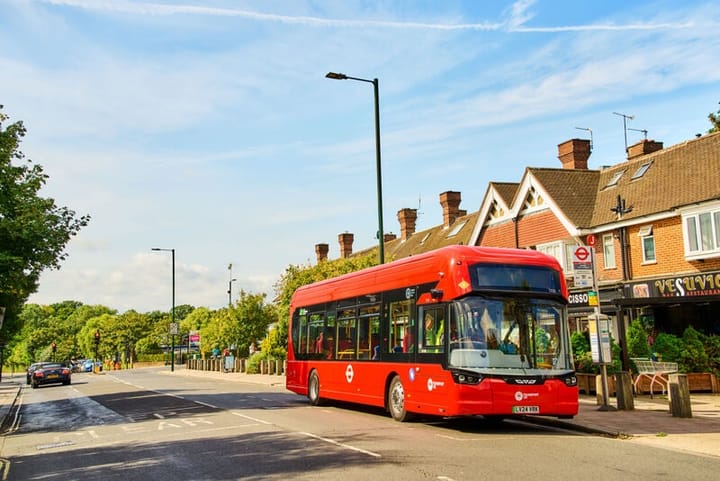
Unite called for bus firms to protect drivers from extreme temperatures, pointing out that due to the glass windows, driver cabs become even hotter than it is outside.
They point out that everyone has a legal right to stop work if they become too hot.
Some events in London Climate Action Week were cancelled due to the heat, even including a session on Extreme Heat: Improving governance and strengthening action around the world - which was due to be held at LSE.
Lewisham council's Climate Connections event, due to be held in the Blue Garage on 24 June was also cancelled.
Lewisham council issued its advice to residents on social media, but seemed to be speaking from different era.
The sparse instructions 'What you can do at home' (including plant trees or shrubs) may be ringing hollow to most residents, and particularly renters who are stretched to the limit.
Unfortunately, these "small actions" are inadequate to cool most homes.
The London mayor's newly launched Extreme Heat Plan highlights the need for extensive retrofit for cooling.
However, it notes the challenges to funding this, and the gap between the action required and finance available.
"Although the benefits of heat adaptation (such as better health and reduced transport disruptions) are valuable to society, they do not always translate into clear financial savings or returns."
Professor Otto sounds a note of desperation: “Scientists like me are beginning to sound like a broken record. We put out similar quotes year after year reacting to heat extremes that climb ever higher ..
“It’s really now a question of what kind of future we want for ourselves, and whether we’re willing to do what it takes to secure it.”
Updated 26/6/26 11:15 to include link to Lewisham advice and reference to Extreme Heat Plan.
Salamander News is the only local news outlet in the UK which is part of global journalism collaboration Covering Climate Now.
Join the co-op, support our work from £2 per month