River protectors fear impacts as Lewisham hospital heat pump project awaits go-ahead
Test results due this week will determine whether the huge project is technically viable. But campaigners are raising concerns about the impact of the system on rivers and waters that are already under "immense stress".
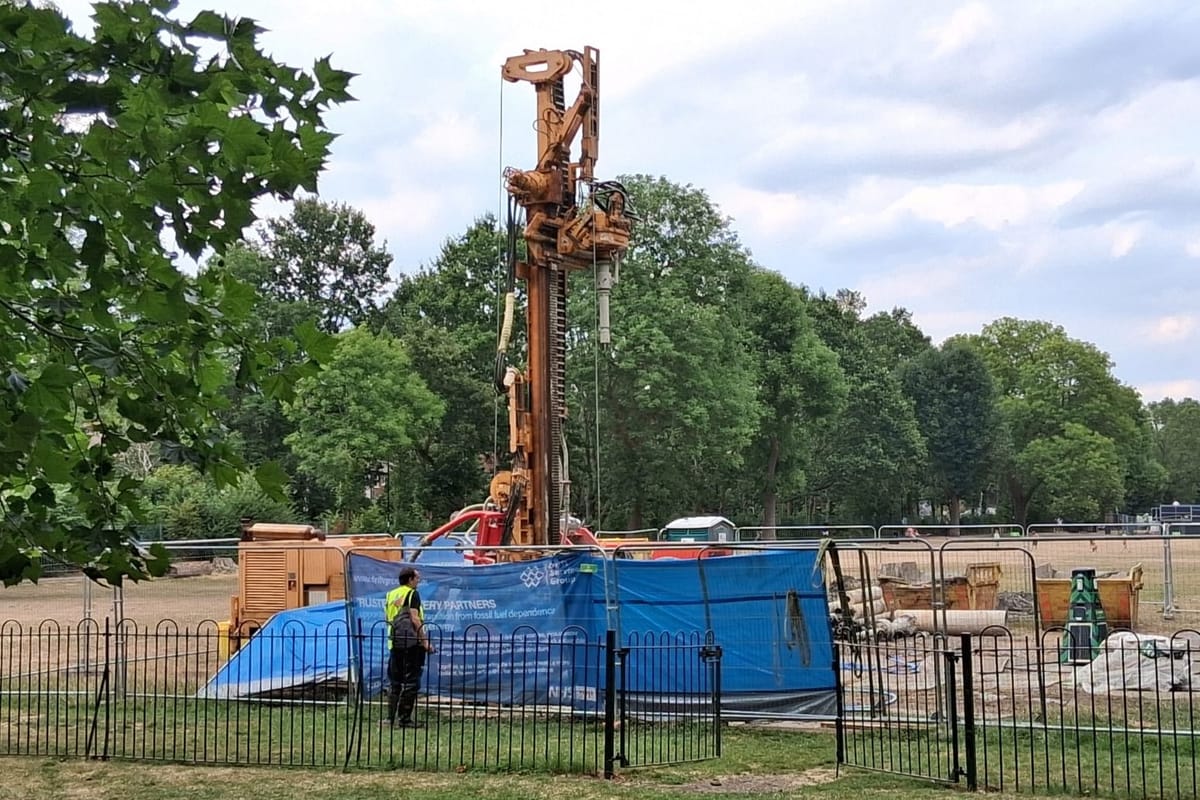
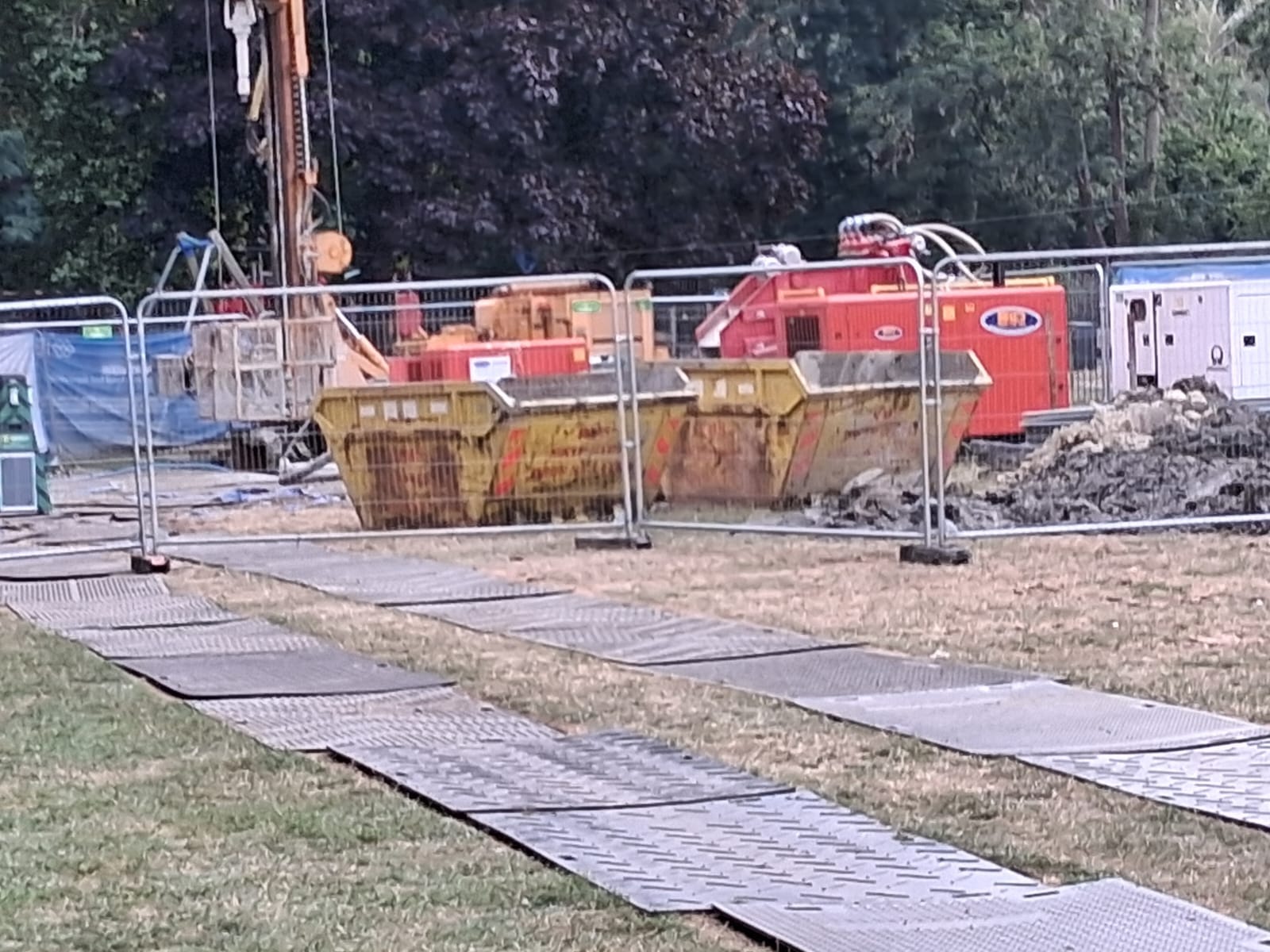
Visitors to Ladywell Fields can see construction work going on in two fenced-off areas, where contractors have been drilling boreholes into the north field.
The boreholes are part of the test phase for Lewisham hospital's project to install an open loop ground source heat pump, which they hope will provide low-carbon heating for the hospital.
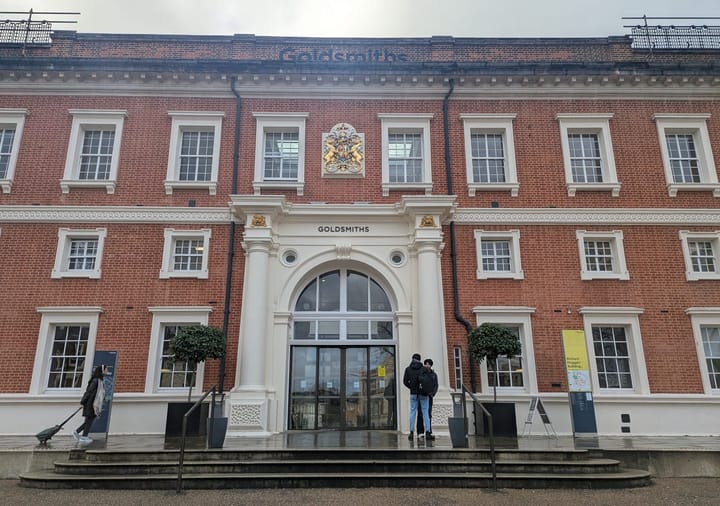
Lewisham and Greenwich NHS Trust have been awarded nearly £18m from the Department of Energy Security and Net Zero (DESNZ) for the £25m project, to install the heat pump system under Ladywell Fields.
The heat pump will draw on water from the chalk aquifer under the park.
Update on the test phase
The test phase is being carried out under an Environment Agency permit, which allows the discharge of water from the drilling process into the River Ravensbourne.
The river is already under stress due to the summer's back to back heatwaves, caused by global warming, which are reducing water levels and warming the water.
Thames Water and the Environment Agency have been investigating the pollution incident which caused mass death of eels and fish in the River Pool upstream.
The trust's contractors have drilled two pairs of boreholes - a 90m borehole which reaches into the aquifer and a 10m monitoring borehole.
The trust told Salamander that after initial drilling, the boreholes had to be flushed to clean out sediment before testing and pumping.
Water has been taken from the Ravensbourne to do this. This is not mentioned in the Environment Agency permit and it is not known how much water was taken out.
Waste water is then piped into the Ravensbourne, which last week led to issues of chalk sediment being discharged into the river.
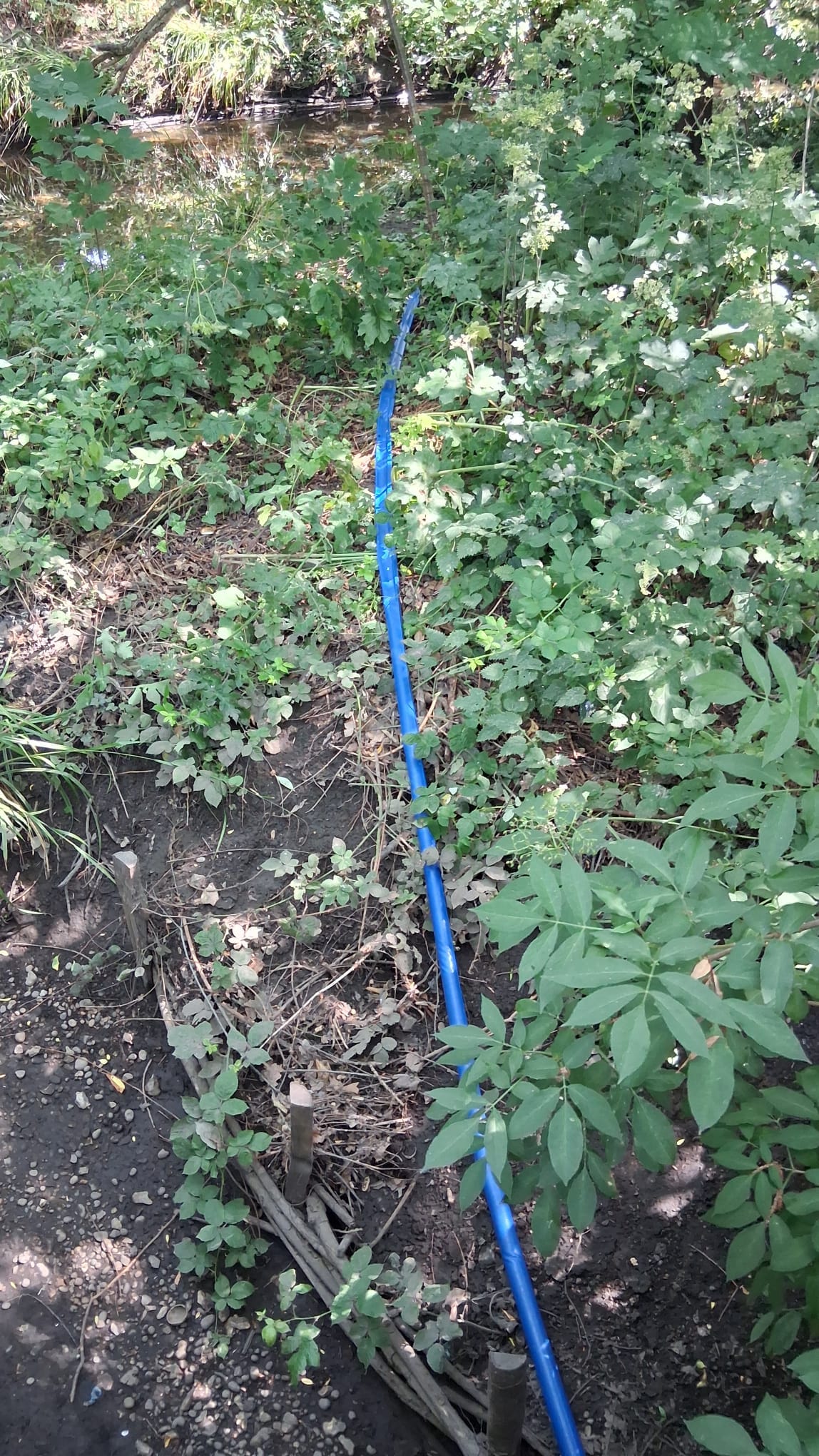
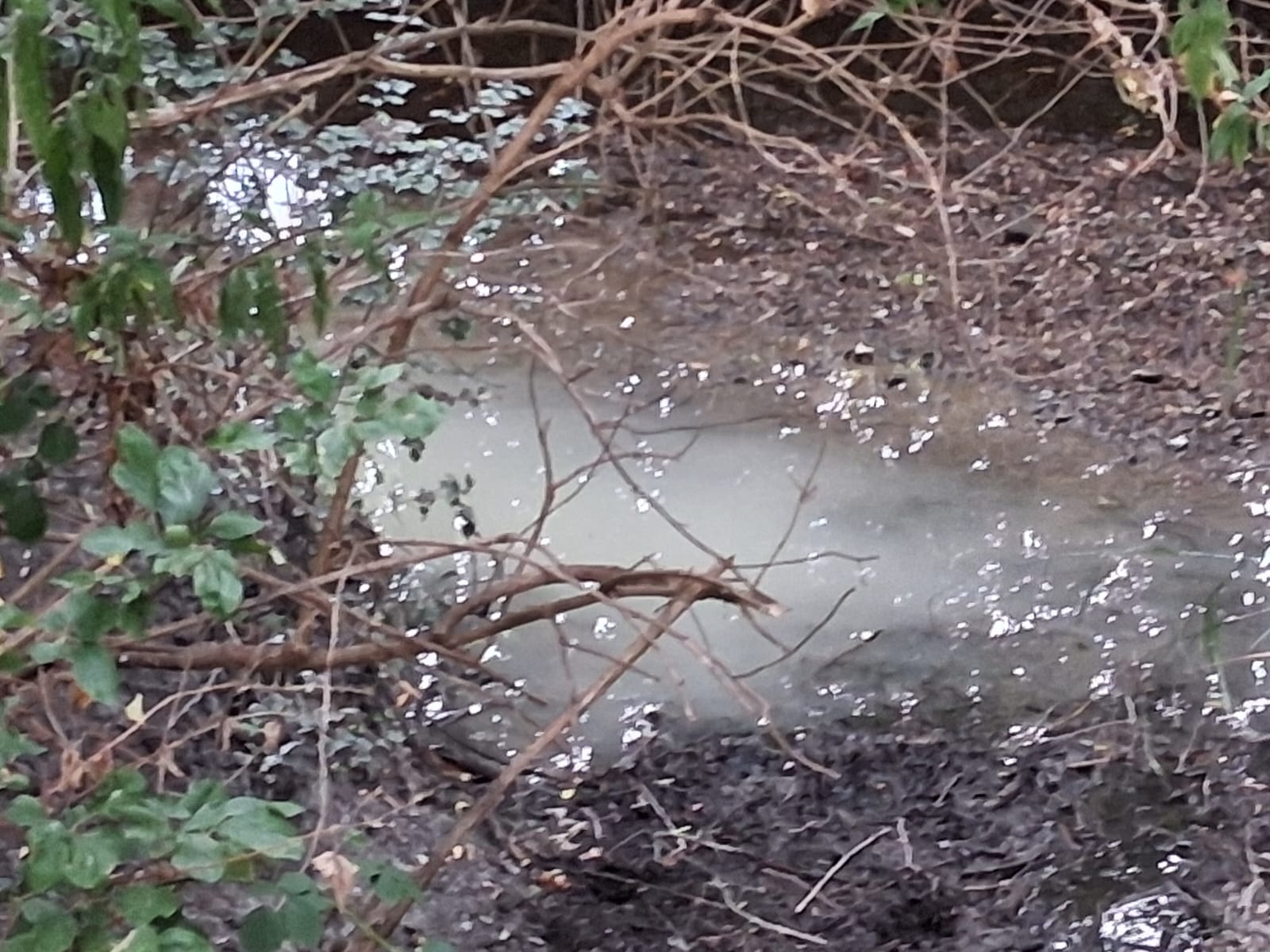
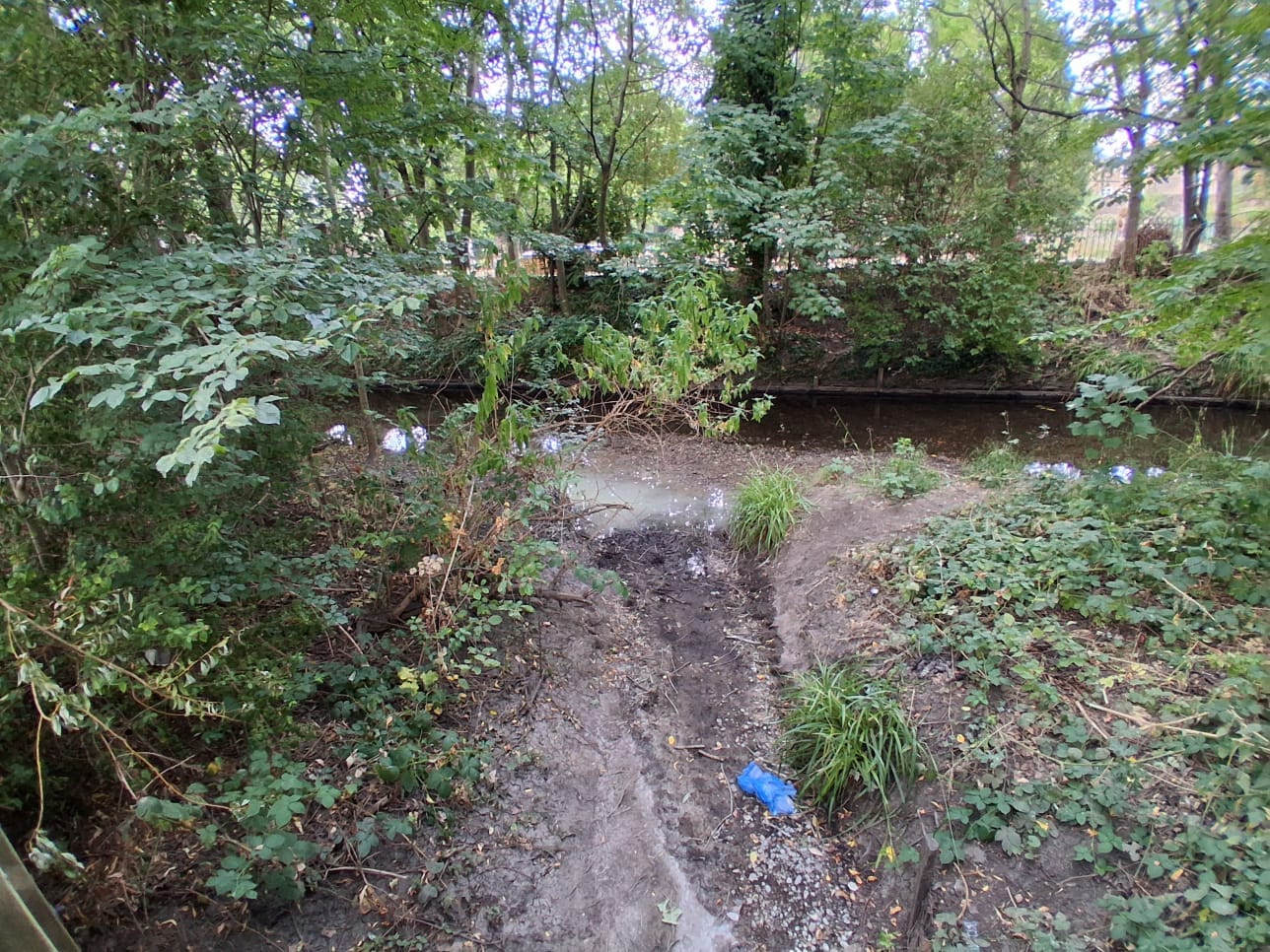
The blue pipe taking waste water to the Ravensbourne, chalk sediment in the water. Images: Mark Morris
The trust confirmed that it has taken measures to prevent this happening again, including running the waste water through settlement tanks before discharging it.
They have also requested more monitoring and been assured that an individual will be assigned to monitor discharge of water into the river.
If the project goes ahead, six more pairs of boreholes will be drilled in the north field, plus an additional borehole for monitoring only, and a 1m trench for pipes and power cables between the boreholes and the new plant room.
What are the success criteria for the test phase?
The borehole at the northern end of the field has been drilled and lined, and will form the trial injection well.
The borehole at the southern end of the field will be the trial abstraction well. The two boreholes will be linked for a short period, to test that the trust can extract the yield of water that it needs.
The testing aims to show that the system could pump at a sufficient flow rate from four boreholes, to extract enough heat to make the project viable.
Tests also aim to show that the system would not have any negative impact on the aquifer in terms of water levels and temperature.
The test period will be short, and it is unclear how the results can be used to forecast long term changes to water levels and water temperature, but Salamander was assured that the results would support this modelling.
The trust expect to have an understanding of the test results by the end of July.
How it works - cooling (or warming) the aquifer
The final project will pump water out of the aquifer from four boreholes in the south end of the north field, near the children's playground.
The water is then piped to a new plant room on the hospital grounds, where heat is extracted using heat pumps. Water is then piped back to a different set of boreholes at the north end of the field.
If used for heating, the water returned to the aquifer will be colder than the rest of the aquifer.
However, as summer temperatures rise, driven by the climate crisis, and chances of extreme heat increase, the hospital is under pressure to upgrade its cooling systems.
The heat pump system could be adapted, at unknown cost, to provide cooling and the trust has told us that it is considering this as a future option.
In this case, the heat exchangers in the plant room are reversed and the water returned to the aquifer will be warmer.
Since 2023, the Environment Agency has recognised heat as a pollutant in groundwater, suggesting that the cooling option might not meet regulations.
Are open-loop systems higher risk?
All kinds of heat pump - air source, closed loop and open loop and variants or hybrids of these - would be a huge improvement on the trust's 1970s gas boilers, offering cheaper running costs and carbon reductions.
But we also know that there can be other drivers behind national infrastructure decarbonisation projects.
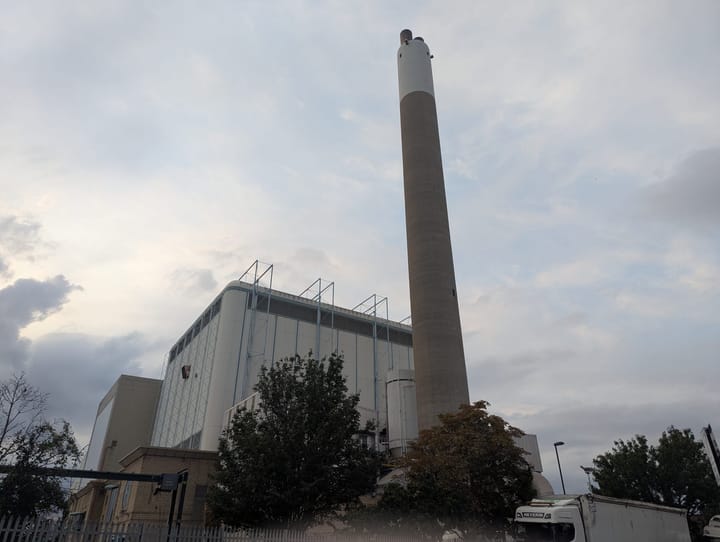
DESNZ funding is being used to fund Carbon Capture and Storage (CCS) on Cory's household waste incinerators at Bexley, destroying a nature reserve. CCS is widely considered a failed technology, while the justification for the two incinerators was widely contested.
A review from the Environment Agency in 2024 found that installation of open-loop ground source heat pumps had fallen massively behind forecast. Less than one in every 100 ground source heat pumps that were installed were open loop.
A 2026 review of heat pump research papers found that "closed loop systems are more widely adopted [than open loop] because they are more reliable, easier to maintain and suitable for a broader range of geological conditions".
The trust have advised us that the reasons for their choice of technology cannot be shared with the public.
'Our rivers and waters are already under immense stress'
One of the concerns with the open loop choice is that long term impacts on the aquifer could cause permanent damage to the already fragile ecology across the park, to the Ravensbourne and potentially more widely.
The trust press release at end of May said that surveys had been performed assessing groundwater, arboriculture and ecology and we asked to see these.
The arboriculture survey, assessing impact on tree roots, has led to a relocation of the planned extraction boreholes, which have been moved to be next to the playpark.
(However, this has led to the abstraction boreholes being moved closer to the injection boreholes, which can lead to lower system efficiency.)
We found that the ecological survey was a preliminary list of the species found in the park, and only considered the impact of the 10-week test phase.
It does not consider the impact of the full project or possible long term impacts eg from changes to groundwater, the river, soils, plant life and the ecosystems that support the listed species.
One of the known risks of open loop systems is that they can change the groundwater temperature (a thermal plume). This makes the heat pump less efficient and will also have environmental impacts.
We have not been allowed to see the hydrogeological survey, which we are told is commercially confidential.
Chair of local river action group, Quaggy Waterways Action Group (QWAG), Paul de Zylva, said:
"We're all for action on climate change and to switch to clean energy.
"It's not clear how the hospital pumping the aquifer for water will add to the immense stress our rivers and waters are already under with low flow, pollution and weather extremes.
"Can it can be done without undermining the aquifer's ability to function? That and the effects on the river are the acid tests."
QWAG are raising questions about the project.
Lewisham council support for the project
Lewisham council owns the park on behalf of the public. A spokesperson told us that although the council has been involved with the project since 2024 and sits on the project board, it would not be doing any work to assess the risks to the park and its ecosystems "responsibility for risk assessments sits with the Trust as project sponsor".
In December Louise Krupski, then cabinet member for environment, transport and climate action expressed support for the project and seemed to suggest it offered an example for the council to follow:
"As a project it sits very well alongside Lewisham Council’s own efforts to improve its housing stock with significant investment from the government’s Social Housing Decarbonisation Fund."
If the testing is successful, the project will move into design stage, assess the results and costs to the trust, and request approval from the board.
At this stage, a planning application will be submitted to Lewisham council, with those of the accompanying documents which the public is permitted to see.