Call to pause London City Airport expansion to assess noise impacts
Leonie Cooper, who chaired the London Assembly Environment Committee last year, said the airport expansion would be damaging to communities under the flight path.
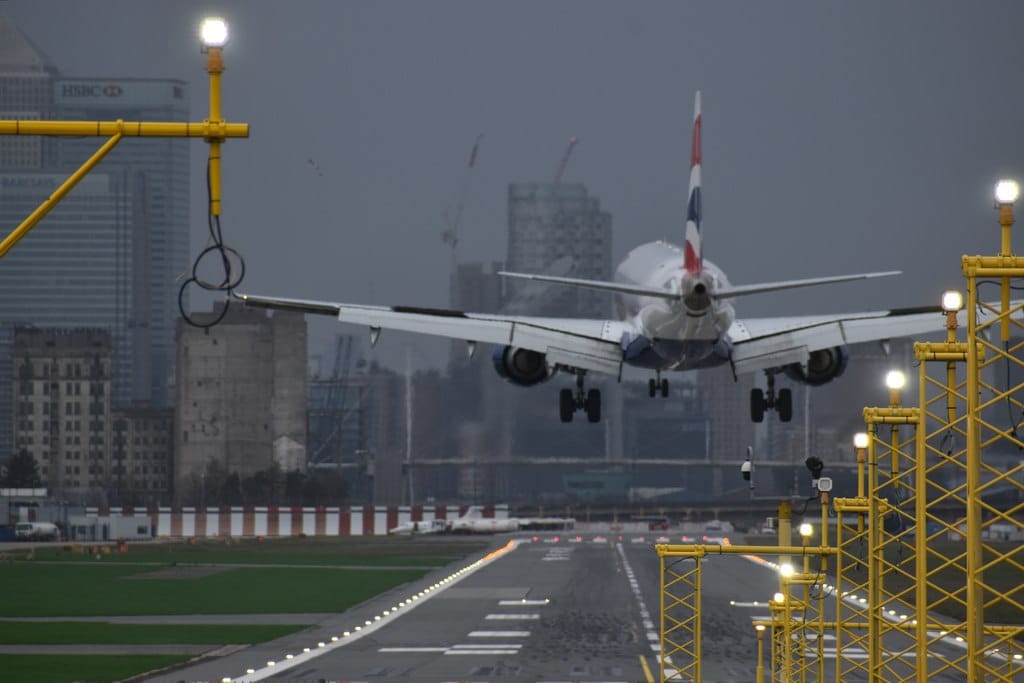
London City Airport’s expansion should be paused until “robust, independent real-world assessments” are undertaken to see how local communities will be affected, a London Assembly Member has said.
The airport appealed after its plans to extend increase capacity from 6.5 million to 9 million passengers were rejected by Newham council in July 2023, reported in The Greenwich Wire.
Boroughs under the flight paths, including Lewisham, along with the Mayor of London and environmental groups opposed the plans, which had over 1600 resident objections.
Within a month of the general election in 2024, Angela Rayner, then deputy prime minister, accepted the airport's appeal and pushed through the expansion plans.
Ministers acceded to the airport's demand for more early morning flights, but said that the existing curfew between Saturday afternoons and Sunday mornings should continue.
Leonie Cooper, who chaired the London Assembly Environment Committee last year, has now written to the airport’s CEO Andy Cliffe to lay out her cross-party group’s concerns around the expansion.
They centre around the impact of aviation noise on Londoners due to the larger planes set to come into operation as part of the airport’s plans, and a perceived increase in the overall number of flights accentuating this.
However, airport officials hit back, suggesting that having aircraft with larger capacity would actually reduce the number of flights taking off and landing at the east London hub.
Cooper also raised concerns that City Airport had not accepted any invitations to be questioned by London Assembly Members over the expansion in recent years.
In a letter to Cliffe, she wrote: “Our response is centred on long-held concerns around the impact of aviation noise on Londoners.
“An evidence review by Aviation Environment Federation (AEF) suggests that there are likely to be mixed impacts on different locations with some potentially experiencing higher levels of disturbance.”
The airport currently operates a steeper than standard glide angle of 5.5 degrees due to the airport’s proximity to tall buildings and to provide noise mitigation for the heavily residential local area, according to the AEF.
London City has applied to the Civil Aviation Authority to permit a shallower approach for the A320neo, with the decision expected in autumn this year. Airport officials claim the changes will, overall, reduce the noise footprint of the airport.
But the AEF review also called for a “real-world trial” and “full comparison” between the new, larger A320neo aircraft and all new generation models currently operating at the airport – not only the E190, as outlined in proposals – to test noise levels.
They claim that a review of published data shows that the A320neo is louder than other new generation aircraft flying in and out of the airport, such as the Airbus A220, Embraer 190 E2 and Embraer 195 E2.
“The margins of difference vary significantly between aircraft variants and noise measurement points, and in some cases the benefit of the A320neo is very slim,” the AEF said.
“AEF proposes that real-world measurements be taken to determine how introducing the A320neo on a shallower glide slope would affect overall noise impact.
"Transparency in the data behind these projections is needed to fully assess whether the proposals will reduce the total adverse impacts on health and quality of life from aviation noise at London City Airport.”
Cooper noted that the proximity of City Hall to the airport means that “the London Assembly itself already experiences noticeable levels of disturbance from planes”.
Should the airport’s proposals be accepted, planes will fly over City Hall more than 90 feet lower than they currently do.
Air pollution affecting communities under the flight paths
In addition to disturbance from noise, aviation creates air pollution which particularly affects communities under the the airport's flight paths in Newham, Greenwich, Lewisham and neighbouring boroughs.
Air quality scientist Dr Pete Knapp told Salamander that if you can see an aeroplane above you, then it is likely that you are being exposed to dangerous ultrafine particle pollution which can enter the brain directly through the nose.
Communities are also being exposed to high levels of particulate matter (PM10 and PM2.5) and nitrogen dioxide from aeroplane jet fuel, which is not required to meet the same standards as petrol and diesel fuels.
In addition, aviation has immense climate impacts which threaten to wipe out London's hard-won emissions reductions from cleaner transport or heating.
Flying generates more CO2 emissions that any other form of transport per mile and is a hugely unequal activity, with an academic study finding that 96% of the world's population do not take an international flight in any single year.
The UK generates more emissions from flying than any other European country and the third highest emissions from aviation in the world.
Sign-up for our free weekly newsletter - Salamander News in your inbox
Two members of the Environment Committee – Reform UK’s Keith Prince and the Conservative Assembly Member Thomas Turrell – chose not to support the letter.
Turrell said he believes City Airport’s proposals are reasonable, and could result in a reduction of noise and disruption to residents. He said he is also conscious of the impact refusing the airport's plans could have on its long-term future.
A London City Airport spokesperson said: “London City Airport is proposing an airspace change which will unlock more destinations and support London’s connectivity and economic growth.
“Larger capacity, new‑generation aircraft will mean fewer flights and less noise disturbance for local communities when compared to not making this change over the coming years. Our priority is to grow our airport and continue to maintain a central role in the regeneration of east London.”
The Department for Transport was contacted for comment. Previously, a government spokesperson said: “We are committed to securing the long-term future of the aviation sector in the UK while protecting our environmental obligations.”
A spokesperson for the Mayor of London said: “The Mayor is clear that changes such as those proposed at London City Airport should only be approved once the environmental impacts have been properly assessed and addressed.
“While the Mayor recognises the economic growth and jobs that aviation brings to London and the wider UK, he has also been clear that the sector needs to take full responsibility for minimising and mitigating its environmental impacts, including on local communities.”
Reporting by Kumail Jaffer, Local Democracy Reporter with additional reporting from Dorothy Stein.
Support local independent journalism from just £2 per month or leave a tip.