Long-term empty homes up by 30% in Bromley
During National Empty Homes week, Barbara Buchanan reports from Bromley where Lib Dem opposition councillors and local campaigners are calling on the council to do more.
The number of homes in Bromley that were empty for two years or more increased last year by just over 30%. The council reported 497 long-term, privately owned empty properties in September 2025 compared with 381 homes in 2024, and 1,720 people in temporary accommodation as of December 2025.
Councillor Chloe-Jane Ross, Leader of Bromley Liberal Democrats, said: “We think the council should take more action on empty homes. They could recruit an officer specifically to deal with it.”
She said her party had asked the Conservative controlled council back in December 2024 what it was doing to tackle nuisance empty homes.
“It was clear that they were not doing much - despite new funding to bring some empty homes back into use, they were not going to prioritise ones that required a lot of work and had no plan for them,” she said.
Dermot McKibbin, chair of Bromley Community Land Trust, said the council should have a formal empty homes policy or address the issue in its local plan.
"It’s very disappointing to see so many empty homes when the council is spending more than £35m on temporary accommodation," he said. "It’s not using all the powers at its disposal to tackle the issue and needs to work with the public to bring these homes back into use."
Bromley council is spending £35.9m a year on temporary accommodation, but has yet to purchase any empty properties, despite securing government funding for council house acquisition in 2024.
At the end of 2024, the council sent letters to empty home owners suggesting ways the properties could be brought back into use, but it reported in November 2025 that take up was poor with just 137 responses.
It investigated buying three of the empty properties but concluded that the cost to make them liveable was so high it was ‘financially unviable’ to pursue this.
Ross said this was a “step in the right direction” but added that the Labour government needed to support local authorities with more funding.
Bromley Town ward has the highest proportion of homes empty for more than two years with up to 75 properties. Wards in the north of the borough such as Beckenham and Penge also have a high concentration of long term empty homes.
Ross said that in her ward of Beckenham Town and Copers Cope there was a block of flats that has stood empty for more than ten years.
“It could have housed people. Just to see it lie there is such a tragic waste. There is a cost associated with empty blocks. They can attract anti-social behaviour and become dumping grounds."
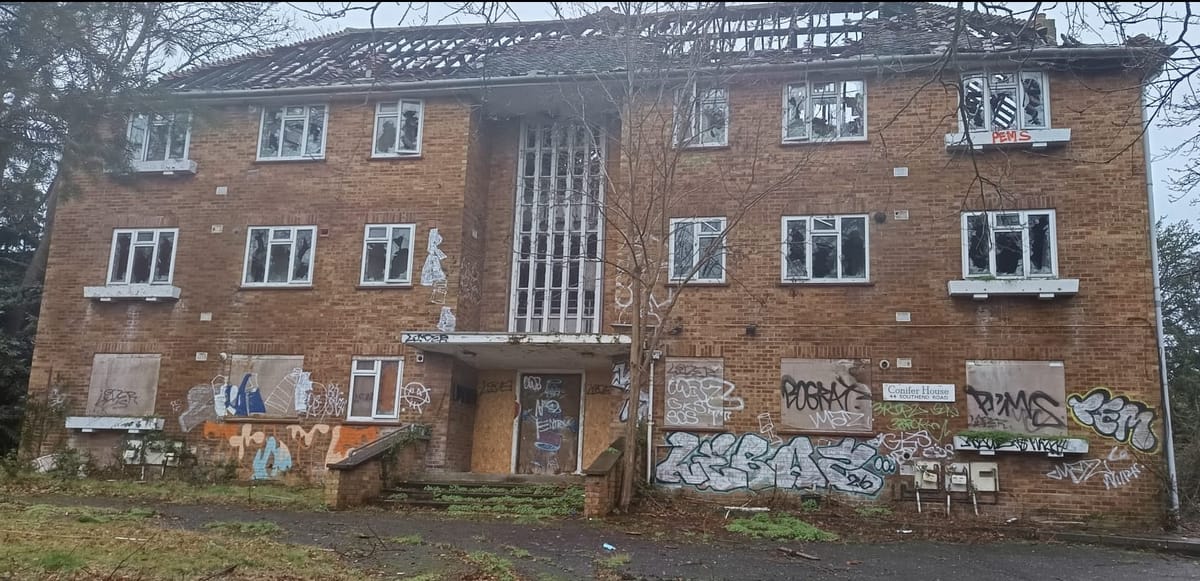
Conifer House on Southend Road in Beckenham has been empty for over four years, and a major fire in May 2022 destroyed the upper half of the building.
North Dene, a three-storey period property near the entrance of Beckenham Place Park was set alight in 2021 after a decade of remaining empty.
Bromley council’s senior public affairs officer James George said: “Bromley is taking a range of actions to support the borough’s housing supply and reduce spend on temporary accommodation, including work to bring long-term empty homes back into use wherever possible.
“This includes discussing whether the council could purchase empty homes to house Bromley residents on the housing register, where this is financially viable.”
Although he couldn’t say if the council’s executive committee was going to adopt a formal empty homes policy, he said the authority was “regularly engaging with relevant owners” to see how their properties could be brought back into use.
Bromley council has been charging a council tax premium since 2019 to incentivise owners of empty homes to bring them back into use. Owners of homes empty for two to five years are charged an extra 100% council tax, with this doubling for properties vacant for over five years and tripling for those empty for more than a decade.
George added: “We are advancing our strategy to further minimise the number of empty homes, which will also reflect feedback from owners of empty homes in the borough and best practice from further afield.”
Please support independent community news. Subscribe or leave a tip.
Long-term empty homes in Lewisham
Lewisham council is also facing the problem of long-term empty homes. The mayor and cabinet approved a three-year strategy to deal with the issue on 21 January 2025.
Residents can report empty homes in their neighbourhood via the council's website.
The council will offer owners advice to bring the homes back into use. If this fails, then the authority says it will take legal action to bring privately owned properties back into use.
Lewisham council has already reduced the number of privately owned long-term empty properties by nearly half. In April 2025 the number of empty homes for two years plus had dropped to 426 compared with 846 in March 2024.
London-wide
Empty homes across London have risen by 23% from 38,386 in 2024 to 47,287 last year – the largest percentage increase of all regions in the country.
A coalition of 25 housing organisations including Resonance, Shelter and the Big Issue wrote to housing minister Matthew Pennycook last month, calling for a national strategy to bring England’s 300,000 long-term empty homes into use.
Adam Cliff from Empty Homes Network said: “We’re asking the government to stop looking the other way and give local councils the funding and authority they need to turn these properties back into real homes for local people.”
National Empty Homes week is running from the 9 to 15 March. Local authorities will highlight successful projects of refurbishing abandoned houses, offer renovation advice to owners and initiate enforcement action.
Sign-up for our free weekly newsletter - Salamander News in your inbox