Lewisham homeless crisis: demand for temporary accommodation driven by rising private rents
The council reports that rising rents, increased evictions, cost of living pressures and market uncertainty are increasing demand for temporary accommodation, which has become a 'prolonged reality' for many Lewisham households.
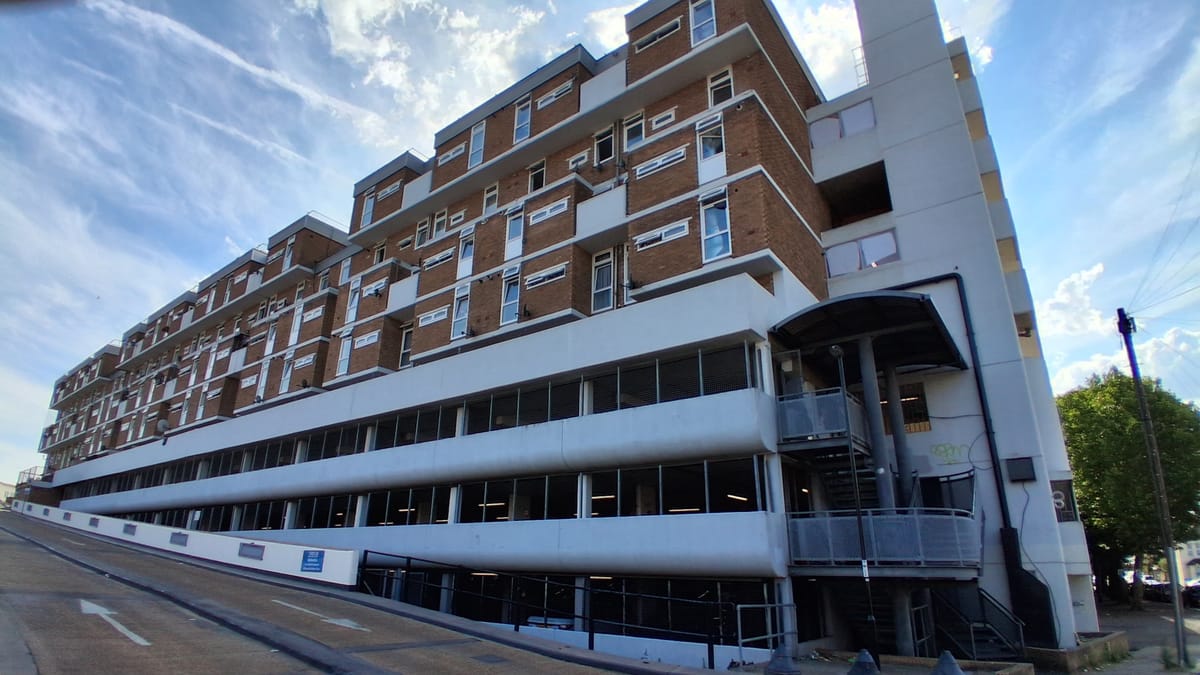
Councils have a legal duty to provide temporary accommodation to applicants who meet certain statutory criteria, until long-term housing can be found.
Lewisham council officers reported that as at 1 December 2025, the council was providing temporary accommodation to 2,450 households, a slight decrease from the previous year when 2,799 households were in temporary accommodation.
Just over half of Lewisham's homeless households are placed in temporary accommodation within the borough.
The report: Update on Temporary Accommodation in Lewisham will be presented to the council's Housing Select Committee on 14 January.
Rising demand
It notes that demand for temporary accommodation continues to rise, due to cost of living pressures, rising private rents and increased evictions, and market uncertainty, including the Renters' Reform Act which has led some landlords to exit the market.
These pressures have created a situation where temporary accommodation "is a prolonged reality for many families".
It points out that Lewisham is among the top five to six of London boroughs for homelessness approaches, with numbers far above the London average.
London boroughs spent £5.5m per day on homelessness in 2024-25, and the increase in demand is creating severe financial strain to councils.
The borough's homeless households are currently staying in temporary accommodation spread across 48 local authorities.
51% of households stay within the borough, 11% are in Croydon, 7% in Greenwich and 5% in Bromley.
19% of the homeless households are staying in temporary accommodation across London’s remaining boroughs, and 7% are staying outside London.
Sign-up for our free weekly newsletter - Salamander News in your inbox
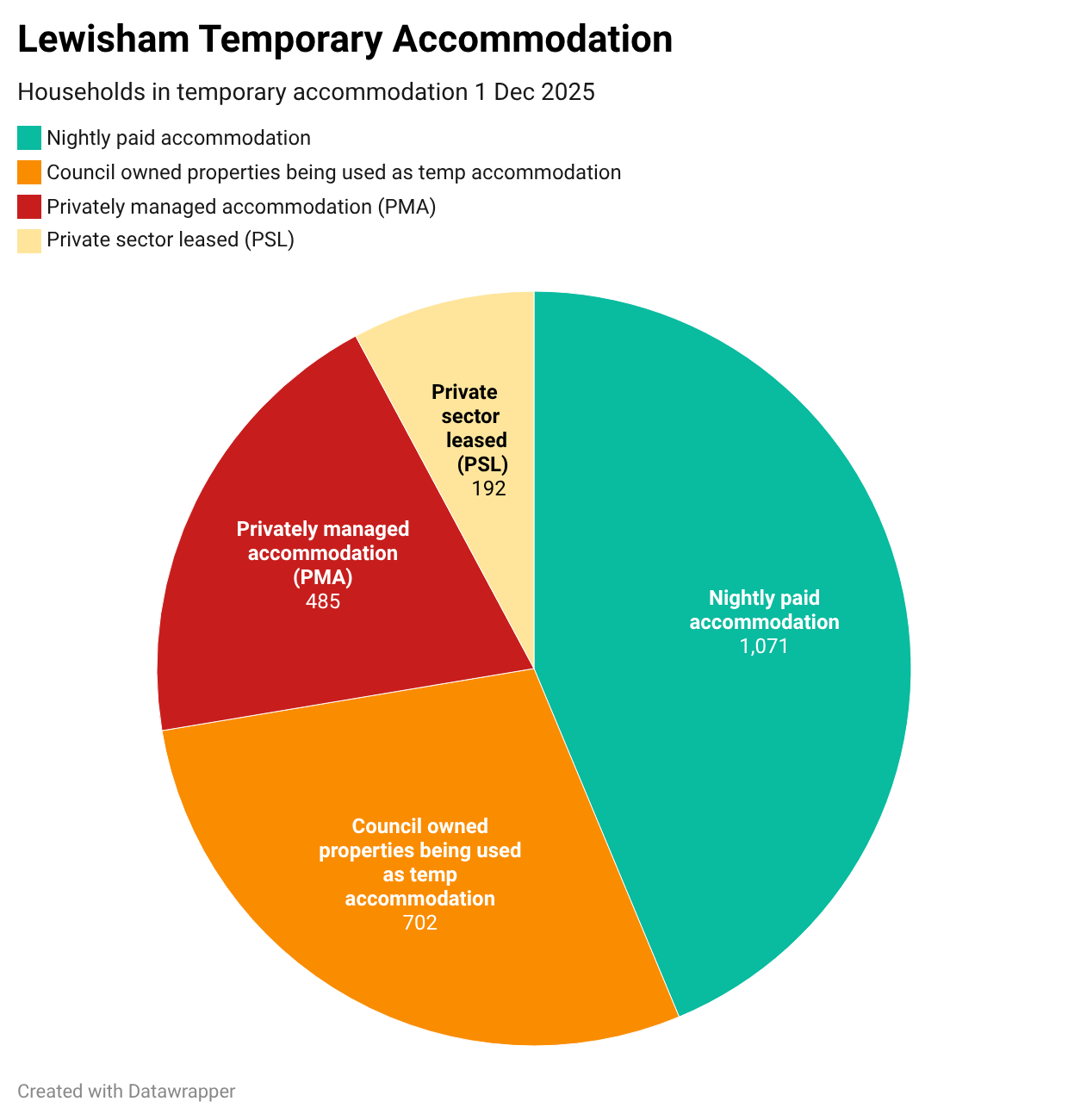
Of the 2,450 homeless households, 1,071 are staying in nightly-paid accommodation (which includes bed and breakfast accommodation) – the most expensive form of temporary accommodation.
702 households are staying in council-owned properties which are being used as temporary accommodation, while 192 households are staying in private sector leased properties which are managed by the council.
The remaining 485 households are staying in privately managed accommodation (PMA) – properties which private landlords lease to the council, and the second most expensive form of accommodation.
Although there has been a reduction in stock of PMA and PSL properties, the council managed to significantly reduce its reliance on nightly-paid properties from 1,415 units in December 2024 to 1,071 in December 2025.
The council reports that the Housing Needs service has been using a range of measures aiming to prevent homelessness before it occurs, including supporting households with emergency funds, negotiating with landlords, community outreach and advice to reduce financial stress.
It notes "reforms introduced by the Renter's Rights Bill should lower the number of households requiring temporary accommodation and ease pressure on homelessness services".
The Renters' Rights Bill is due to take effect from 1 May 2026.
Reporting by Ruby Gregory, Local Democracy Reporter, additional reporting by Dorothy Stein.