Convoys Wharf, Deptford: London's new emergency housebuilding rules heighten local fears
Local residents were offered a site visit, but the recent announcement has increased concerns about low levels of social housing and exclusion of local communities from the planned development.
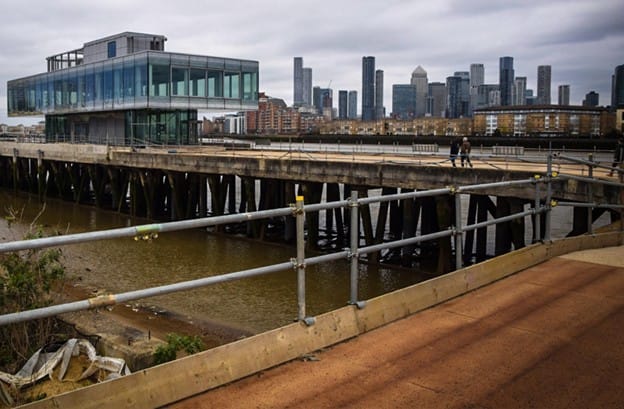
For nearly two decades, the 40-acre Convoys Wharf site in Deptford has sat derelict. But while the site itself sits largely untouched, the policies dictating its future have just drastically changed.
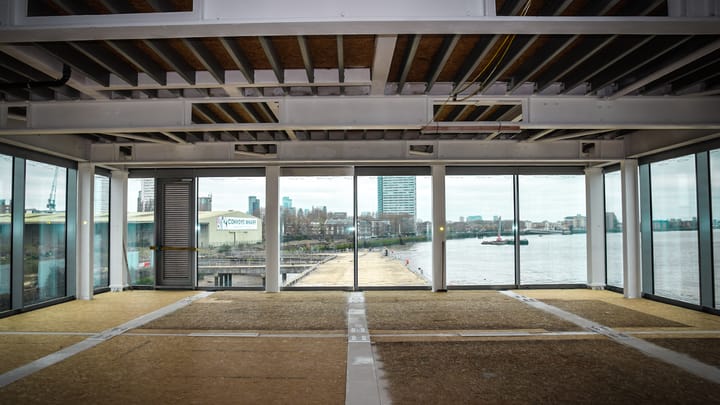
The tension surrounding the site was palpable during a recent public visit organized by the local campaign group Voice4Deptford (V4D). Standing among the overgrown weeds and historic docks, residents pressed a representative from Hutchison Property Group - the development arm of Hong Kong billionaire Li Ka-shing’s empire - on its plans.
Hutchison’s representative confirmed that they intend to increase the density and height of the site's proposed 3,500 homes, citing new government mandates. Yet, when locals pressed him on specifics, the answers were noticeably non-committal. He pointed out there was still two to three years of planning left before the 10-year build period would commence.

The confirmation of additional units coincides with a major policy shift confirmed just one day earlier.
Against a stark backdrop of a housing pipeline in crisis - with recent figures showing that London house-building starts have plummeted by 84% over the last decade - the London Mayor Sadiq Khan has faced immense pressure to act.
On 26 March, he confirmed a package of emergency measures which aim to “kick start London housebuilding”. Crucially, this includes removing Greater London Authority (GLA) guidance on housing density, giving developers permission to build taller and more tightly packed towers.
The decision to approve an outline of the Convoys Wharf scheme was pushed through by Boris Johnson as mayor in 2015, following complaints from the developer.
Hutchison benefits from an unusual mayoral loophole which gives them until 2028 to submit their final plans for Convoys Wharf, so they are perfectly positioned to capitalise on these relaxed rules.
The new policy will also lower the threshold for the existing 'fast-track' planning route, allowing developers to qualify if their schemes include at least 20% affordable housing.
A third concession, raising another red flag for housing campaigners, is the temporary suspension of the borough level Community Infrastructure Levy (CIL) for eligible schemes commencing before March 2030.
CIL is the charge levied on larger residential developments to help local authorities fund the infrastructure required to support development of their area - things like transport links, flood defences, health clinics, and schools.
The amount of CIL relief developers are able to claim relates to the amount of affordable housing they deliver.
The mayor’s announcement does not affect the GLA level CIL, which developers will still have to pay. The three changes together make potential development more profitable to the developer, and it is hoped will motivate them to build.
The damaging impact of the concessions on existing communities has been brushed aside.
Please support independent community news. Subscribe or leave a tip.

V4D has long highlighted Hutchison’s history of prioritising profit over local needs - a systemic issue highlighted by housing charity Shelter, who warn that relying on "trickle down " from the private housing market will never fix the housing emergency and address housing need.
V4D serves as the primary case study in a new academic book, Neoliberalism and Urban Regeneration, which launched during the Telegraph Hill Festival.
The authors highlight how the developer's maths obscure a grim reality. Out of the 3,500 proposed homes, Hutchison offered an overall "affordable" quota of just 15%.
But even that tiny slice is heavily skewed: the developer guaranteed only 131 units for social rent (just 25% of the quota). The remaining 75% of the affordable housing quota was allocated to intermediate products like shared ownership.
With 60% of intermediate units planned as two-bedroom flats, larger, lower-income local families are left without provision.
The developer cites "an existing predominance of social housing" in the area.
Lewisham has over 11,000 households on the waiting list for social housing, 2,450 of whom are in temporary accommodation.

Deptford faces a mega-development permitted to build denser, taller luxury towers, while potentially being excused from meeting affordable housing quotas and from paying the tax designed to cover the increased pressures on community facilities those towers require.
Under the revised criteria, Hutchison could, in theory, qualify for these financial exemptions by boosting its overall affordable housing quota from 15% to 20%.
This grants the developer the ability to build taller towers, while a mere 5% increase - 175 affordable homes - offers little relief for a borough with over 11,000 households on its waiting list.
In practice, the policy would allow the developer to bypass millions in infrastructure levies that the neighbourhood desperately needs.
If residents fear this sounds far-fetched, they only need to look next door to Southwark. City Hall approved revisions to the massive Canada Water masterplan, allowing the developer to slash their affordable housing commitment from 35% down to just 9%.
Southwark Law Centre warned that such mayoral concessions set a "dangerous precedent," allowing the costs of the housing crisis to fall squarely on local communities.
This leaves Lewisham council and local residents with a clear, urgent mandate. The battle for Convoys Wharf is not just about preserving maritime heritage or preventing segregated "poor doors". Instead, it is how community facilities and affordable housing can be built at all, alongside the planned increase of 3,500+ households.
In the meantime, the hoardings around Convoys Wharf stay up as they have for the last several decades, leaving a hole in the heart of Deptford.
Sign-up for our free weekly newsletter - Salamander News in your inbox