
AI demands 'through the roof' - are London's new data centres undermining climate goals?
AI's immense compute demands are driving new data centres, clustered in London. How will they affect the capital's climate goals?
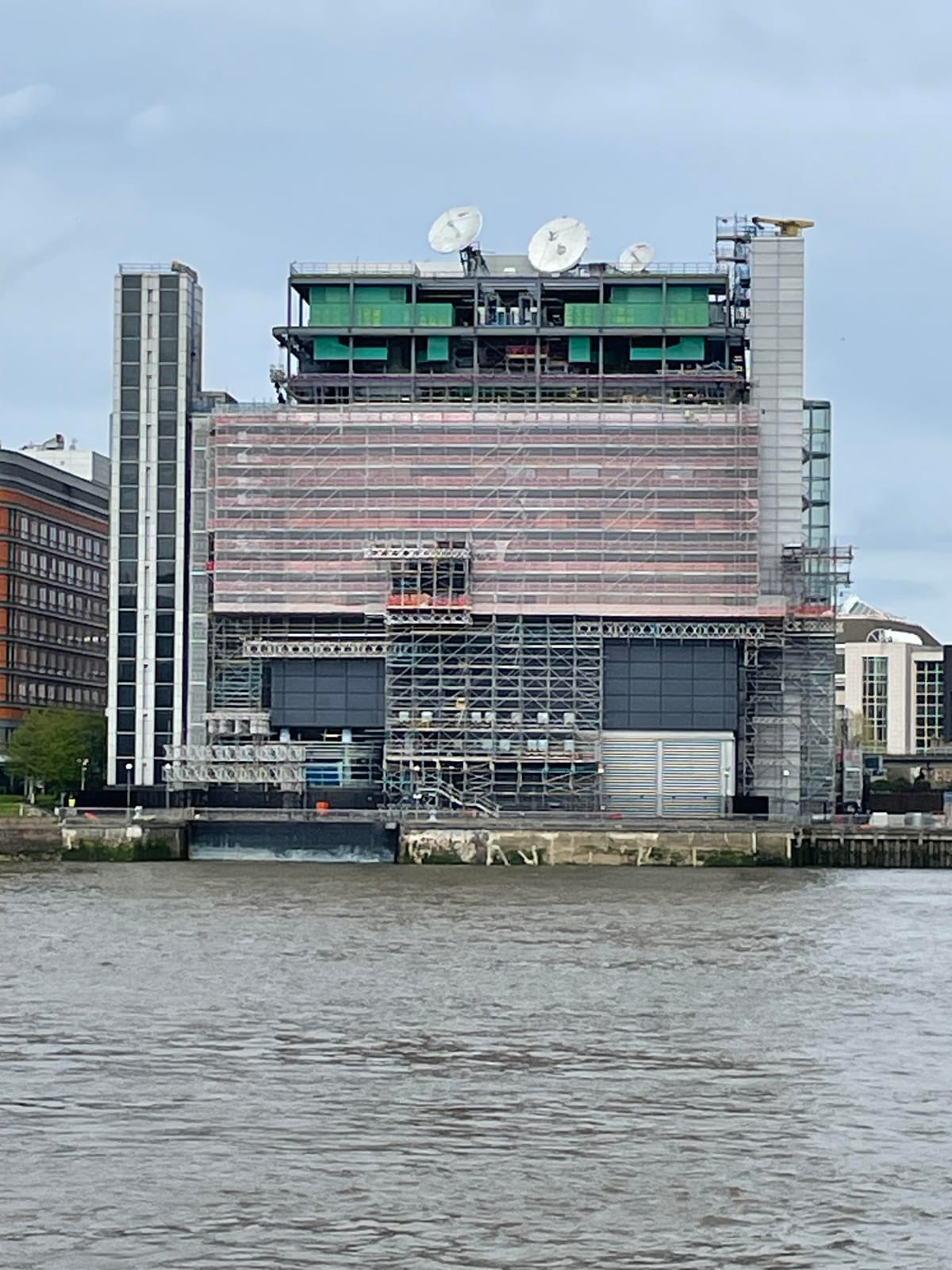
With 99 sites already in place and more than two dozen in the pipeline, the debate around the costs and benefits of more data centres rages on.
The buildings – secure, warehouse-like facilities that house IT infrastructure such as computing, storage, and networking systems – are seen as critical for supporting the capital’s economy and public services.
However, major concerns have been raised by environmental groups over the amount of energy demanded by data centres, covering both the impact on City Hall’s environmental goals and the potential knock-on effect on London’s housing and water usage.
A report from the London Assembly Planning and Regeneration Committee last year suggested several housing projects in west London had stalled due to data centres using all available electrical grid capacity.
Campaigners say the issue could get worse in the coming years, with the majority of new data centres in the construction pipeline set to be erected in London.
London is a 'unique' data centre hub
Oliver Hayes, Head of Policy and Campaigns at Global Action Plan, told the Local Democracy Reporting Service (LDRS) that the capital is “unique” due its unusually high proportion of existing and planned data centres.
This is due to a desire to be close to the UK’s financial hub and a ‘snowball’ effect from existing centres.
“We’ve had data centres in and around London for a long time, but they were always quite small,” he added.
“Historically, data centres have been key to financial trading – and being close to where trade is taking place makes a massive difference. You also have big fibre optic cables running out through West London – being able to tap into those has been a priority.
“An element of that still remains – developers prefer to cluster data centres where they are already built. These developments aren’t popular with local communities – it’s a lot easier to (build) where they already exist.”
AI has driven compute demands 'through the roof'
The recent AI boom, however, has driven demand. "With the proliferation of LLMs like ChatGPT, the compute requirements have gone through the roof and so the data centres being built to meet that (demand) are far bigger and require more energy to generate.
“This is a particular problem for London – the main pressures are around power requirements, and the associated emissions from that, and the water requirements for cooling these centres.
“There are increasingly reasons to be concerned around air pollution as well.
“For Londoners, we have already seen that can mean housing developments can’t be completed because the data centres hoover up the grid capacity. This speaks to the priorities of governments and the clash between the two goals.
“Londoners may have to cope with a lack of grid capacity because of these data centres.
Using gas to power data centres
“Developers are trying to build these as quick as they can – it’s essentially a gold rush. They are now looking to gas to power their data centres, building (generators) on site, as opposed to plugging into the electricity grid. This is really bad news for climate emissions.
“It’s also worrying for people working and going to school in the local areas – there will be an awful lot of air pollution as well.
“The water demands will also go up in local areas – they will need water in their gas turbines as well as to cool their systems.”
Hayes said the issue has “crept up” on many local authorities in London, who he suggested often face opaque planning applications “which aren’t clear about their intended use”.
Cash-strapped boroughs under financial pressure could also see the construction of data centres as an economic quick fix, Hayes said, adding: “Decision makers appear to be publicly sold on the idea that this is a route to economic growth, and they feel it is worth accommodating.
"Boroughs under financial pressure will be hearing from developers about how much they can receive from business rates and economic benefits for the area.”
Sign-up for our free weekly newsletter - Salamander News in your inbox
Tech sector insists new data centres 'essential infrastructure'
However, the tech sector would push back on such claims, suggesting data centres built in the UK are far ‘greener’ than those built abroad due to the relatively high proportion of renewable energy in the UK's electricity grid.
Sophie Greaves, Associate Director for Digital Infrastructure at TechUK, a trade association for the UK’s technology sector, told the LDRS: “It’s important to stress that data centres are essential infrastructure.
"They are vital for our economy and help public services like the NHS to deliver services in a transformational way.
“We appreciate there are concerns around our environment. TechUK is committed to making sure technology is good for the planet.
“We would push back on reports around power and water usage – over half of the data centres we surveyed do not use water at all, and more water is lost through leakage than DCs.
“Data centres run on electricity and can be big users of energy – but that makes them an anchor tenant of Britain’s renewable energy, and a data centre built in the UK is better for the environment than if it was built elsewhere.
“If we were to block such construction, the demand wouldn’t go away – only the investment.
“Data centres are facing a backlog in being able to access the grid – they’re in the same queue as houses, there’s not been enough investment in expanding the grid. We’re working to clear those backlogs.
“We are supportive of a Mayoral data centre policy.
“Data centres are already regulated by the Environment Agency in terms of their emissions and are signed up to the Climate Change Agreement. There are safeguards in place already, such as the need for Biodiversity Net Gain on brownfield land.
“Data centres are the foundations of modern life, and in the UK they’re built on one of the cleanest power grids in the G7.
“Blocking construction in London doesn’t cut global demand, it simply exports the investment, the jobs and the emissions to countries with dirtier grids and weaker standards.
“The real environmental question isn’t whether we build, but whether we can connect these projects to the grid fast enough, because data centres are increasingly the anchor customers underwriting Britain’s new wind and solar.”
City Hall response
The Mayor of London attempted to bring the two sides together on Wednesday 10 June he vowed to make the city a global hub for ‘green’ data centres by ensuring developers use renewable energy such as waste heat to power their buildings.
With City Hall already pledging to include a dedicated data centre policy in the forthcoming London Plan, Sadiq Khan said he would bring together boroughs, energy providers, innovative companies, developers and universities to help develop greener data centre solutions.
Officials say some potential measures have already been demonstrated, such as the OPEN heat network at Old Oak and Park Royal planning to use waste heat from data centres to provide low‑carbon heat to homes and businesses.
They claim London’s data centre growth will “be aligned with, and not at the expense of, housing and growth ambitions.”
Sadiq Khan added: “My ambition is clear, I want London to become the world’s leading city for environmentally friendly, low emission, high efficiency data centre development and AI infrastructure, so that our capital remains a leading global hub for digital innovation.
“The energy requirements of data centres are colossal, so delivering their expansion at pace alongside London’s other infrastructure needs will require more coordinated planning.”
Deputy Mayor for the Environment Mete Coban told the LDRS: “We live in a massively changing economy where AI is moving so fast and more and more data centres are popping up.
“We want to see the benefits of that growth in London but we will make sure there are environmental safeguards in place.”
Support local independent journalism from just £2 per month or leave a tip.