Policy designed by us: it's time to reimagine Access to Work
Carmen Yau and Clare Williams, like many other disabled service users, are facing increasing difficulties in claiming Access to Work funding from the DWP. They have a vision of something better.
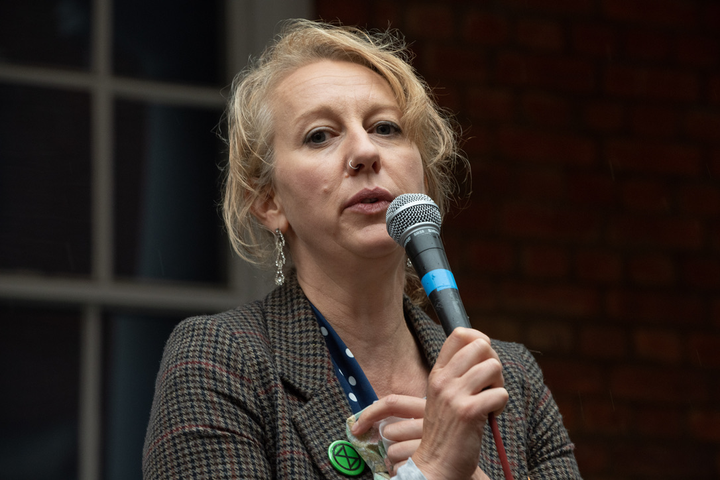
Carmen Yau is a lecturer in social work at Goldsmiths, University of London. She explains that she needs Access to Work funding to pay for her personal assistant (PA), Jochen, so that she can go to work and perform her role.
Yau is a wheelchair user, "I have very little movement," she says. "I can't even open a bottle or press a door button or wave for the bus. Wherever I go I need Jochen to do everything."
She describes increasing levels of bureaucracy at the Department of Work and Pension (DWP), and the delays she has faced in trying to claim the funds to reimburse her payments to Jochen.
There have been frequent and unannounced changes to DWP requirements - first they wanted timesheets then invoices then descriptions of tasks - alongside abrupt rejection of her reimbursement claims.
"You shouldn't reject someone's reimbursement without first telling that person that your internal policy has changed," she says. "I would think that is very unethical."
DWP's communications channels seem to be stuck in an earlier decade.
Yau has faced demands to print out documents and sent them by post, followed by complaints of failures by the DWP "scanning department" and "missing pages."
Jochen says he spent almost £100 last year sending her documents to DWP, always recorded delivery.
Yau says DWP use email in one direction only. "They will email you 'Dear Carmen, I reject your reimbursement claim because .. ' but they won't read my email reply.
"So I call them," she says, "and they say 'Oh actually we never read your email. No-one is checking that inbox. If you have an enquiry, you need call us.'"
Yau describes spending around an hour a day waiting on the phone (no call queue message, no call back option) in attempts to speak with DWP.
She describes the effort it takes her, a highly qualified academic and confident communicator, to meet the shifting demands of the DWP and over a period of months, trying to get through to correct errors they have made. Errors have included both missing payments and double payments.
She has had periods of delays where she has not been reimbursed for months.
"I hired my PA and I think that I have a responsibility to pay him," she says. "So I actually put myself in debt, but ... how many people could do that?"
Please support independent community news. Subscribe or leave a tip.
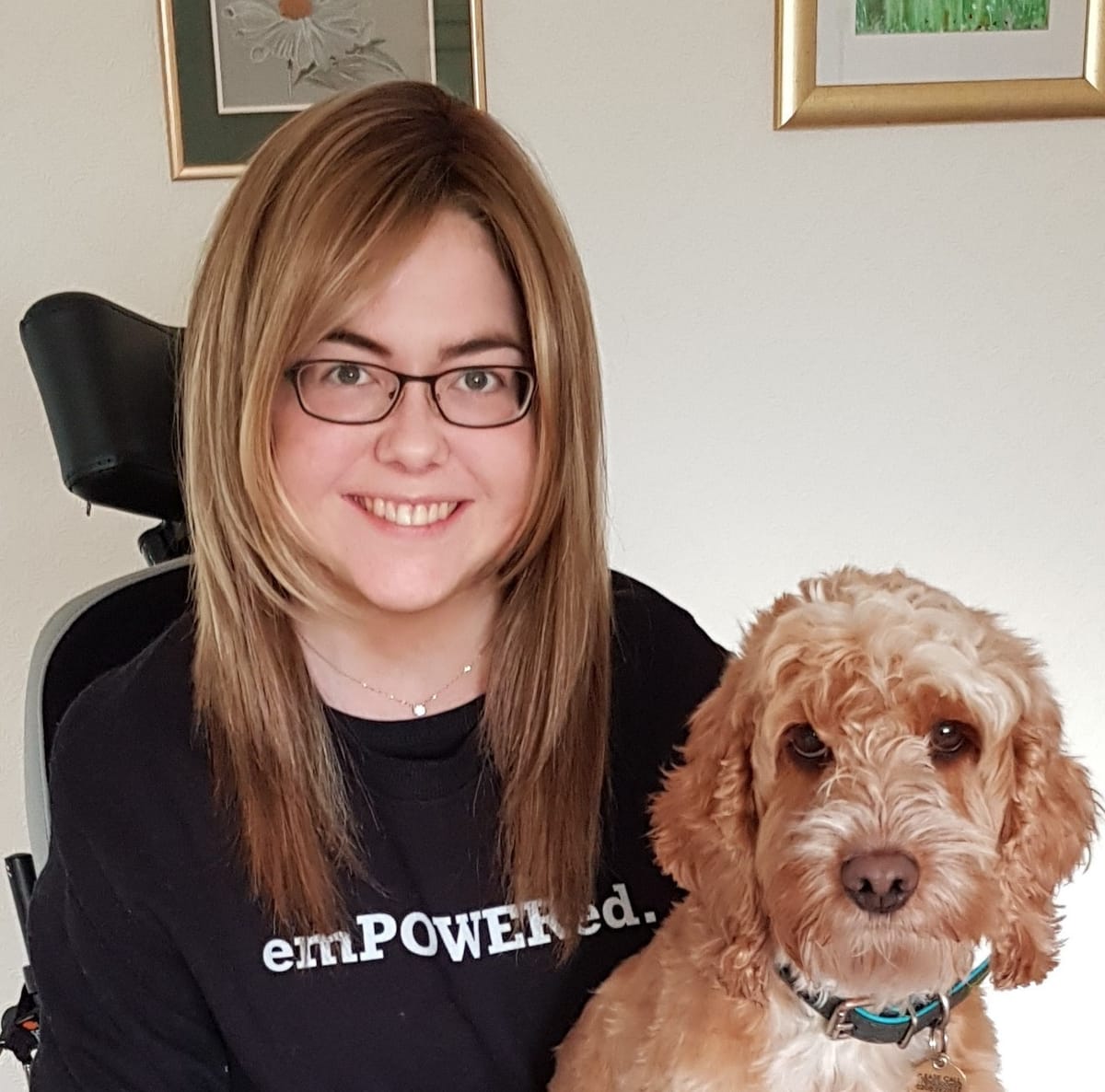
After more than a year of job hunting and interviews, Clare Williams got a teaching and research post in the Law department at the University of Birmingham, a contract "as rare as hen's teeth" in the highly competitive academic job market.
Her contract started in September.
"Between last September and a couple of weeks ago I had sleepless nights I was so anxious, waiting for confirmation of the Access to Work grant," she said.
"The sword of Damocles has nothing on the DWP."
Williams was first awarded an Access to Work grant in 2022 when she started as a post doctoral researcher at the University of Kent, where she progressed to the position of lecturer.
The grant funded her support worker to drive Williams to work and then stay with her at work, helping her carry things, setting up teaching rooms and keeping her safe if she had a medical episode.
The funding was renewed three years later. When Williams got her new job offer, she told the DWP that she would be changing jobs, "doing exactly the same type of job but just at a different institution.
"So I would need exactly the same type of support from the same support worker."
But DWP informed her that her grant would end and she would have to start a new application, from scratch.
She reapplied and waited six months before she heard back.
Williams couldn't pay her long-term support worker, who found another job. She couldn't get to campus, her new employer allowed her to postpone all teaching duties.
Compared with others, Williams believes she was lucky. Her grant was agreed in principle in February 2026.
"If they'd have said no .. then I can't get to work, that's my job over," she said.
But Williams had trained her previous support worker in her complex needs, including how to dismantle, hoist and reassemble her power wheelchair, and how to keep her safe in the event of medical incidents.
If she has to find and train another support worker, she will have to submit another change of circumstances request, and the timeframes for a response can stretch to nearly a year.
"Last time I had to submit a change of circumstances request it took them 10 months to confirm," she says. She was requesting a £1 per hour increase for her support worker.
While corporations like banks, building societies and energy companies have legal responsibilities regarding fair treatment of their most vulnerable customers, disabled users report that DWP is moving in the opposite direction.
They describe a pattern of increasing time delays, growing bureaucracy and levels of customer service that would be unacceptable in any commercial public facing body.
Policy designed for and by the service user
"At the moment, there is that sense of tokenism" says Yau. "Our voices are not being heard, We are a group of people who are being decided for .. by able bodied people, by bureaucracy, by politicians .."
"The policy should be designed for and by the service user.
"That is really crucial, particularly for disability .. so the policy and the service delivery should include it. We call it the 'expert experience'."
"But the point here .. is not 'to send someone to help me'. The spirit of Access to Work is to give the access ..
"It is a right, to enable people to be able to work and to be independent."
A new vision for Access to Work
Both Yau and Williams believe that the Access to Work is crucial and can be re-envisioned and redeemed.
They challenge head-on the simple cost/benefit model that the government uses and the underlying assumption that cutting Access to Work saves the government money.
"Carmen is not just 'taking money'," says Jochen, "she gives money back to the government. If she's got the ability to work, it means she pays tax from her salary, she's able to hire me and I also pay tax, and I'm not unemployed ..
"And she can go out and spend money all over London for transport and for leisure activities, buying her own food .. and she doesn't have to go to a care home."
Williams points out the range of benefits that come from being in good work and developing a career.
The funding enables her to do her job, she says, "a job that I am highly qualified for, that I have worked hard to secure, and at which I excel ..
"There are so many so many wider benefits, including health outcomes and wellbeing outcomes that are just not captured in that kind of (cost/benefit) data."
Williams' work looks at the role of law and markets in shaping our concept of disability.
Access to Work scheme was set up in 1994, and significantly, was left out of the Welfare Reform Act of 2012.
"What's curious about Access to Work is that its discretionary, not an entitlement," she says.
"You've got the administration of public funds, people in public roles making essentially life-changing decisions for people like me about whether I can get to work .. or not, that can have life-changing implications."
And there is no formal, independent appeals pathway. "An appeals process is really important for transparency and consistency of decision making," she says.
Yau appeals for a new perspective and a new social model for disability. "The government is ... looking at disability employment as a cost centre," she says, treating the payments as an expense, grudgingly paid out.
"Imagine looking at it as a profit centre .. the money is a social investment .. with positive impact for the whole community."
Jochen points to some of the wider benefits of Yau's work, "with her knowledge, Carmen builds the next generation of social workers and psychologists."
Sign-up for our free weekly newsletter - Salamander News in your inbox