Murals at Foxborough Gardens, Ladywell restored - 1960s public art for 'ordinary people'
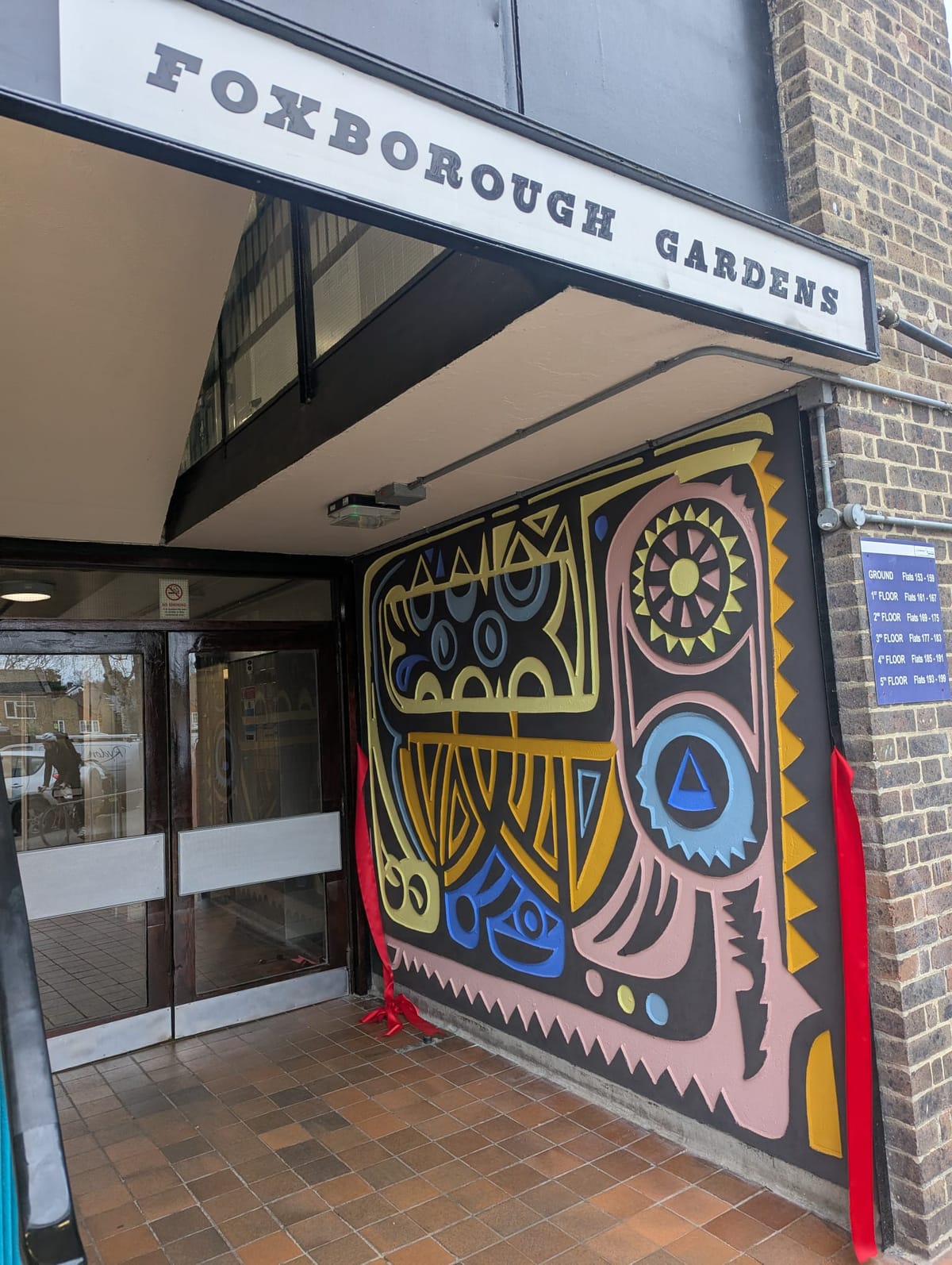
The local community celebrated the official reopening of the restored murals, created by the London County Council (LCC) artist William Mitchell.
Foxborough Gardens' tenants and residents, children from Beecroft primary school, an art historian, a furniture restorer and architectural conservators, with funders Heritage of London Trust (HOLT) and Pilgrim Trust, gathered to mark the event.
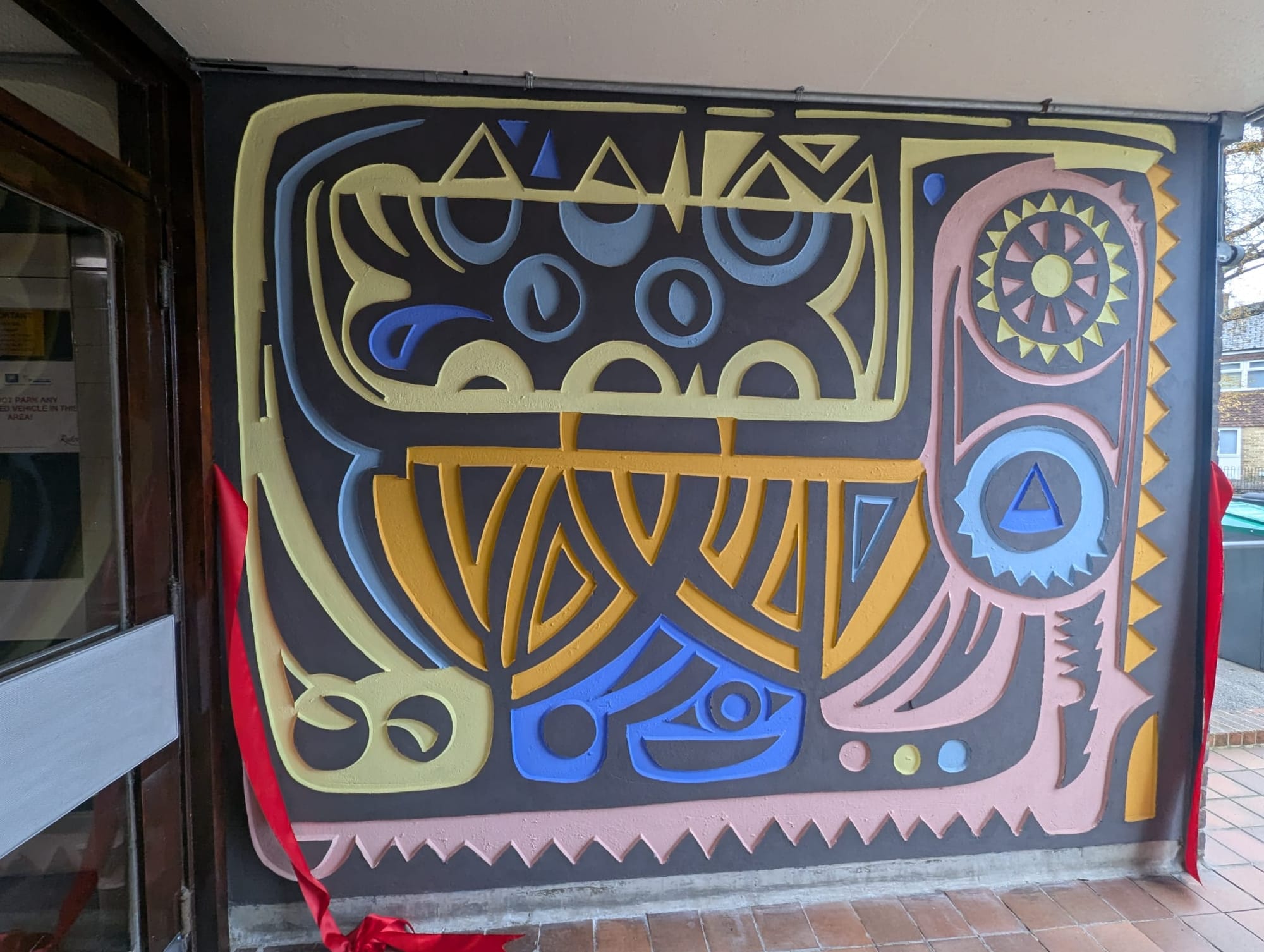
The murals were created by William Mitchell in the entrance halls of two blocks on the post-war housing estate, demonstrating the LCC's conviction that "ordinary people" deserved high quality social housing and beautiful art.
Lewisham speaker and councillor Jacq Paschoud explained the importance of the housing at the time it was built.
"I was in the generation that benefited from housing like this," she said, "I was born ten years after the second world war, and housing was in really short supply.
"We lived in rooms. If there were three floors in a house, then there'd be a family living on every floor. We didn't have a kitchen and we didn't have a bathroom."
But she added, "this was what everybody was doing".
For families like hers, the LCC's commitment to building quality housing and "the inspiration to put art works in .. the fact they thought that ordinary people deserve to live in a beautiful place .. that was a very precious thing."
John Keidan, chair of Foxborough Gardens Tenants and Residents Association (TRA), had the vision of restoring the two weathered murals, and has championed the project since 2021.
The TRA raised funding for the restoration work from HOLT and Pilgrim Trust, and the project was supported by Lewisham council.
Please support independent, local journalism. Become a supporter or leave a tip.
Nicola Stacey, director of HOLT, said that the LCC had "a desire to build housing that really creates joy in the people who live in it".
The LCC funded many sculptures, murals and paintings during this period, around 70 of which survive.
"If they're ever in bad repair, come to us and tell us about them, and we will try our best to help restore them."
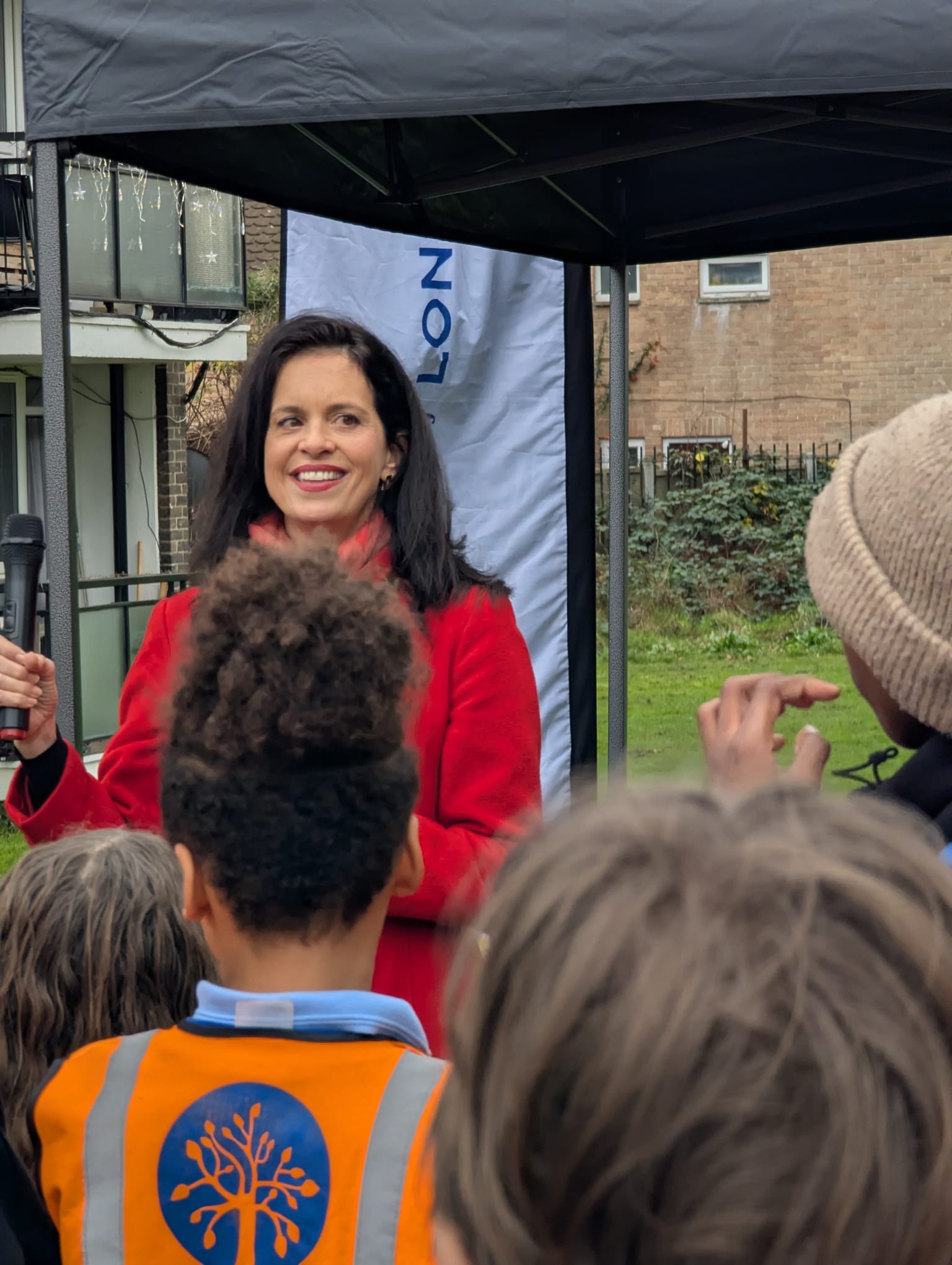

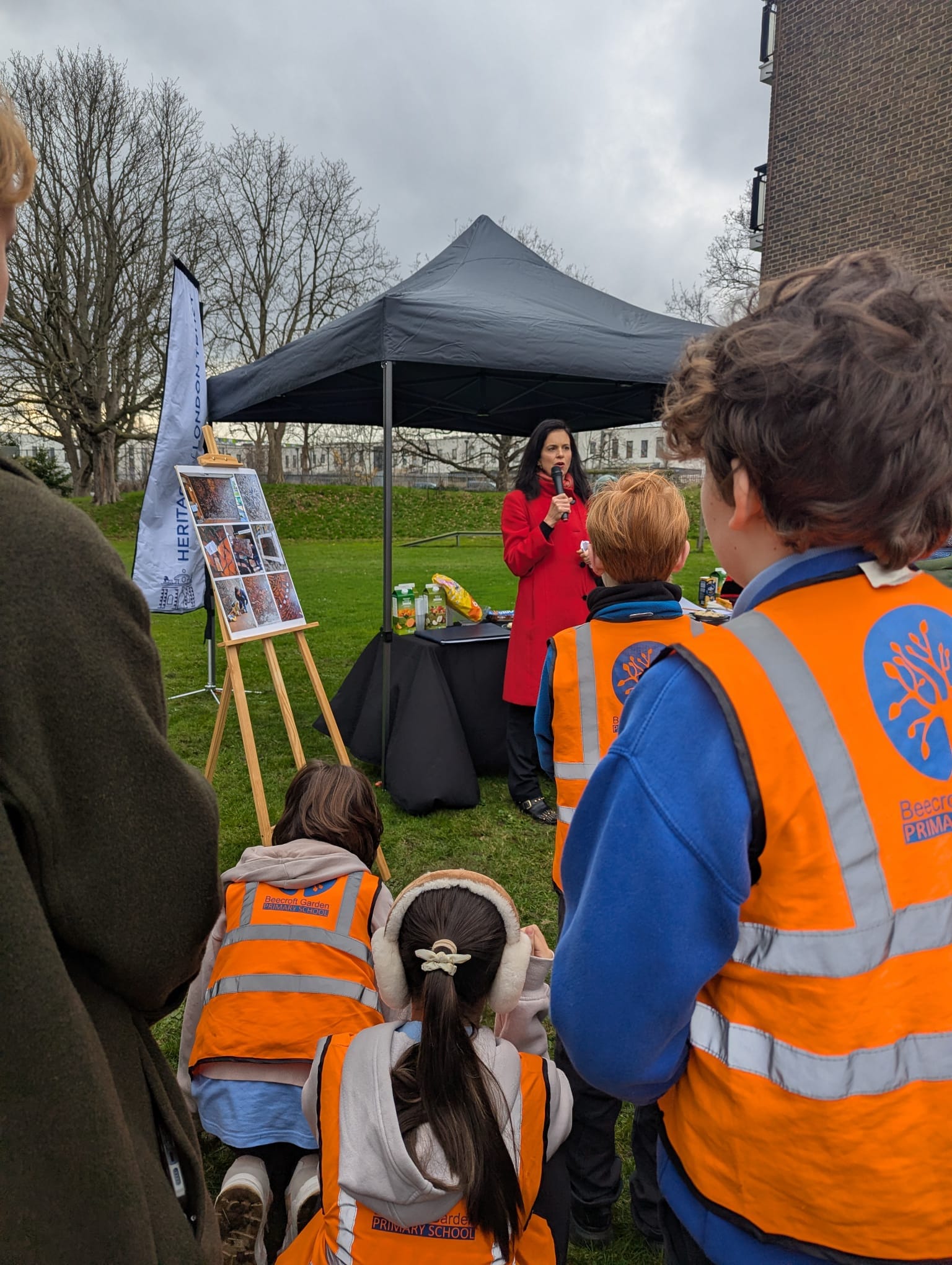
From left, Nicola Stacey, Ife Davies and Stacey again address schoolchildren. Image: Salamander News
Ife Davies runs the Proud Places programme for HOLT. The project had been "incredible, for creativity and connecting young people to their local history," she said.
Over 240 local children from Beecroft Primary school, Stillness Junior School and Haberdasher's Hatcham Primary school took part in different activities including site visits, workshops and creating their own art using reclaimed materials.
"This project is a lovely and prime example of what it's like to inspire young people through their imagination, through creativity, and for them to connect and take pride in their work," Davies said.
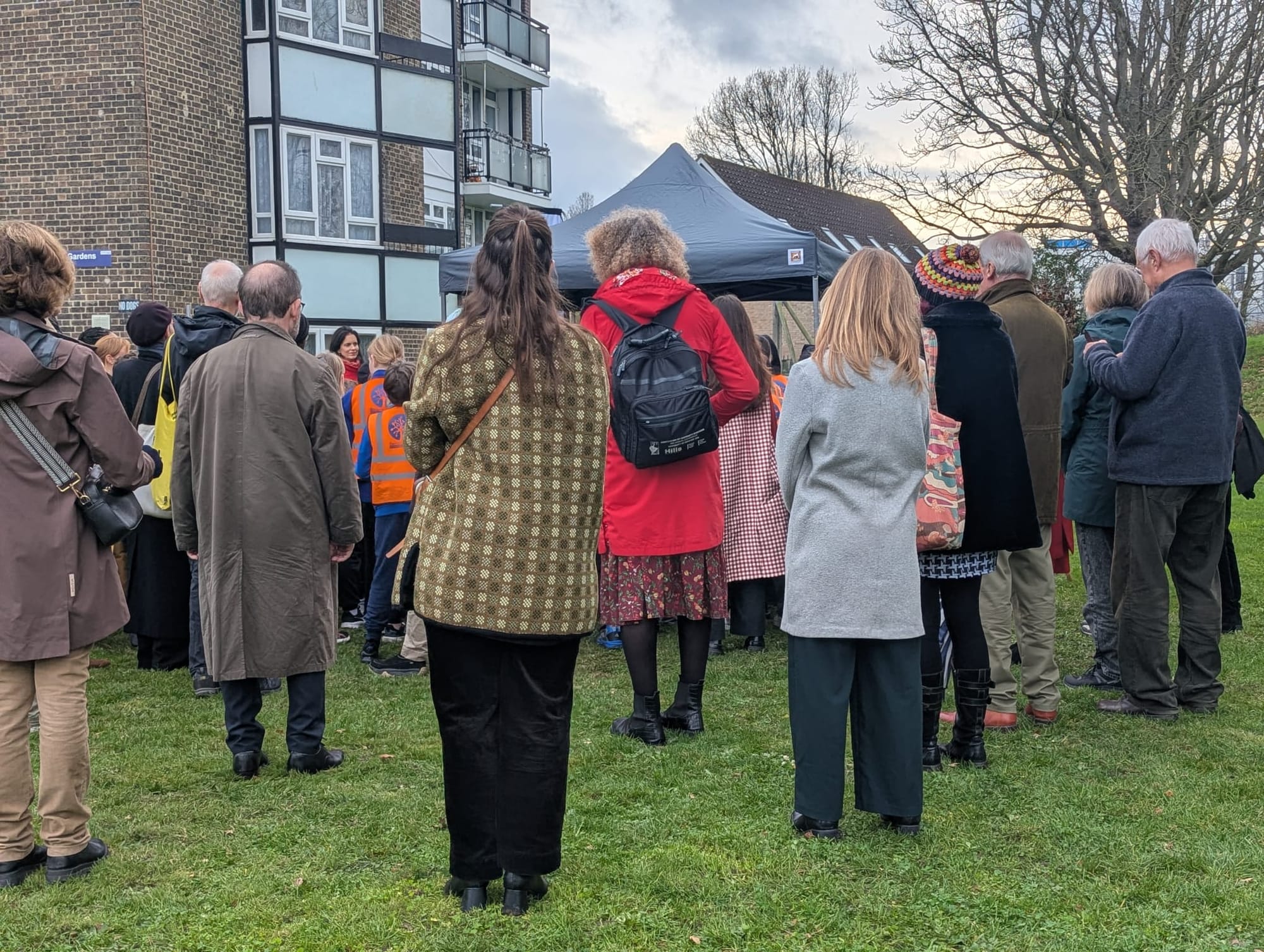
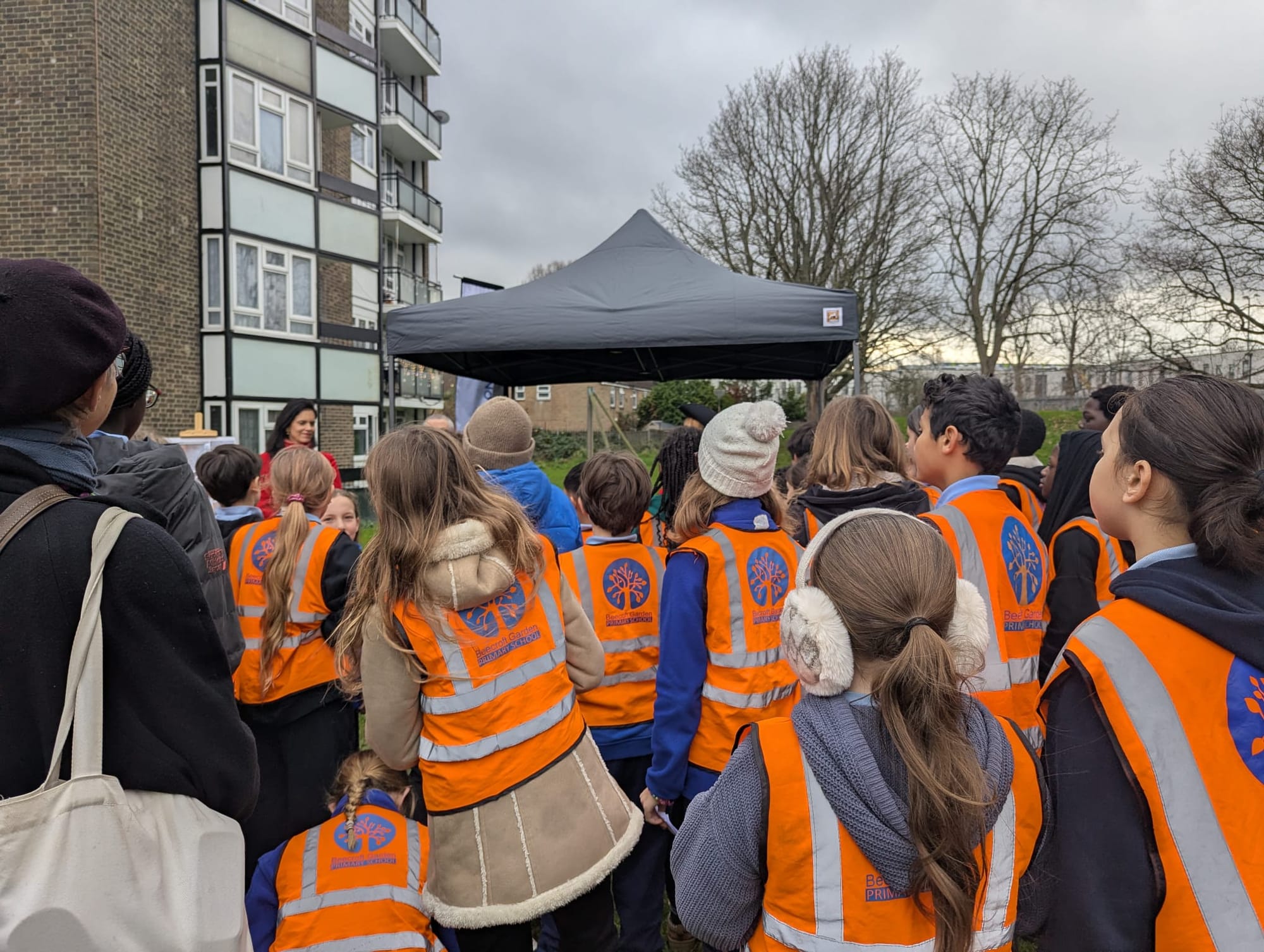
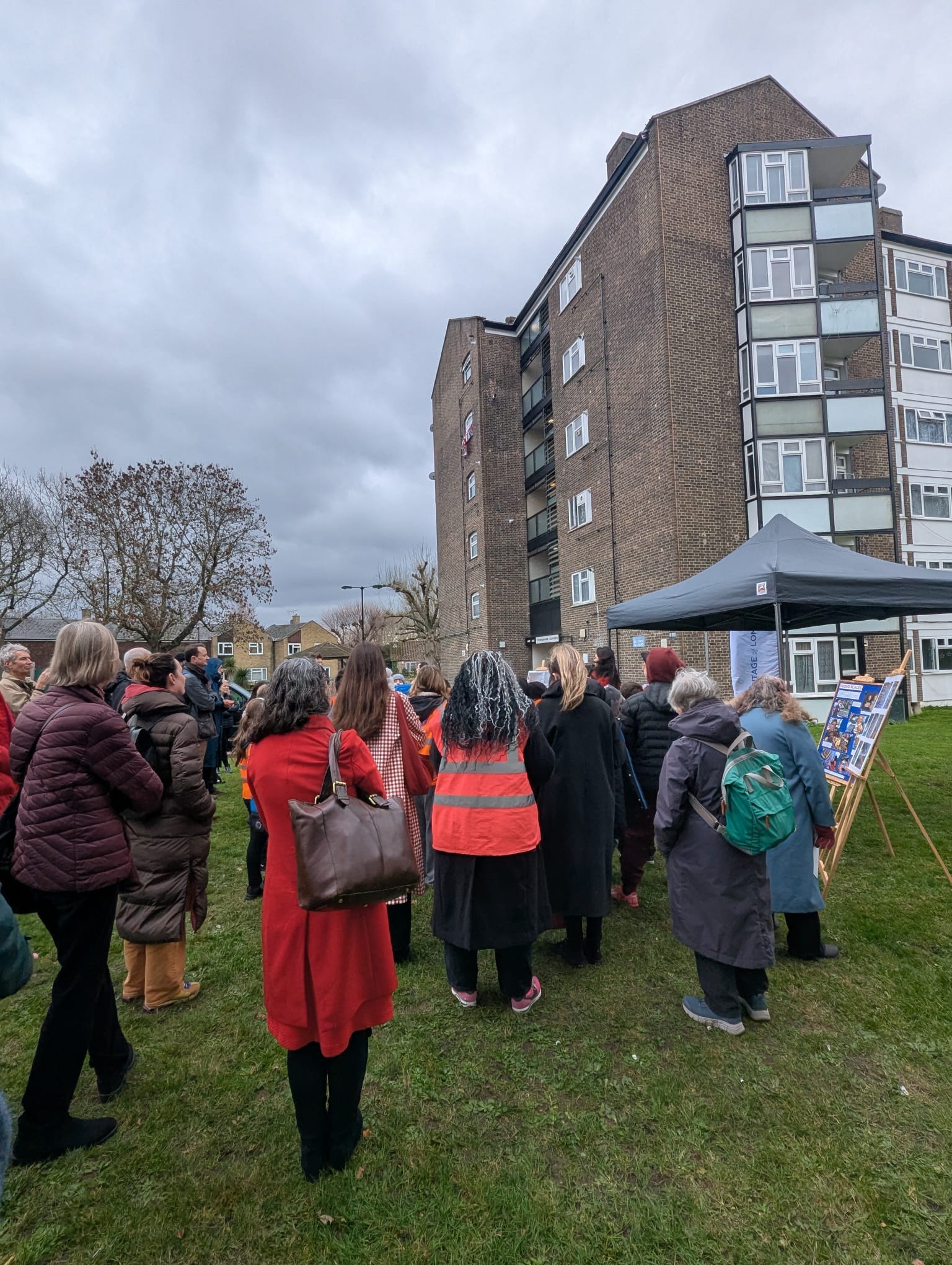
Speeches at the site. Image: Salamander News.
The restoration story
Dr Dawn Pereira is a sculptor, artist and historian with a special interest in public art. She has studied William Mitchell and his role with the LCC, and raised awareness of his work.
Standing at the wooden mural, she said: "It's just lovely to see it back in its former glory .. I've been visiting this site for over 20 years, and .. my eyes can't quite believe that it looks like this!"
Mitchell was born in Paddington in 1925 and later lived in Catford and then Blackheath.
He became LCC design consultant from 1958 to 1965, along with artist Antony Holloway, and had a workshop in Forest Hill during this period.
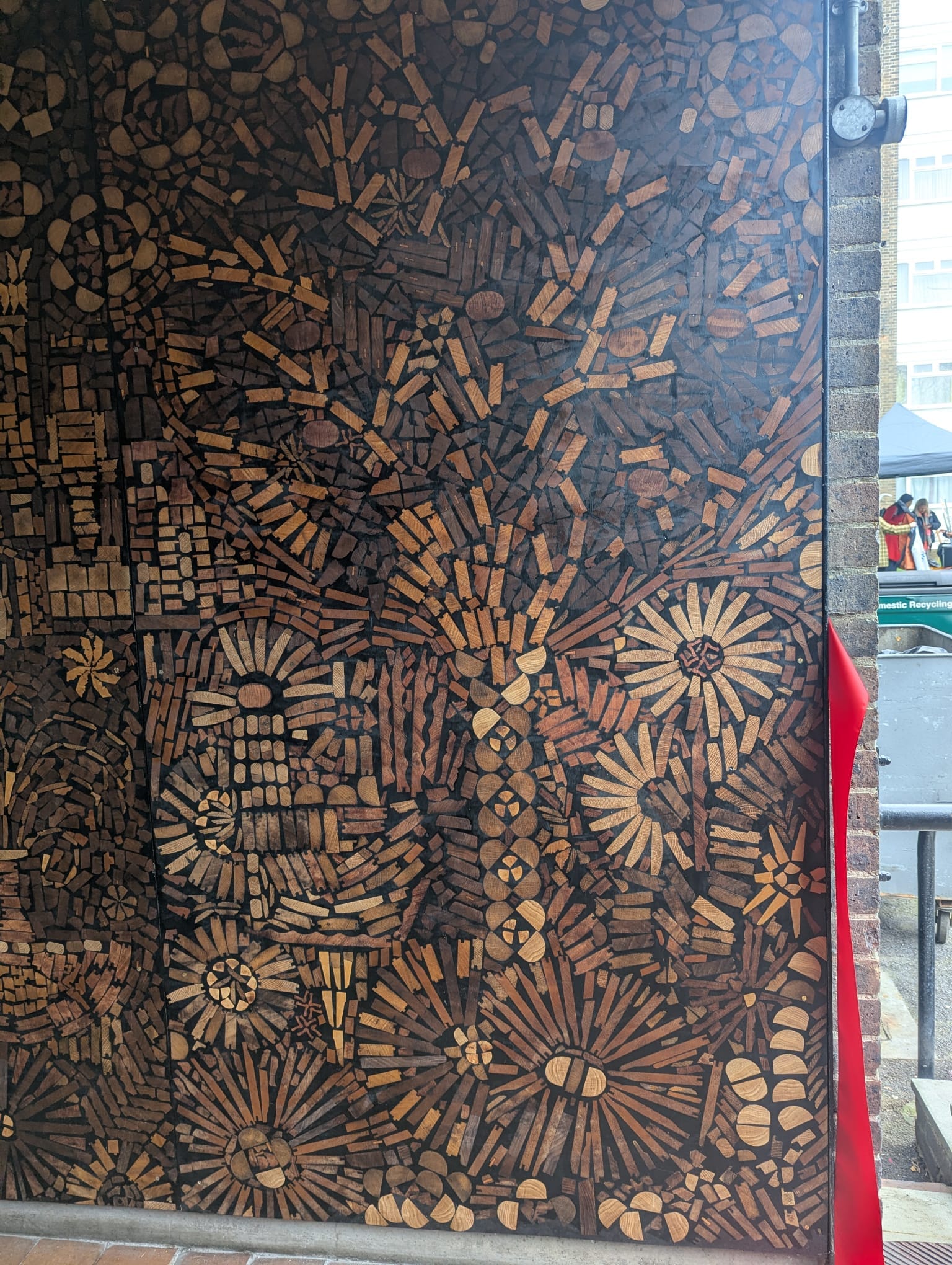
Pereira explained the background to the wooden mural, which was originally made using offcuts of wood and old bits of furniture, covered in varnish.
"A lot of his murals at this time used lots of different found materials and reincorporated them. Victorian stuff was really out of fashion, so you could pick up quite a lot of cheap stuff.
"He even talked about using bits of old pianos and slicing them into sections. So that's why you can see so many bits and pieces."
Detective work
Fritzi from Temple Studios restoration usually works as a furniture restorer and performed the restoration of the wooden mural.
"It's been really interesting working with Dawn on it, and working out what we were aiming for," he said, "because what we were presented with was clearly so far from what it had originally looked like.
"But there's a lot of detective work .. someone had tried to clean it - there were some areas that had been painted a bit .. we had to sand down the whole thing ..
"I was really thrilled with how it turned out".
Fritzi removed layers of varnish to reveal the original design, and restore missing blocks and lost resin.
After taking advice from marine conservators and chandlers, he oiled the wood with marine-grade oil to weather proof it.
Turning her attention to the concrete mural, Pereira said: "We think a plasterer would have come along, done the wall, and as he was going along plastering, William Mitchell would have carved out the different sections.
So that's how I think that one was made, rather than casting."
The concrete mural was originally unpainted, but painted in later decades.
Sculpture conservation firm Taylor Pearce cleaned the concrete mural and scraped off the old paint, before restoring and repainting it.
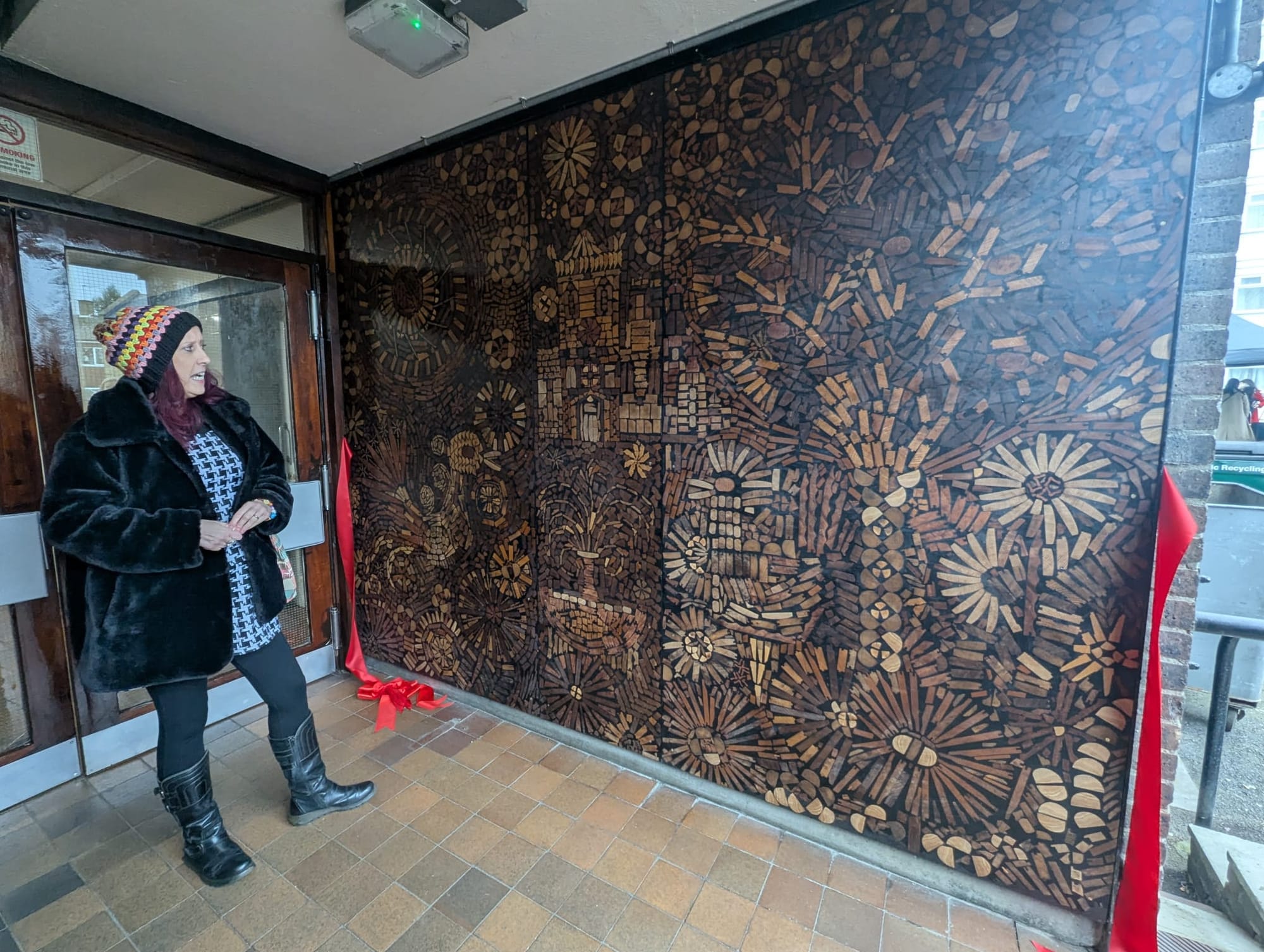
Dawn Pereira at the wooden mural. Image: Salamander News
You can visit the murals in the entrance to the two blocks at Foxborough Gardens, SE4 1HS and track down more of the LCC's public artwork via Heritage of London Trust.
Updated on 24 December 2025 16:40 with additional attendees at event and correction to conservator's name.
Sign-up for our free weekly newsletter - Salamander News in your inbox