Goldsmiths: UCU marking boycott in response to new round of cuts
After years of brutal cuts, the union says further plans to cut around 25% of remaining jobs would lead to "the destruction of what remains of this institution."
"Cuts of this scale would leave Goldsmith's a shell of its current self and would cause irreparable damage to current and future students as well as the local community," UCU general secretary Jo Grady said.
"Ahead of the local elections in May we are calling on Lewisham MPs, mayoral and council candidates to stand with staff, students and the local community and demand Goldsmiths changes course."
Goldsmiths is considered an anchor institution for Lewisham, and Lewisham council recently announced plans to open a new campus in the old Town Hall in Catford.
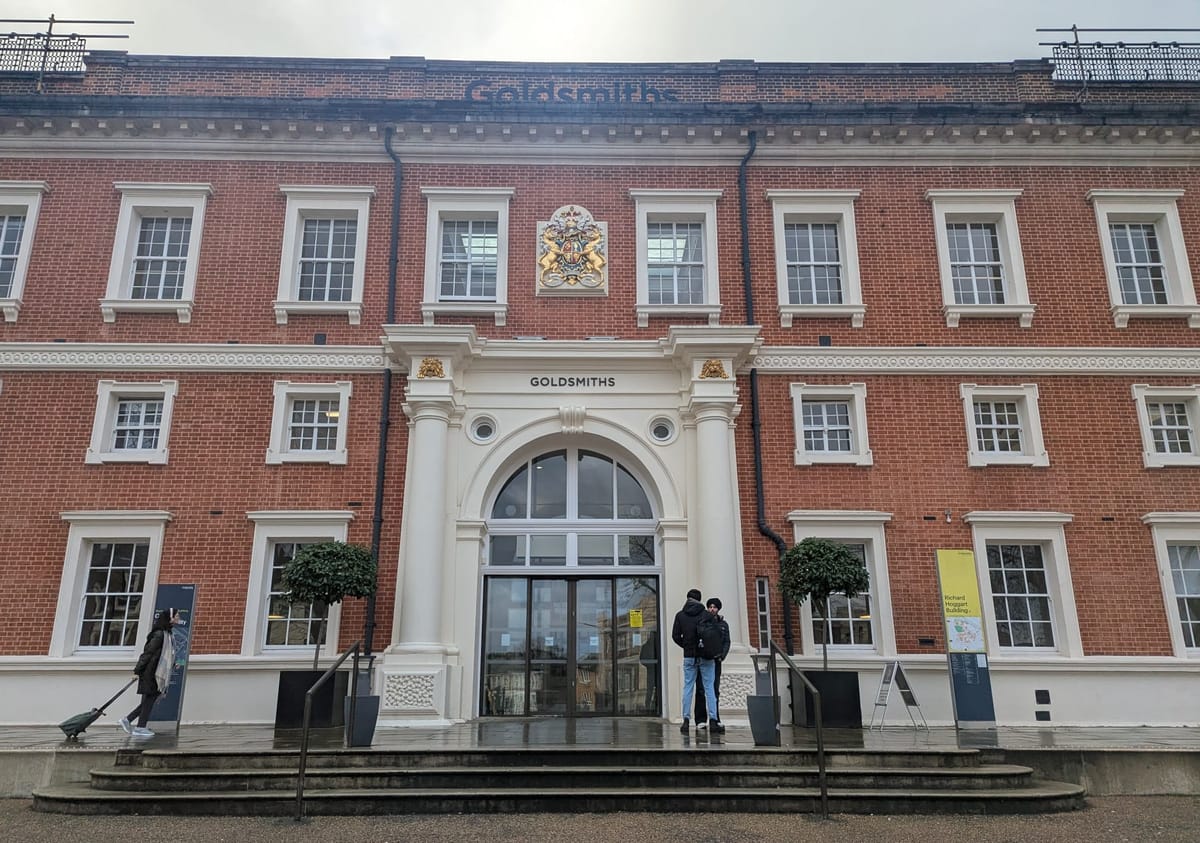
Goldsmiths branch of union UCU has voted for industrial action, to begin with a marking boycott, in response to university management's announcement of "Future Goldsmiths" - a two year programme of cuts.
University management plans to rapidly implement cuts to make savings of £22m by the end of the next academic year 2026/27.
The union covers both professional services and academic staff who will be affected by the plans. It reports that plans involve £20m in staff cuts: £10m each from Professional Service and academic staffing.
This represents almost 25% of staffing costs and could lead to over 300 staff being made redundant.
The union argues that far from ensuring the survival of the university, the cuts will undermine it further.
The branch meeting agreed: "We believe that .. to not oppose management's plans would give them free reign to destroy what is left of our workplace, to the point that their worst-case scenario predictions of insolvency will likely become self-fulfilling prophecies".
The union says that the planned boycott will effectively block students from progressing and graduating until the dispute is settled.
London's only local news co-op. Join us from just £2 per month or leave a tip.
The previous warden, Frances Corner's, controversial tenure began in 2019 with programmes of deep cuts, with at least two rounds of redundancies which led to strikes.
The cuts affected many of the departments for which Goldsmiths has been renowned, including degree courses in sociology, creative writing, music, theatre, performance and visual cultures.
Dierdre Osbourne, co-founder of its Black British literature course was made redundant, although after protests the course itself survived the last round of cuts.
While not criticising the struggling staff, students have told Salamander of their deteriorating student experience as Corner's programme took effect.
Students described lecturers disappearing in the middle of their course, whole degree courses being cut while they were in the middle of their degree, and the collapse of the administration function, which was needed more than ever to support them in the shifting landscape.
Following plans from global management consultancy KPMG, administration staff were cut and replaced with a centralised administrative hub.
The result was widely considered dysfunctional, unable to provide basic levels of support and information on modules to existing students, and affecting potential future students.
It even led to failures in issuing the necessary letters for international students to get their visas. The sudden reduction in international student numbers then added to Goldsmiths financial woes.
The union says that almost £15m was spent on consultants since Corner's arrival in 2019, including over £2.65m to KPMG.
Corner suddenly departed her role in October 2025, and the university's latest round of cuts suggest that the strategic transformation which she vowed would get the university on a stable financial footing, has failed.
Goldsmiths has explained the programme as a response to "the exacting policy and financial environment that is impacting all universities".
It references falls in student recruitment, national insurance increases and government cuts to the Office for Students strategic priorities grant.
The grant helps universities in areas including widening access and supporting vulnerable young people, including care leavers.
Following the abrupt reduction of costs of £22m by the end of academic year 2026/27, management plan "institutional transformation" by the end of academic year 2027/28.
"Goldsmiths is operating in an environment defined by declining enrolment, with our student numbers falling by more than a quarter in the last five years, rising costs, global competition in higher education, geopolitical insecurity, and rapid technological and cultural change," Acting Vice Chancellor Professor David Oswell said.
"Without purposeful redesign our institution will continue to face structural financial deficits and an operating model that is not aligned with future learners, regulatory expectations, or the pressing realities of our sector.”
A spokesperson for the university said: "We’re taking action to secure our place as one of the world’s leading creative universities, at a time when many in higher education are facing uncertain futures and are having to make difficult decisions.
“In an increasingly disrupted world we simply cannot afford to stand still, and our plan will ensure that we are able to continue delivering unique critical education and research while supporting our students to achieve their ambitions.”
It is not known how Goldsmiths' new programme of cost saving will affect plans for the Catford campus, but it is clear that the futures of students, staff and Lewisham communities are in the balance once again.
Sign-up for our free weekly newsletter - Salamander News in your inbox