Did tactical voting keep Reform out in Bromley and Bexley?
Bromley Labour opposition leader Simon Jeal suggests that Labour supporters switched to voting Conservative to stop the far right party.
Bromley and Bexley were two of Reform’s biggest targets in London in the run up to last week’s local elections.
Nigel Farage—who was born in Farnborough near Orpington —visited the borough of his birth last month and said his party had a “real chance” of winning both councils. Reform London mayoral candidate Laila Cunningham also visited both areas on several occasions to drum up support for the far right populist party.
Reform made big gains across the country last week, including taking control of its first London borough in Havering. But it didn’t manage to seize power elsewhere in the capital.
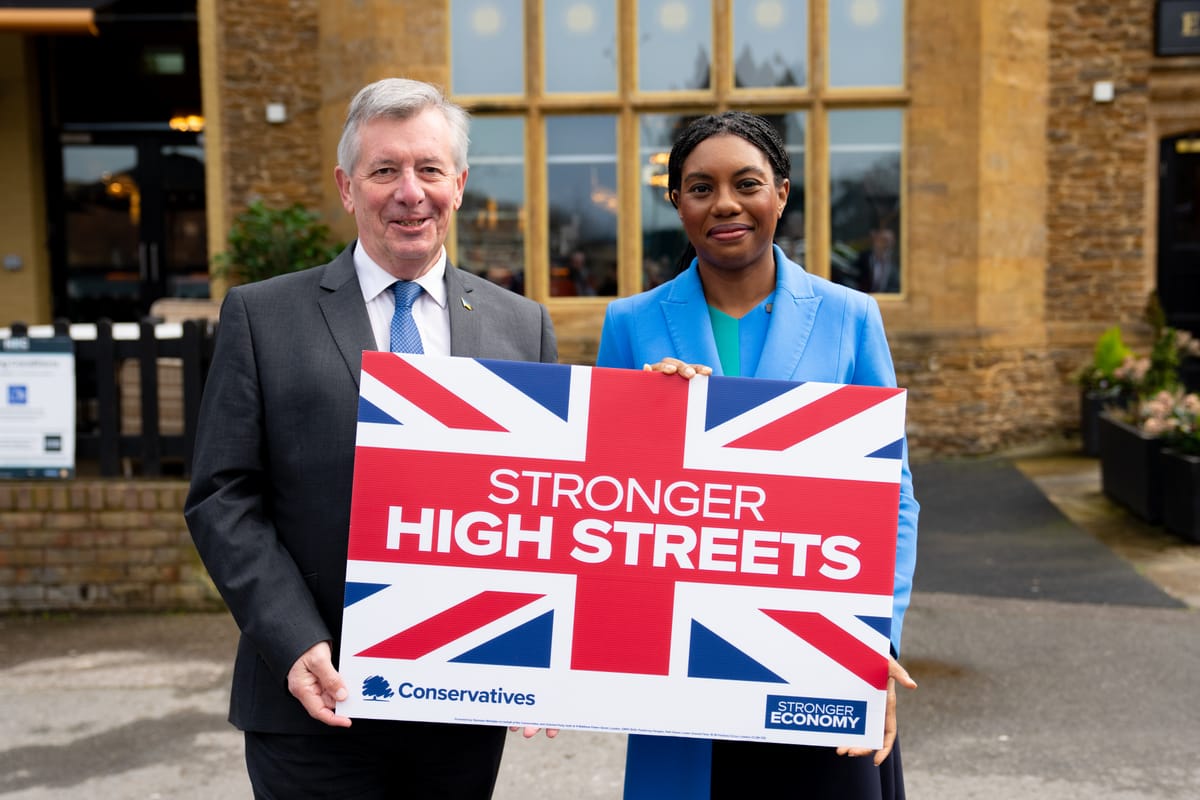
Many predicted Reform would take over in Bromley and Bexley, and YouGov had the Tories and Reform neck and neck in the polls before election day. The Conservatives clearly felt the heat, with party leader Kemi Badenoch visiting both boroughs in the lead up to the election to lend her support to local Tory candidates.
Despite what was predicted before May 7, the Conservatives held onto their majorities in South East London quite comfortably. In Bromley they even increased their number of councillors by two to 35. In Bexley they only lost one seat, their total now 29.
In Bexley there are now seven Reform councillors, while in Bromley there are six. Neither contingent is big enough to be the official opposition group which remains the job of Labour in both councils.
Reform UK Bromley Chairman Alan Cook became the party’s first directly elected councillor in the capital when he won the Bromley Common and Holwood by-election last summer. However Cook lost his seat to a Conservative last week, expressing his ‘disappointment’ at the overall results.
So where did it all go wrong for Reform in Nigel Farage’s backyard? YouGov predicted Reform UK would take 24% of the votes in Bromley and 29% in Bexley.
When it came to vote share, the analysts weren’t far off. In Bromley, Reform secured 21% of the votes cast. Over the border in Bexley, Reform had 32% of the vote.
But despite the party securing the second most votes in each borough behind the Conservatives, it didn’t translate into council seats. Reform has roughly 10% of the seats in Bromley, and 15% of the seats in Bexley. Under a proportional representation system, rather than first past the post, both councils would now be under no overall control.
'I voted Conservative for the first time ever, to stop Reform'
Tactical voting seems to be a factor in Reform’s failure to have more councillors elected. Bromley’s opposition Labour leader Simon Jeal certainly thought so. He said: “I think the honest truth is that a large number of our votes have gone to keeping Reform out.
“We’ve seen Reform really underperforming in Bromley compared to what many thought was going to be a Reform takeover possibly, so I think actually in many respects this is not the outcome we were hoping for but it’s certainly not the worst outcome we were fearing.”
Many voters took to social media (often anonymously) to admit they had voted Conservative to stop Reform gaining control. One Bexley resident said: “I think a lot of staunch Labour voters (myself included) voted Conservative for the first time ever, to stop Reform.”
Another said: “I never thought that I’d be relieved to see Tories win, but that’s how I feel now.”
Following his party’s election win, Bromley Council Leader Colin Smith said: “I’d like to thank all the residents of Bromley who voted for us. I’d also, unusually, very much like to thank those residents that don’t normally vote Conservative that voted for us to basically keep us in power out of perhaps fear of Reform gaining seats.
“It makes it a little bit sweeter and a little bit more special, but above all else, I think it is a great result for the people of Bromley.”
Councillor Smith put the Conservative win down to his party’s “proven track record” of running Bromley Council. He said: “I think residents know we are a safe pair of hands and are trusted.
“We approach our elections without flash gimmicks and without promises that can’t be hit, and we keep residents realistically advised of all the very difficult things that are going on and how and why we intend to manage Bromley the way we are planning to moving forward.”
Reform plan to take Outer London boroughs out of GLA
The “flash gimmick” Smith might be referring to was Reform’s suggestion that some Outer London boroughs such as Bromley should split from the Greater London Authority (GLA).
It was an idea first posed by Alan Cook after he was elected last year. At the time, he said Nigel Farage was “really enthusiastic” about the bold proposal which would see Bromley secede from London and form its own local authority, perhaps combining with other councils in Kent.
Proposed benefits included greater autonomy and Bromley residents not having to pay the GLA precept as part of their council tax, which Cook said went towards London Mayor Sadiq Khan’s “pet and vanity projects” that Bromley residents “did not want to pay for”.
However, if Bromley did leave London, it would no longer benefit from being part of TfL and its older residents would lose access to the Freedom Pass, amongst other things.
Nigel Farage stoked the flames of the debate a month ago when he predicted some boroughs would want to hold a referendum in the near future on whether they wanted to remain part of the capital. Reform’s national leader said some “really serious reconsiderations” of Bromley’s place in London were being discussed.
However, Reform denied it had any plans to engineer Bromley’s removal from the GLA just a few weeks later.
A Reform UK Bromley spokesman said at the time: “Over the last decade of Sadiq Khan and Labour’s catastrophic leadership it’s only natural that Bromley residents have become increasingly disillusioned with their place in the GLA.
“Whilst the Labour Party has serious questions to answer about its failure to deliver for the Outer London boroughs, Reform UK has no plans to take Bromley out of London.”
Despite being seemingly passionate about the idea less than a year ago, Reform’s U-turn on whether Bromley should remain part of London or return to Kent may have influenced voters on either side of the GLA split debate.
Across the border in Bexley, Council Leader David Leaf put Reform’s failures down to the party’s handling of Kent County Council. Reform took control of the upper-tier authority a year ago and has been heavily criticised for raising council tax when their party’s campaign leaflets promised to cut it.
Nigel Farage has continually denied that the campaign made any tax cut promises, positing their statements on the leaflets were referring to Reform’s national policies, not their local ones.
Councillor Leaf said: “We’re pleased that Bexley residents put their trust in us. They looked over the border, saw the chaos, broken promises, deceit and lies that Reform offer in local government in Kent and they didn’t want it here.”
Reform supporters accused of abusing other candidates online
Reform candidates have also been criticised for not taking part in hustings events in the lead-up to the election. After being re-elected, Bromley Labour councillor Jeremy Adams called Reform out for not allowing its candidates or policies “to be held to account”.
He also accused Reform supporters of abusing other candidates online. Adams added: “This is not a form of democracy that voters in Bromley or voters in Britain deserve. It’s not a British form of democracy, and I hope it disappears.”
In response to the criticism they received for not attending hustings, Alan Cook said: “We were in high streets, removing the middle man and actually talking to the people directly. We were very open and we were very available.
“That’s the other political parties making problems and making mischief and a big hullaballoo about nothing really.”
Reform councillor Christopher Marlow added: “There is no substitute for knocking on residents’ doors and going door-to-door.
“Nothing is better than speaking to the right people, and we did a phenomenal amount of that, particularly considering we’ve had to develop an organisation largely from scratch over a relatively short time.”
This may be the case, but with Reform only gaining six seats in Bromley when many predicted they would gain 30, it could be argued that not taking part in pre-election events was a factor.
The Chairman of Reform UK Bexley, Eamonn Delaney, did not get elected in Crook Log, but he did say his party was pleased with the Bexley results despite never getting close to mounting a leadership challenge.
Delaney said: “Our mission was to take seats away from both the Tories and Labour, and in that endeavour we have fully achieved our goal. Our vote share was also greater than forecast due to a fabulous campaign.
“Overall the margins were paper thin and on another day we could have easily had eight or nine more seats. In some cases we lost some seats by only two votes.”
Following a recount that took place hours after the rest of the Bexley results were declared, Labour candidate Donna Briant beat Reform’s John Frederick McDermont by just one vote in Slade Green & Northend.
Reform on a national level will see these elections as a great success. They have their first solid foothold in London with Havering, they have made significant gains across the country and they’ve taken councils from both Labour and the Conservatives.
But do they view their results in Bromley and Bexley as missed opportunities to strike deep into Tory heartland? It’s too early to say, but it is clear that Reform would need new tactics if they were to topple two Conservative strongholds in four years’ time.
Sign-up for our free weekly newsletter - Salamander News in your inbox