Besson Street, New Cross: plans for more homes .. and Passivhaus
Revised plans offer more private rented and affordable homes, and upgrade the scheme to the ultra-low energy Passivhaus standard for warmer homes, lower bills and low climate emissions.
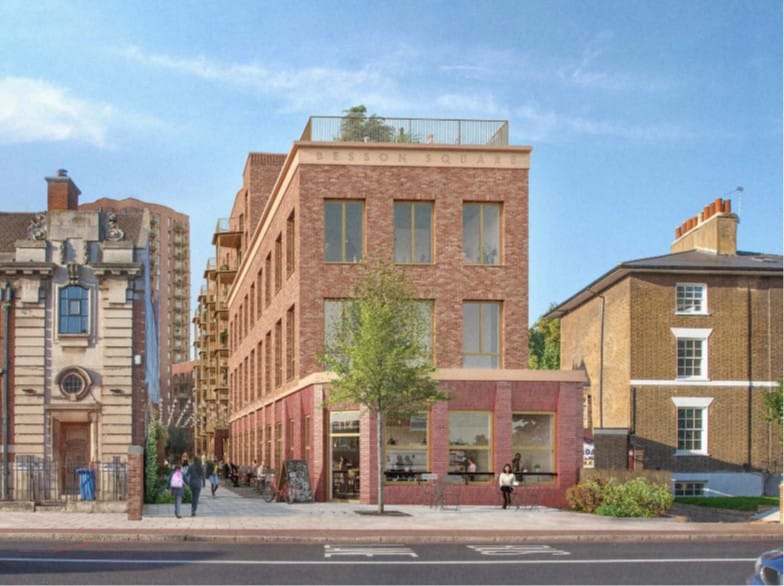
The proposed changes to the Besson Street development increase the number of homes to 383, while keeping the proportion of affordable homes at London Living Rent at 35% (134 homes).
The additional homes are achieved mainly through increasing the height of the tower from 12 to 18 storeys, and raising the height of the seven storey building by one storey.
Most other key features of the scheme are unchanged, but there are innovations in sustainability.
The entire development will be brought up to exacting Passivhaus energy-efficiency standards, to provide residents with warm homes in winter, comfortable homes in summer and low energy bills, with very low climate emissions.
Architects Maccreanor Lavington were founder signatories of the Architects Declare movement and told Salamander what the Passivhaus "fabric first" approach will mean for the Besson Street scheme.
The Besson Street site is owned by Lewisham council and has been lying derelict since the demolition of earlier buildings in 2008.
Since then multiple planning applications have been approved and then lapsed.
The most recent planning application was consented in 2022 for development of 324 homes, in partnership with the firm Grainger which builds property for rent.
London Living Rent tenancies
The plans included no social rented homes, but 35% of homes (114) were to be let at London Living Rent (LLR).
The LLR calculation for the Besson Street scheme would be based on average incomes in the Telegraph Hill ward.
Lewisham council says that the LLR tenancy homes are "not aimed at people who qualify for council homes.
"Instead they are aimed at residents who earn low to average incomes, are priced out of home ownership, have no realistic prospect of getting a council home."
A "good private landlord" model
The council argues that as well as the acute need for social rent and other affordable homes, there is a need across the borough for well-managed private rented homes.
The development is intended to "showcase what a good private landlord" looks like, with measures such as tenancies of at least 10 years, rent controls, no agent fees and 24/7 responsive repairs.
It counters arguments that the development will push up market rents, saying it will deliver "much better services at mid-market rent levels. We hope this will have a stabilising effect on the local private rented sector".
Sign-up for our free weekly newsletter - Salamander News in your inbox
What are the proposed changes to the scheme?
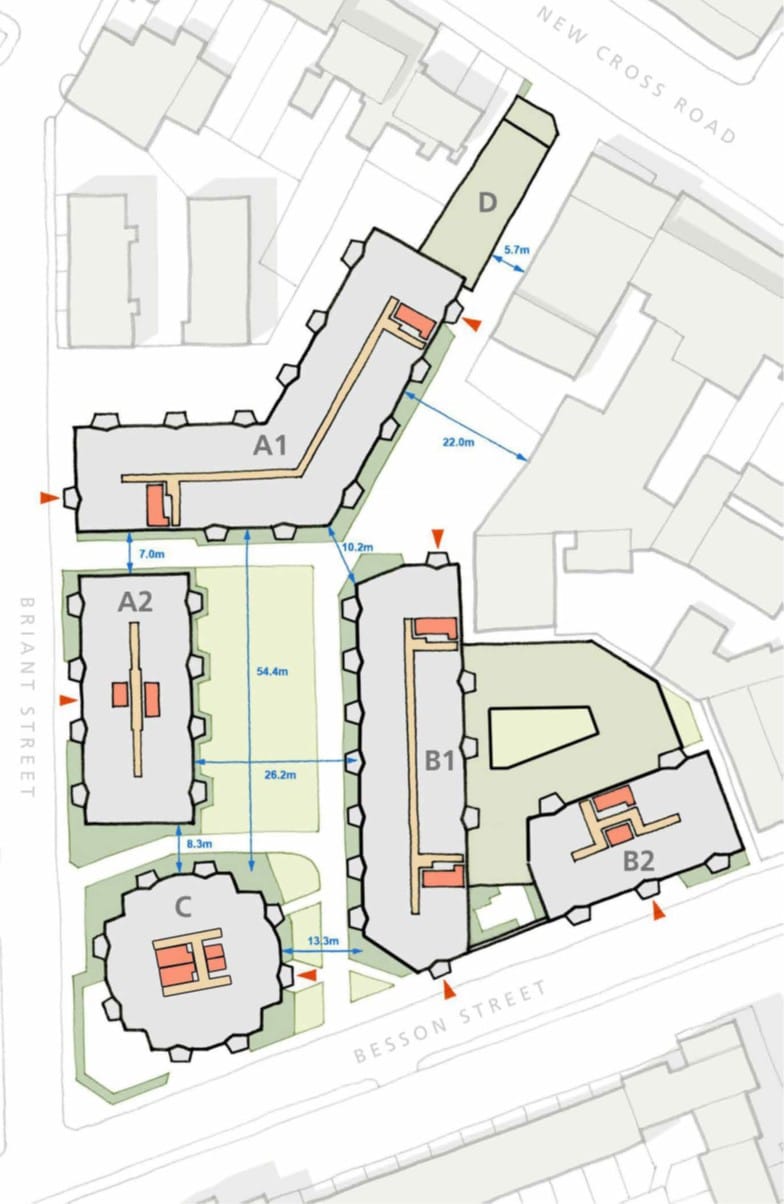
The amended plans keep key features of the plan unchanged, including the layout of the buildings, the GP surgery, community space and public green spaces.
They add second staircases to the taller buildings - this is required to comply with fire safety standards, which were upgraded following the Grenfell tower disaster.
The revised plans provide an additional 59 homes, bringing the total to 383 homes, while keeping the proportion of affordable homes on LLR tenancies at 35% (a total of 134 homes).
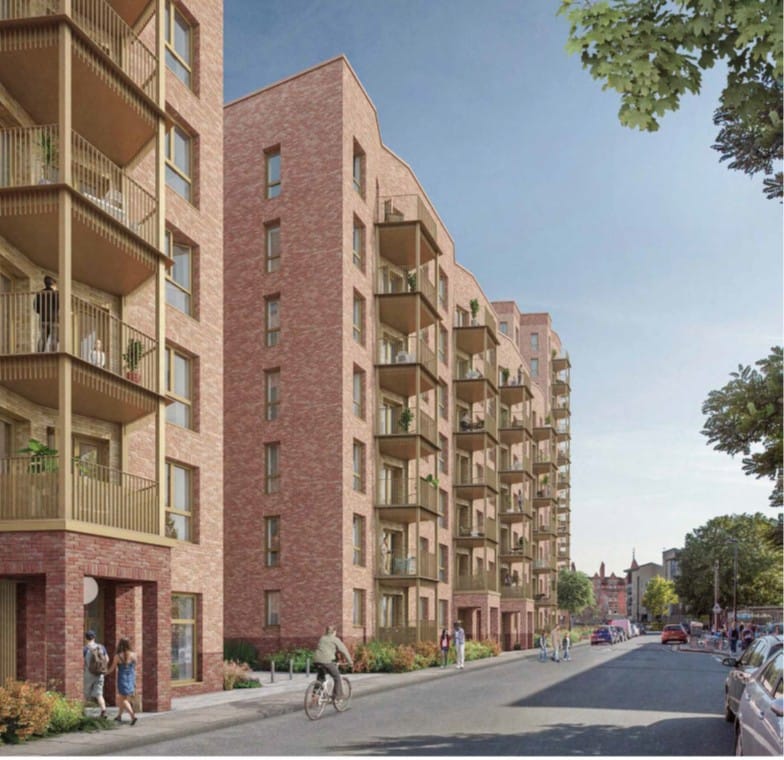
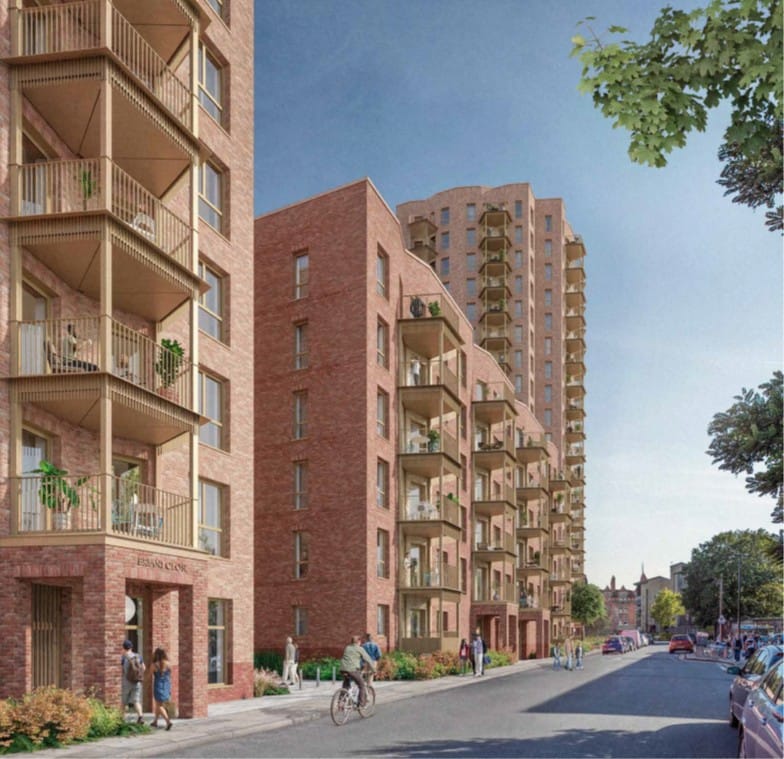
View from Briant Street before and after revisions, showing building A2 reduction in height, building C tower increase in height. Images: Lewisham council and Grainger consultation event
The increase is achieved by increasing the height of the tower by six stories, and two other buildings/part buildings by one story, while two buildings have a single storey reduction in height:
- Building A1: increases in height from a part-6/part-7 storey building to a consistent 7-storey building.
- Building B1: increases in height from a 7-storey building to an 8-storey building.
- Building C1 (The Tower): increases in height from a 12-storey building to an 18-storey building.
- Buildings A2 and B2 will each be reduced in height by one storey.
What are the drivers for the changes?
The architect told Salamander there were three different drivers for the revised plans:
- The change in building regulations following the Grenfell, which require a second staircase in higher buildings.
- The changed economic climate since the pandemic and the invasion of Ukraine and continuing challenges to construction, which means that more homes are needed to make project viable.
- Improvements to sustainability, and their mission to built the development to Passivhaus standards.
How will Passivhaus be achieved?
Architects Maccreanor Lavington told Salamander that addressing the climate emergency is a practice priority.
They outlined the planned measures to achieve Passivhaus standards across the Besson Street development:
"The scheme will incorporate a fabric first approach which includes enhanced insulation to the external walls, triple glazing and increased airtightness.
"This will minimise heat loss and mean you don’t use as much energy to heat the homes as you would normally.
"It’s important to make sure that the homes won’t overheat by controlling solar gain. You have to control the amount of glazing a bit more when taking this approach and we have reduced the size of some windows while still maintaining views out and daylight in.
"This will be combined with a change in energy strategy which will mean there will be individual exhaust air heat pumps (EAHP’s) in each residential unit.
"EAHP’s work by recycling energy from warm, stale indoor air (from kitchens/bathrooms) using a ventilation system, then transferring that heat to provide hot water and space heating (radiators/underfloor), all while bringing in fresh, filtered outdoor air, making them highly efficient for modern, well-insulated homes.
"This will mean you need even less energy to keep the home warm in winter and they even provide some cooling in summer."
The firm advocates for improvements in building and material efficiency with clients and their design teams, and their work is assessed against ‘RIBA 2030 Challenge’ and ‘LETI’ climate emergency targets for embodied carbon.
Support independent, local journalism. Become a supporter or leave a tip.
Transport links and nearby development
The site sits nearly halfway between two Overground stations: New Cross Gate, and Queens Road Peckham.
It would also be a ten minute walk to the proposed Old Kent Road station on the Bakerloo line extension, which is currently unfunded.
There are planning proposals at nearby Kender Street and New Cross Road, between 8 and 11 storeys tall.
Crossing the Southwark Border, building heights dramatically increase.
The tower block next to Brimmington Park reaches 21 stories, with a ground floor Aldi open. This replaced a single story Aldi.
North of Old Kent Road, at 349 Ilderton Road there is a new development of 13-15 stories.
Although the planning application at this site covered purpose built student accommodation and 58 affordable homes, developer YourTRIBE petitioned Southwark council in January 2025 to allow the affordable homes to be privately sold.
Besson Street Consultation
Following the in-person consultation event on 20 January, the information boards can be viewed here. The on-line consultation is open until 6 February.
Thank you to Tomilyn Hannah Rupert for research.
Sign-up for our free weekly newsletter - Salamander News in your inbox