The transformation of a Ladywell flytipping spot .. into a green sanctuary
What happened to our street the day we stopped waiting.
We live in a time when we are constantly exposed to enormous problems but often feel powerless to do much about them.
It's becoming common knowledge that this situation affects our mental health, but less often discussed is another consequence: when something has been wrong for long enough, no matter how obvious or unacceptable it is, we begin to lose hope that it will ever change.
This is why today I'd like to tell you a story, taking my chances against the rules of sensationalism the media often relies on to capture our increasingly scarce attention.
No dramatic petitions, no finger-pointing, no loud protests, no celebrities and no large budgets played any part in its unfolding. Instead, I invite you to follow the journey of a residential street in Lewisham, where people who once felt powerless discovered that as antisocial behaviour can spread, so too can hope.
It is a story about fly-tipping, and, unusually enough, it is a story with a happy ending.
If you're reading this from somewhere in the borough, that alone may qualify as newsworthy. But if I still haven't quite captured your attention, let me add one final detail: a problem that had persisted for over 20 years has been turned around in less than three months. Hooked? Great ..
Follow me to Sandrock Road, a quiet T-shaped street somewhere between Hilly Fields and Lewisham. One end finishes in a small cul-de-sac, connected to the road above by a narrow pedestrian alley. The perfect blind spot for illegal dumping.
Over the years, residents became accustomed to waking up to an ever-changing catalogue of discarded belongings: builders' rubble, mattresses, shopping trolleys, broken furniture, toys, clothes, electrical appliances and countless black bags filled with unknown contents.
No CCTV cameras had ever been installed, the council would just come now and then to collect the load and local residents would exhale in temporary relief, immediately replaced by the frustrating certainty that another pile will form in just a few days.
Every collection was simply a reset before the next inevitable chapter in the same familiar story. Slowly, the rubbish became more than just rubbish: it became part of the identity of the place.
Residents' bins started being left permanently on the pavement, despite council regulations, to the point where children walking down the hill towards one of the nearby primary schools would ask their parents: "Why do we always go down the bin street?".
A handful of residents tried to seek support from the council, but no consistent enforcement seemed to happen, nor to be realistic given the extent of the issue.
The physical mess was accompanied by something less visible, yet arguably more damaging: the growing conviction that nothing could ever really change. This is when things escalate to new levels of complexity, because when change no longer feels possible, it quietly reshapes the expectations of everyone involved: certain behaviours become normalised and accepted, while others gradually disappear through collective resignation and burnout.
The bar for what is considered acceptable keeps lowering. We stop expecting better, stop asking for better and, eventually, stop imagining that better is even possible.
Sign-up for our free weekly newsletter - Salamander News in your inbox
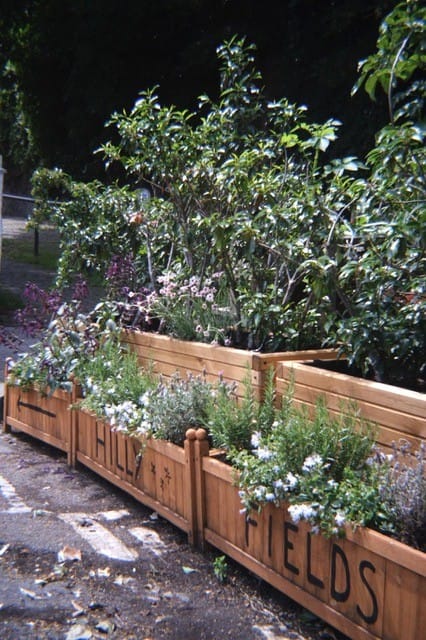
Our story takes an unexpected turn when we decided to change our front yard layout: eighteen rather unremarkable (if we're being honest, mildly depressing) plants, arranged in groups of three, suddenly needed a new home. Together with some neighbours, we realised that they could be positioned along the edge of the dumping hotspot, creating a modest green barrier that would at least make it a little less convenient for cars and vans to pull up and unload their rubbish.
In what was, admittedly, a rather tentative attempt to reclaim a small sense of agency, a fundraising pot was set up to buy a handful of inexpensive planters and give the idea a chance. Little did residents know that those eighteen displaced, rather underwhelming plants would soon find themselves on the front line of an unexpected green revolution.
In fact, within just a few days the pile of rubbish had already reduced dramatically. It quickly became clear that what still appeared at the site was no longer being dumped from cars or vans, but left behind by people walking through from nearby streets.
This was definitely a bittersweet discovery. On the one hand, we had achieved a significant victory: changing the trajectory of a problem that had persisted for years and years in a matter of days felt almost miraculous. On the other, we were confronted with a very uncomfortable truth: much of the remaining litter was coming from our own local community.
I think that was the clearest indication of how far expectations had fallen, because the problem was no longer just the rubbish itself, but the culture of resignation and diminished responsibility that had grown around it.
We realised then that it wasn't enough to stop people using the space badly, we had to give them a reason to use it well. So, by day twenty or so, we began looking around Facebook Marketplace, driving across South East London to collect affordable planters and gradually extend the planted area.
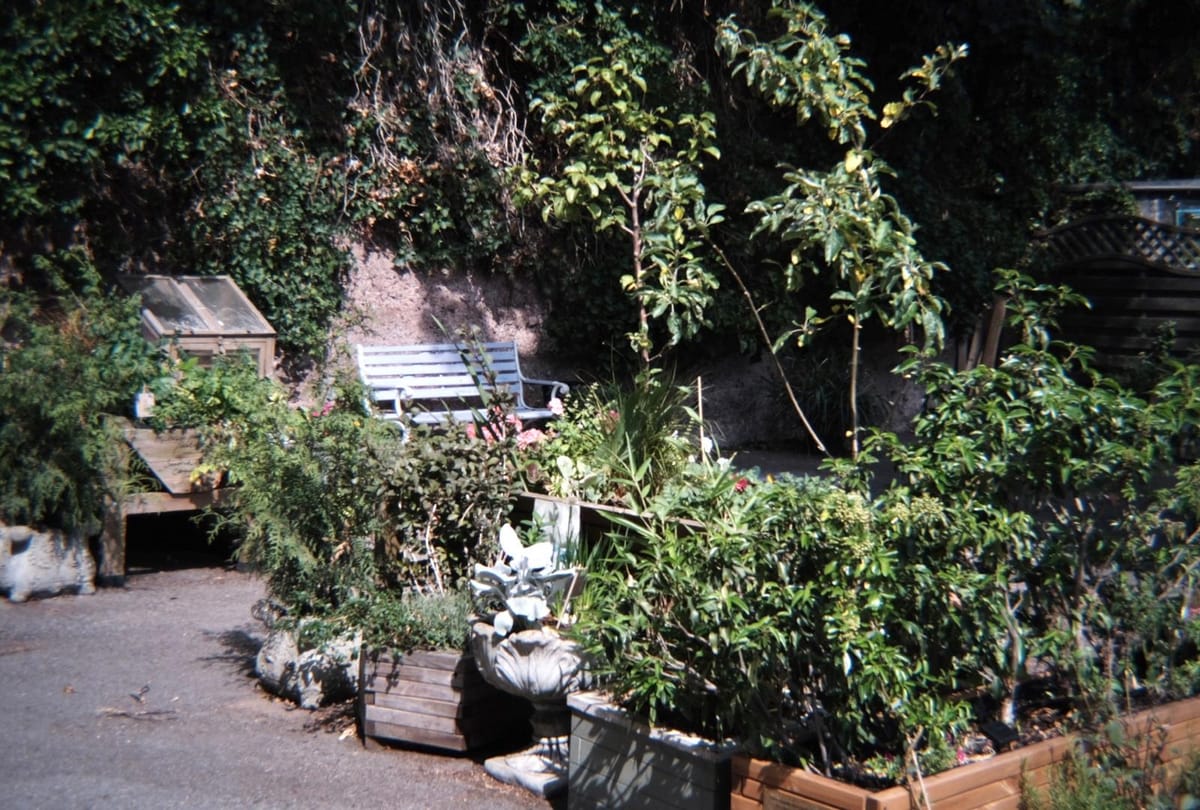
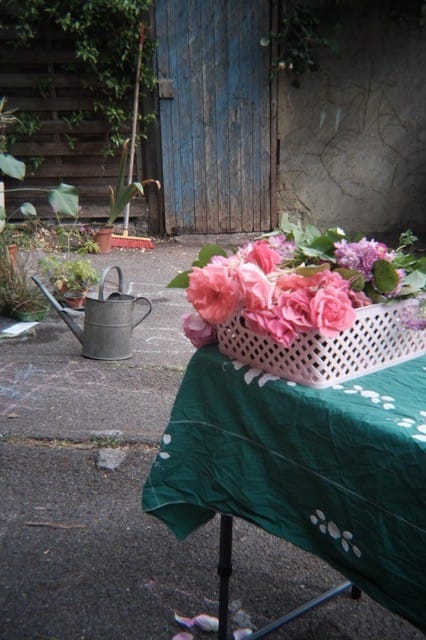
An incredibly generous donation by a local estate agent really helped and gave us courage to keep going. A generous neighbour donated a greenhouse cabinet, which we turned into a little community library and book swap. We left out chalk for children to draw, a few toys, basic gardening tools and bird seed so anyone passing by could refill the feeding station and feel part of the project.
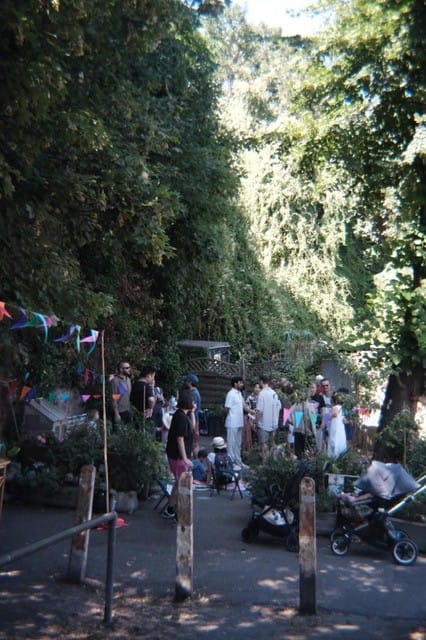
A bench appeared beneath the shade, inviting people to pause for a moment with a book. A small mud kitchen and a collection of tree stumps created an opportunity for imaginative play. Little by little, what had once been a dumping ground began to offer reasons to stop, linger and connect instead.
We also started an Instagram page, hoping not only to involve more people but to make a simple public statement: this space had a new identity now, and it belonged to the community. We even gave it a place on Google Maps, as if to say, "This is our somewhere now."
Local florists began donating plants that were no longer suitable for sale, allowing us to keep costs to a minimum while giving perfectly healthy plants a second chance. Over time, we became more intentional about what we planted, introducing vegetables, fruit and herbs so children could explore a richer sensory environment and discover where food comes from.
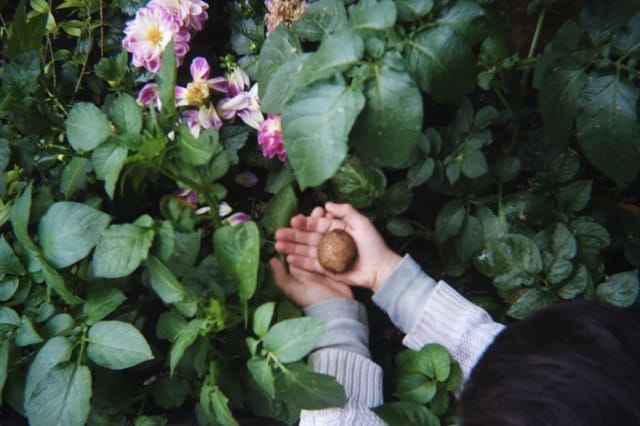
We designed the garden to support pollinators and wildlife, while keeping plastic to an absolute minimum wherever possible. Tucked among the flowers, we planted something else too: short quotations from literature and poetry, offering visitors small pockets of beauty and kindness in a world that can so often feel hurried, indifferent and harsh.
By Day 45, it was clear that the more the garden grew, the less fly-tipping we had. When we hosted our first community plant swap, we realised we had also created a place where a community itself could begin to hope again.
The final piece of the puzzle came when the council removed the public bin that had unintentionally legitimised the remaining littering. Once that excuse disappeared, so did the dumping.
We are now just three months into this journey, the fly-tipping is gone and the garden continues to grow. We are applying for grants, working closely with the council, and dreaming up new ways to make this little corner of Lewisham an even more welcoming place for anyone who wishes to pause and rest.
This Saturday, we will hold our very first street party. Among other things, we'll begin creating our Clootie Hope Tree, where people will be invited to tie a ribbon carrying a hope for themselves, for someone they love, or for the wider community.
And perhaps this is the most fitting way to end this story. We hope it encourages others to nurture hope, take the initiative and reclaim the places they call home. London has always been a city of possibility, shaped by the extraordinary diversity of its people. We are living proof that this is still true.
Communities change when ordinary people stop waiting for someone else to fix the issues they are facing. If you think someone should do something about it, just remember, you may be that someone.
Sandrock Road Community Garden is on instagram @sandrockcommunitygarden along with their fundraiser.