Campaigners raise PFI fears for Lewisham and Queen Elizabeth hospitals
Riverside wing at Lewisham hospital was built under PFI and opened in 2006; NHS campaigners are raising concerns about the ongoing poor service levels and financial risks.
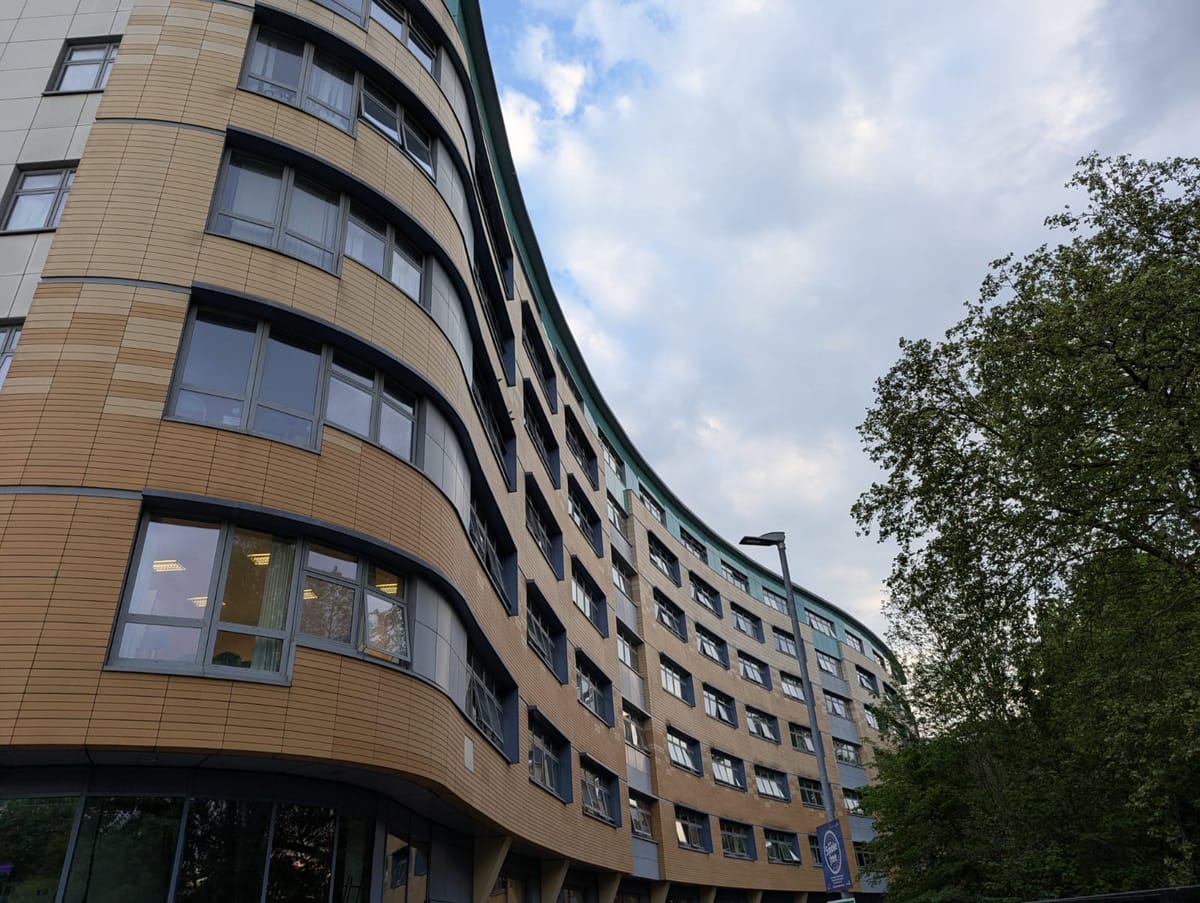
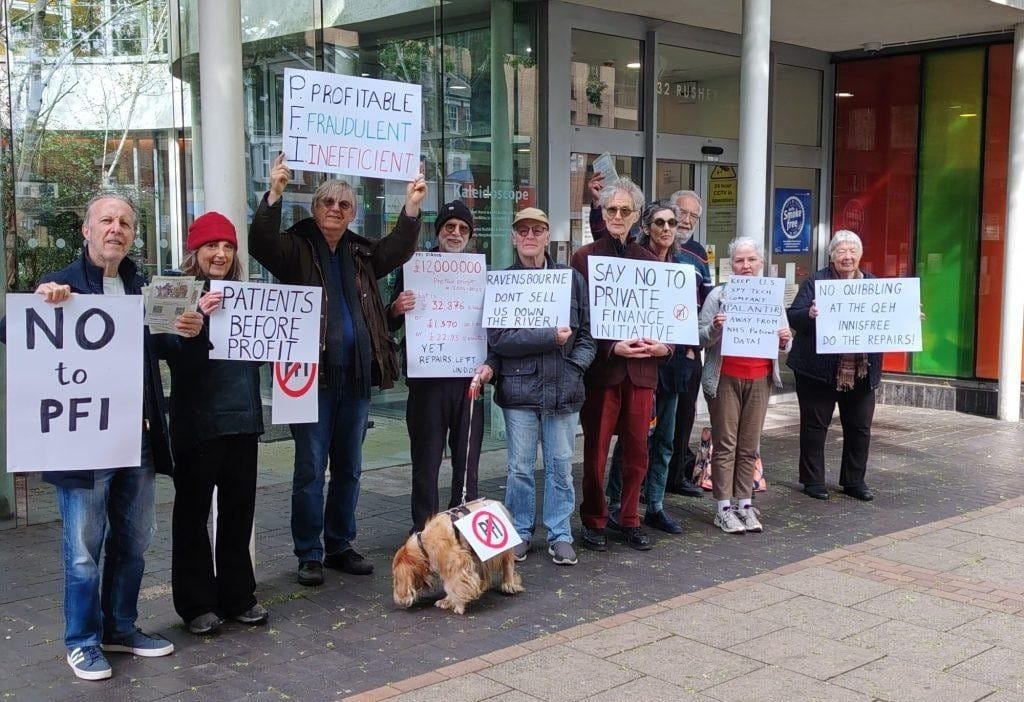
Campaigners Reclaim the NHS are raising concerns about the Private Finance Initiative (PFI) contracts held by Lewisham and Greenwich NHS trust for Lewisham and Queen Elizabeth hospitals.
The campaigners raised questions about poor service levels and the financial risks to the trust as the PFI contracts come to an end, at a board meeting of Lewisham and Greenwich NHS trust on 28 April.
But they were told that the trust could not comment publicly due to commercial confidentiality and current discussions with the contractors.
Campaigner Helen Mercer said: “We understand that the Trust may not be able to reveal financial details but our questions related to what the company accounts suggest are serious maintenance issues."
PFI contract at Lewisham Hospital
Ravensbourne Health Services Ltd built and provides maintenance for the Lewisham Hospital Riverside building under a PFI contract that began in 2006 and is due to end 2036.
Lewisham and Greenwich NHS trust is Ravensbourne's only client.
Giant developer Carillion built the new wing. The firm was the UK's second largest construction company, with a large network of PFI contracts.
Carillion went bankrupt in 2018, making Ravensbourne liable for repairs in a programme continued through 2025.
In its last annual report to March 2025, filed in December 2025, Ravensbourne reports "significant areas of reductions" in payments received from the trust to a total of over £1m due to reporting failures, contractual disputes and quality failures.
The firm reports that it breached its Service Failure Points every month from November 2024 through to August 2025.
Service Failure Points are a measure of service quality, and can be caused by construction defects, failure to meet compliance standards (eg on fire regulations) or facilities management failures (eg help desk, cleaning, maintenance levels.)
The trust then formally withheld over £1m of payments in August 2025, which Ravensbourne note as “an Event of Default” .
The PFI firm notes the risk that the NHS trust might terminate the contact and its lender might terminate its credit agreement.
However, it paid dividends of £1.5m to its shareholders for the year ending 2025.
PFI contract at Queen Elizabeth Hospital
Queen Elizabeth Hospital in Woolwich has a PFI contract with Meridian Hospital Company which built the hospital, began operating it in 2001 and now maintains it.
The contract is due to end in 2030. Meridian has been in a long-term dispute with the trust over maintenance standards.
Its latest annual report states that "monthly performance reports have not been agreed by the Trust since July 2022" and associated deductions are "under discussion".
This is a particular concern as the PFI is coming to an end.
The National Audit office has outlined risks of service disruption as PFI schemes come to an end.
Meridian’s majority shareholder is Innisfree - one of the largest investment funds in the UK and involved in many school and hospital PFI contracts.
The BBC reported on the problems at the end to the PFI contract for Stoke-on-Trent City schools last year.
TSSL, the PFI company which held the contract, went into liquidation leaving high levels of serious maintenance issues across more than 40 schools.
The BBC found that TSSL was in a group of companies that belong to Innisfree, however, Innisfree did not intervene to support TSSL and continued paying its own dividends.
Mercer said: “PFI companies are taking millions every year in profits from these contracts. In 2024 - 25 pre-tax profits of Meridian and Ravensbourne came to £12.45m.”
“Reclaim the NHS will continue to press for information and assurances regarding maintenance issues under the PFI contracts at Queen Elizabeth and Lewisham hospitals and will oppose any proposed new PFIs in the NHS.”
A Lewisham and Greenwich NHS Trust spokesperson said: “The trust is working towards exiting both its PFI contracts, in 2030 for Queen Elizabeth Hospital, Woolwich and 2036 for University Hospital Lewisham’s Riverside building.
"In doing so it is following a best practice methodology set by the Government’s National Infrastructure and Service Transformation Authority (NISTA). As part of this process, the Trust is working with its PFI partners on both sites to ensure maximum value for money on both contracts and to ensure optimum service delivery for our patients, colleagues, and stakeholders.
"Any liability risk to the Trust at hand back of the PFI assets is mitigated through the application of the NISTA approach to PFI exit planning.”
Support local independent journalism from just £2 per month.
PFI was launched under John Major's Conservative government in 1992 and heavily adopted by Tony Blair's New Labour government from 1997 to 2007.
It is a financial structure which uses private finance, underwritten by public money, to build public infrastructure. Public bodies then repay the financing with interest over the following decades.
The mechanism allowed government to place debt "off the balance sheet" and was later widely criticised. Conservative chancellor Philip Hammond announced an end to the use of PFI in 2018.
It is considered highly damaging to public sector organisations because of the heavy burden of cost to finance the debt, which has led to some organisations going into special administration.
In the case of hospitals, servicing the debt has a direct impact on patient care.
The Institute for Public Policy Research (IPPR) published a report focussed on PFI within the NHS in 2019.
It found that paying off the PFI debt of £13bn of investment would eventually cost the NHS £80bn and that the legacy of PFI was harming quality of care for patients.
Sign-up for our free weekly newsletter - Salamander News in your inbox