Ladywell Fields: long-awaited new café opens amid construction fears
Three days after the celebration launch of the new Fields café, contractors will begin the NHS trust ground source heat pump project drilling bore holes deep into the public park, which sits over a chalk aquifer.
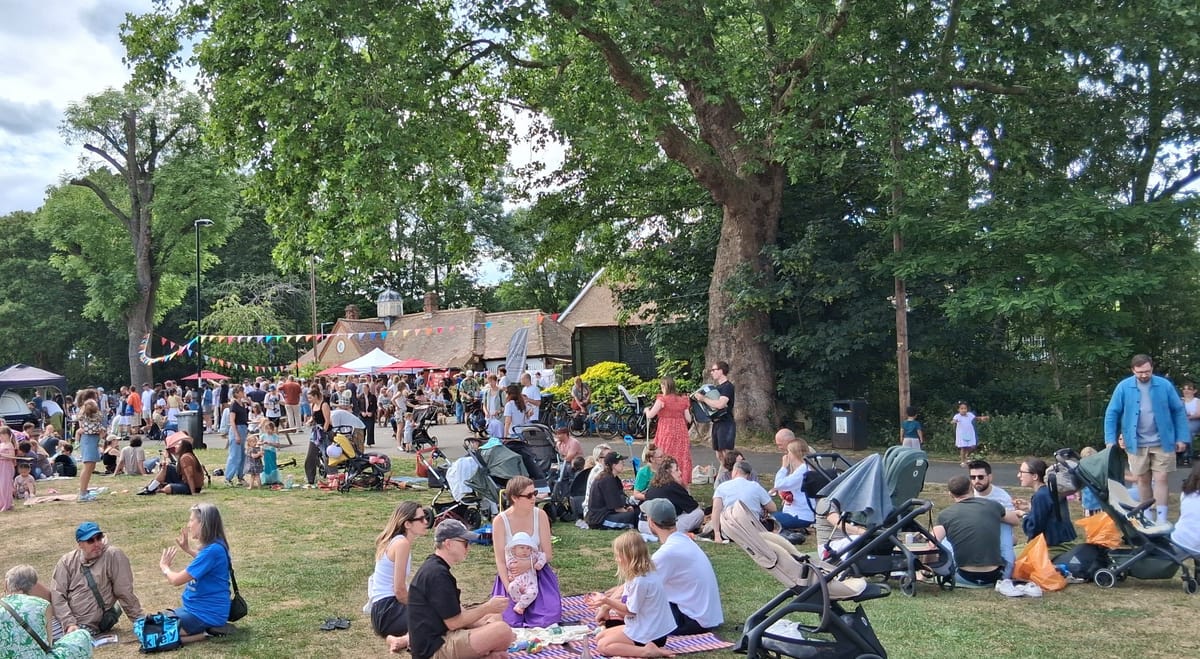
From today, the café in Ladywell Fields has re-opened. The café, renamed Fields, is located in a Victorian lodge in the park’s north field.
For over a decade the café was run by the Jimmy Mizen Foundation as the Thousand Hands/Good Hope Cafe.
After a competitive bidding process managed by Glendale (which provides maintenance and management services in Lewisham parks), the new café is now being run by Joel and Alina, the team behind the café Oscars, restaurant Wilsons and the wholefoods store Plenty, in Ladywell.
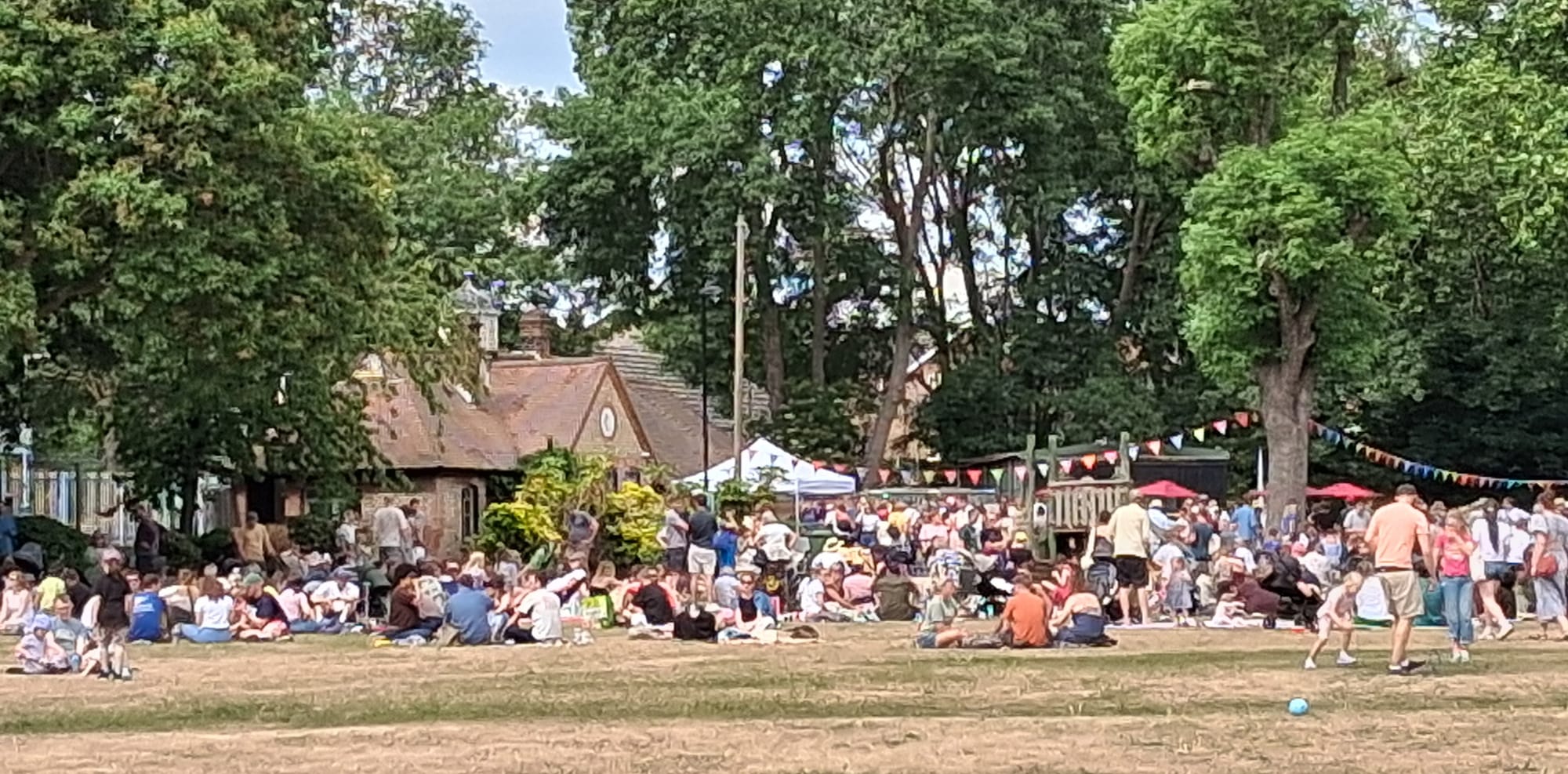
Ahead of its official opening today, there was a party on Sunday held as part of the programme for Broxley Max community festival.
The news about the re-opening of the café had clearly travelled far, as demonstrated by the very large number of people who attended.
Open loop ground source heat pump - a fridge in reverse
The re-opening of the café is not the only development taking place this week in Ladywell Fields.
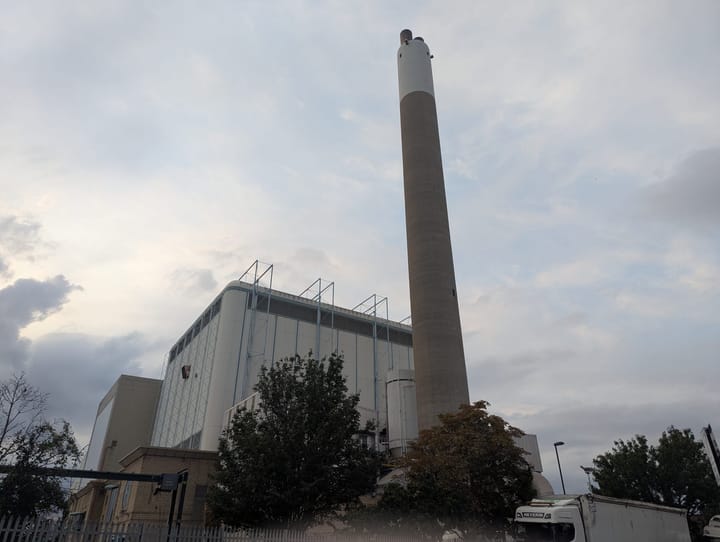
Work is set to start on Wednesday 3 June on Lewisham and Greenwich NHS Trust's £25m infrastructure project which aims to replace the hospital's gas boiler system, which dates back to the 1970s, with an open loop ground source heat pump.
The first step is to determine viability of their planned use of the water in the chalk aquifer underneath Ladywell fields.
This type of ground source heat pump works by harnessing heat from water which flows naturally underground.
Water is pumped to the surface where heat is extracted using a heat pump and transferred for use in nearby buildings. The cooled water is then returned underground.
The heat pump process has been described as like a fridge in reverse and works by extracting heat from the water, which in colder months will be warmer than ground temperature, and returning cooler water to the aquifer.
The initial planned works are set out in the Works Notice, which suddenly appeared late last week in the park.
Work begins with drilling two deep (90m) boreholes and two shallow (10m) boreholes in Ladywell Fields Park.
It includes installing casing, building headworks and pumping tests.
Sign-up for our free weekly newsletter - Salamander News in your inbox
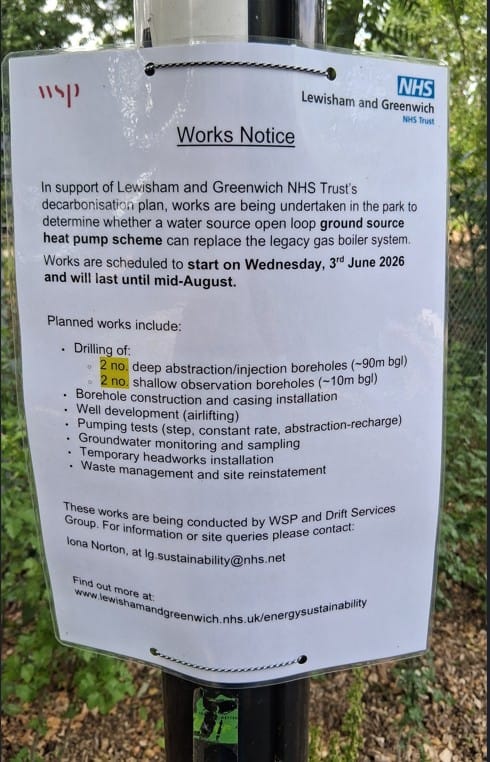
One set of boreholes will be near to the newly re-opened Fields cafe, while an enormous digger will be parked on the grass nearby for around 12 weeks.
The details of the exploratory drilling were formally released by the trust on 27 May in press release, which states:
"Work will be restricted to small, fenced enclosures, and a traffic management system will ensure that equipment is brought on and off site efficiently, with minimal disruption.
"One set of boreholes will be located in the open field area north of the playground, with the second set at the southern end of the park. These locations have been selected to minimise impact on tree root zones.
"Track matting will be laid between the two work areas for the duration of the works.
"We have conducted several surveys covering: groundwater, arboriculture (trees/roots/plant life) and ecology (animal/wildlife environment) to ensure we minimise any impact to the park.
"Disruption during the work will be kept to a minimum and local residents will continue to have access to the park at all times.
"If the data collected during this initial testing phase (scheduled to finish on 11 August 2026) proves the scheme is technically viable, the project will work towards a second phase that would require additional drilling of up to 6 further boreholes, again with works restricted to small, specific areas."
If the second phase of the project goes ahead, the NHS trust forecast that the work will be completed in summer 2028.
Once installed, the low carbon heating system is projected to save 4,000 tonnes in carbon emissions per year, compared with use of the old gas boilers.
Is fingers crossed the way to treat this much-loved park?
Despite many park users finding out only this week about the changes that are planned in one of Lewisham’s most popular parks, it is worth noting that funding for the scheme was confirmed exactly a year ago.
Lewisham and Greenwich NHS Trust were allocated £17.8 million of Government funding in June 2025 from the Public Sector Decarbonisation Scheme, with the Trust having to find the remaining capital of the expected £25 million investment.
At this stage it is far from clear why communication with the public about the actual impact on the park has been left so late, by both the hospital and Lewisham Council.
Many users of the park would welcome far clearer assurances about the disruption that will take place in the park this summer.
And further assurances will be needed before the second phase of the project, assuming it goes ahead. Drilling of up to six further boreholes will be required, as well as pipework across sections of the park and crossing the Ravensbourne River.
There are concerns about the transparency around this £25m publicly funded project, which has not yet received the scrutiny of Lewisham council's planning process.
Following the first press release in December 2025, the wide-ranging community engagement and consultation promised by both the trust and Lewisham council did not materialise.
The trust state they have conducted several surveys covering ground, arboriculture (trees, roots, plant life) and ecology (animal/wildlife environment) to help minimise any impact to the park, although these reports have not been made available to the public.
Salamander will request further information about the project from the trust and the council, and request that these reports are made public.
The trust stated in December that the work would not begin until Lewisham council gave "permission to proceed in collaboration".
There are questions about how the assessment of the technical viability will be made following the test drilling, who will make that assessment and how independent it will be.
And if the initial testing reveals the scheme is not technically viable, what the trust's other options are.
Behind this, there are questions about the alternative options that were available to the NHS trust, which do not cause the same high level of disruption to the park and river, and the ecosystems that depend on them.
Alternatives might have included air source heat pumps on hospital grounds or alternative types of ground source heat pumps with a smaller footprint and which do not depend on the chalk aquifer.
It is worth noting that while other NHS trusts around the country have set out their plans for similar projects, it seems that none of them are operational at present.
And following last week's disturbing heatwave, there is a question over cooling.
The Climate Change Committee's report of 20 May 2026 stated that air conditioning should be installed in all care homes and hospitals within the next 10 years.
There are heat pumps that can be used for both heating and cooling, but the trust's current plans are for heating only.
Wednesday will see the arrival, via Ladywell Road, of the drilling equipment for this new sustainability project.
We will report back later in the week on how the first few days of work are progressing.
Updated 3/6/26 17:01 to clarify that Salamander requested further information from Lewisham council and LGNT immediately following publication, for use in a follow up article.
Support local independent journalism from just £2 per month or leave a tip.