£1bn government investment in community energy will 'drive down' bills across London
The government's Local Power Plan means that community groups can now bid for funding to generate clean energy. Kate Parker, co-chair of South East London community energy (Selce) welcomes the scheme.
A £1bn government investment into community energy projects could drive down bills across London while also making the capital greener, a minister has said.
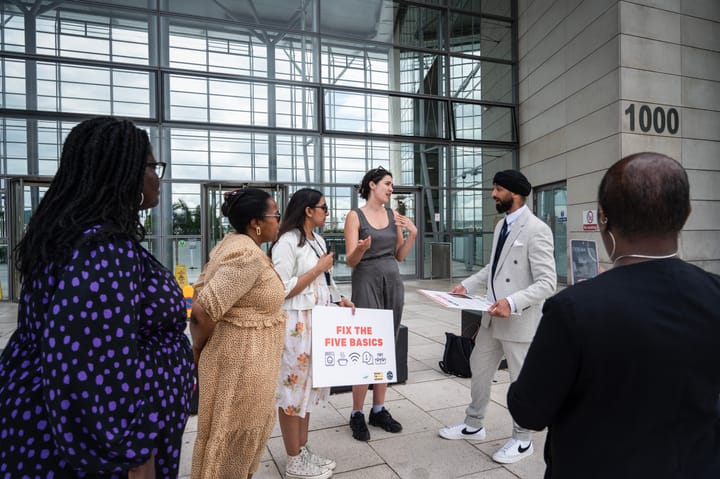
Community centres, places of worship and social clubs will be able to bid for funding for clean energy generation under the plans announced on 9 February.
Energy Secretary Ed Miliband said the intention of the Local Power Plan is for every local community to “own and control clean energy so the profits flow into the community and not simply out to the big energy companies”.
During a visit to a Community Food Learning Centre in South London, Minister for Energy Consumers Martin McCluskey said the scheme was a glimpse of a “new economy” in London and across the UK.
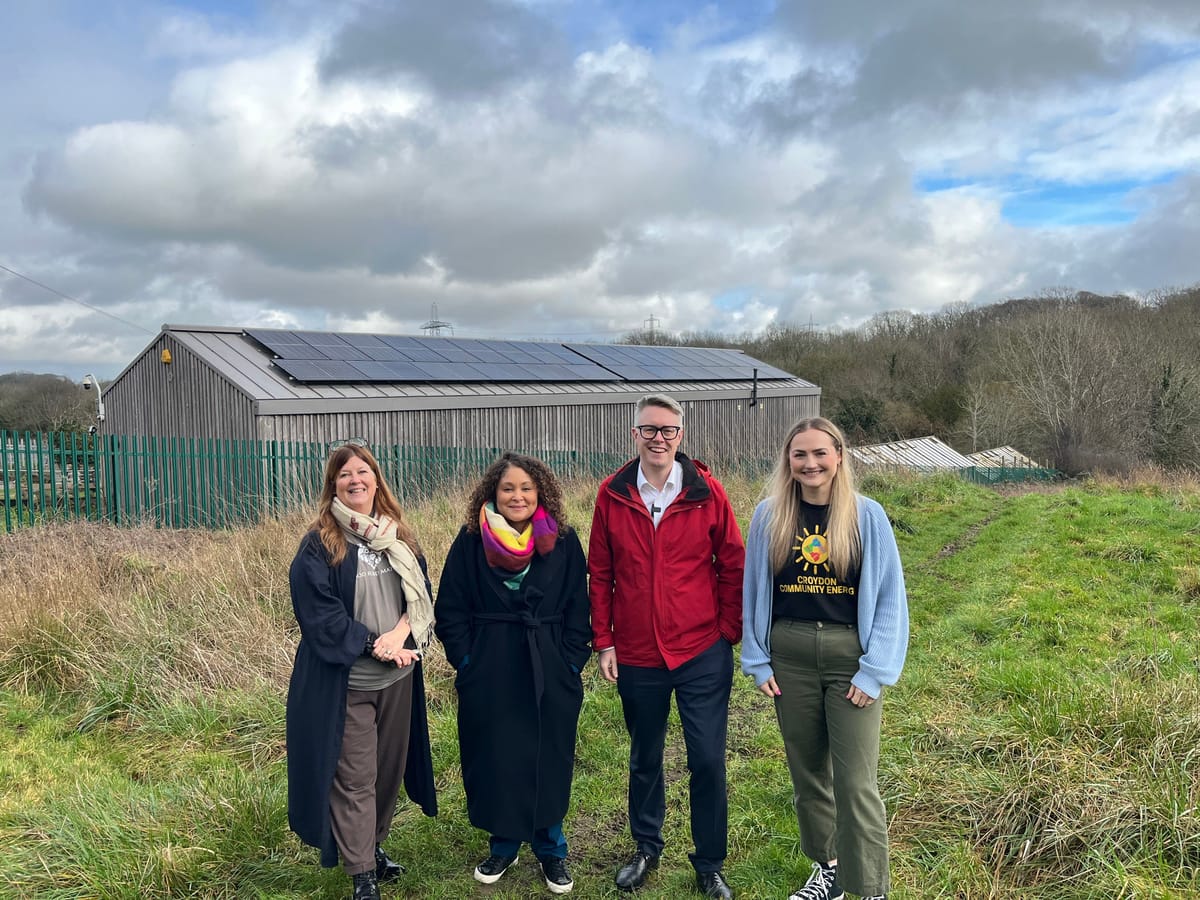
Last summer Good Food Matters – with help from Community Energy Croydon – installed solar panels on their roof, saving them an estimated £523 on their energy bills every year.
“We want to see communities across the country doing projects like this and making sure that not just they’re taking advantage of lower energy bills but also that they have ownership over their own energy supply,” McCluskey told the Local Democracy Reporting Service (LDRS).
“The driving purpose of this government is to try and reduce energy bills. And what we’re seeing here today is a project that gives us a glimpse of a kind of new economy that we want to build, a fairer economy where people can have ownership over their own community energy assets like this here.
“Now, here we’ve got solar panels and in other places that might be batteries and other projects are looking at different technologies.
“But this is all about giving people, not just in London, but across the country, real ownership over these energy assets.”
Amanda McGrath, the Managing Director of the project, said she “couldn’t see why” any other organisation in the capital and beyond who owned their own building wouldn’t look to take advantage of the scheme.
“From a kind of sustainable perspective, it’s something that’s really important to us here that we’re trying to be as carbon neutral as possible,” she said.
“This is really helping us hit that target. We’re a really small charity with a small turnover, so financially, it also helps us, because it’s reducing our energy bills.”
The Mayor of London – who has set a target for the capital to become a Net Zero Carbon city by 2030 – said the support will “help our city’s vibrant community energy sector continue to grow” and that Londoners were ready to “play a powerful role in building a cleaner, fairer and more resilient energy system for everyone.”
McCluskey said the government were “standing alongside” Sadiq Khan in his “ambitious targets” for London.
“We want to make sure that we can do what he’s doing in London right across the whole of the United Kingdom,” he added.
Connie Duxbury, who founded Croydon Community Energy, said the investment could see clean, community energy projects proliferate across London.
She added: “There are already just over 250 community projects in the capital. Community Energy London has a vision for a thousand projects in London by 2030, which I think is absolutely possible.
“We’ll see the sector grow exponentially, especially with a boost from the Local Power Plan.”
Natasha Irons, MP for Croydon East, told the LDRS: “The solar panel project at Good Food Matters is a perfect example of how community-owned power can fuel vital work that supports local families, isolated men, young people and refugees. I’m looking forward to seeing how public buildings and schools across Croydon will benefit.”

Kate Parker, co-chair at South East London Community Energy (Selce), attended the launch of the government scheme.
"The Local Power Plan recognises the multiple interconnected impacts that community energy projects have, and the potential for community wealth building that they offer," she said.
"The £1bn investment demonstrates a commitment to supporting and growing this model, with a vision that ‘by 2030, every community in the UK will have the opportunity to own a local energy project’.
“The plan builds on the knowledge, experience and success of community energy groups across the UK and the ‘working with’ not ‘doing to’ approach is welcomed ..
“In particular the recognition of Local Authorities as key partners in the Local Power Plan, with targeted support, has the potential to make a big difference at a practical level."
By Kumail Jaffer, Local Democracy Reporter. Additional reporting by Dorothy Stein, Salamander News.
Sign-up for our free weekly newsletter - Salamander News in your inbox